Complete Dental Care Under One Roof in NJ: What It Means
Dr. Nicole EliaAugust 6, 20268 min read
Key Takeaways
Complete care under one roof covers general, cosmetic, restorative, periodontal, and orthodontic treatment in one team
Surgical implant placement is coordinated with an outside specialist; the restorative crown is handled in-house
Same-day technology like in-office 3D printing lets more treatment happen in a single visit
Seeing one team means treatment planning builds on existing history instead of starting from zero each time
Coordinated care reduces duplicate exams and repeated intake forms when a patient needs multiple types of treatment
Dr. Elia completed a residency at Naval Medical Center San Diego and served five years as a U.S. Navy dentist
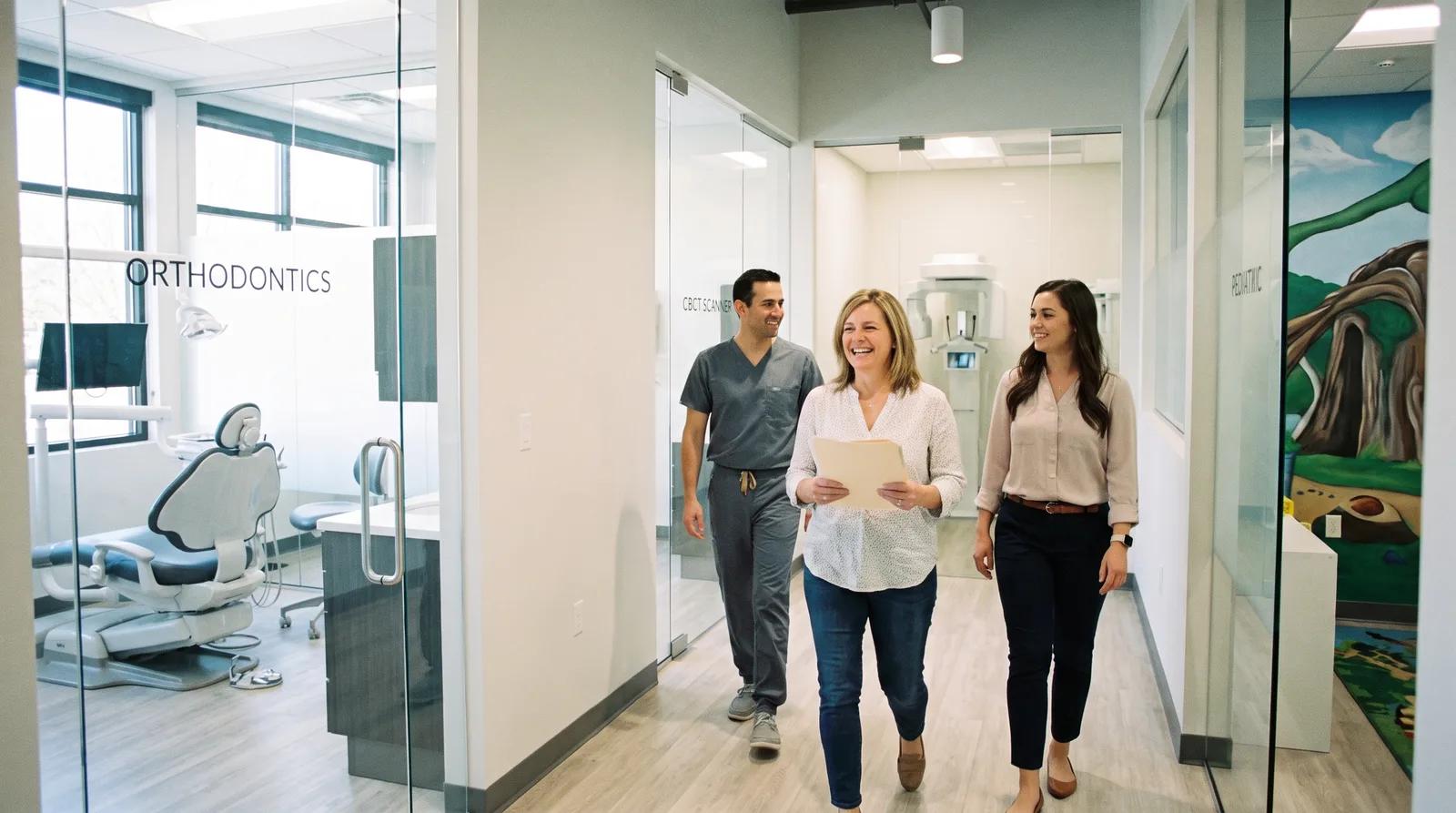
Complete dental care under one roof NJ patients search for sounds like a marketing phrase until you see what it actually changes about a treatment plan. At Elia Family Dental, it means most of what you need, exams, cleanings, fillings, crowns, Invisalign, cosmetic work, and emergency visits, happens with the same team who already knows your history.
The phrase gets used a lot in dental marketing, often without much substance behind it. This article is meant to be the more honest version, including where the model genuinely applies and where it necessarily involves coordinating with an outside specialist rather than doing literally everything under one physical roof.
Dr. Elia is a New Jersey native and former U.S. Navy dentist who builds relationships that last, one visit at a time. Here's what "under one roof" actually looks like once you get past the tagline.
Complete Dental Care Under One Roof NJ: What It Means
Complete care under one roof means most routine and complex dental needs, general, cosmetic, restorative, periodontal, and orthodontic, get handled by one coordinated team rather than being scattered across multiple offices. It doesn't mean every possible procedure happens on-site without exception.
The honest version of this phrase includes an important nuance: some specialized procedures, like surgical implant placement, are still coordinated with an outside specialist. What "under one roof" really promises is that your general dentist stays the hub of that coordination, not that every single service in dentistry happens in one building.
This distinction matters because overpromising erodes trust the moment a patient discovers a referral was needed somewhere along the way. Being upfront about which services stay in-house and which get coordinated with a specialist actually builds more confidence than a blanket claim that everything happens under one physical roof without exception.
What Services Are Coordinated in a Single Practice?
A single coordinated practice typically covers general and preventive dentistry, cosmetic treatment, restorative work, Invisalign, periodontal care, and same-day emergency visits. At Elia Family Dental, that list includes Digital Smile Design, GLO whitening, Guided Biofilm Therapy cleanings, and same-day 3D-printed crowns.
About 100 million Americans fail to see a dentist each year, according to the ADA, even though regular exams and good oral hygiene can prevent most dental disease.
Category
Example Services
General & preventive
Exams, Guided Biofilm Therapy cleanings, fillings
Cosmetic
Digital Smile Design, GLO whitening, veneers
Restorative
Same-day 3D-printed crowns, implant restorations
Orthodontic
Invisalign clear aligners
Emergency
Same-day emergency dental care
Here's a general breakdown of what's typically handled directly versus coordinated with a specialist:
Handled directly: periodontal treatment, cosmetic veneers, emergency dental care
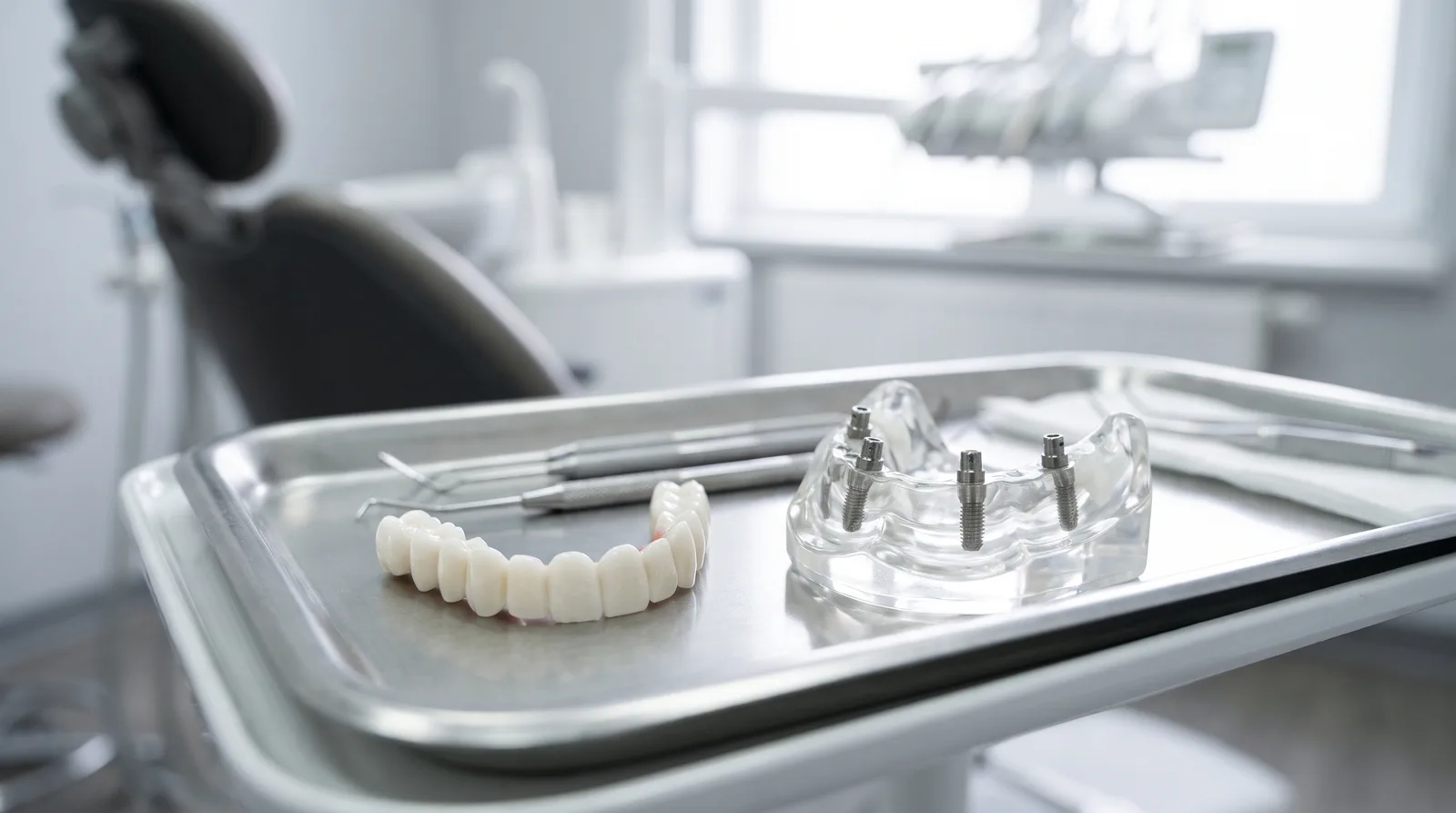
Coordinated with a specialist: surgical implant placement, with the restorative crown handled here
Coordinated with a specialist: certain complex oral surgery cases beyond routine extractions
The point isn't that everything happens in-house without exception. It's that your general dentist manages the whole picture, even the parts that get referred out.
Curious what coordinated care would look like for you?
A consultation is the easiest way to see how your specific treatment plan would come together.
How Does Same-Day Technology Fit Into Coordinated Care?
Same-day technology like an in-office 3D printer for crowns, an iTero digital scanner, and CBCT imaging lets more of your treatment plan happen in a single visit, reducing how often coordination even needs to cross into a second appointment or another office.
A same-day 3D-printed crown is a good example. Instead of a temporary crown, a lab turnaround measured in days. A second visit to place the final restoration, the whole process compresses into one appointment using in-office 3D printing. That's less about a flashy gadget and more about how much friction it removes from a process that used to require multiple trips.
The iTero digital scanner plays a similar role for Invisalign and other cosmetic work. A digital impression replaces the old mold-based process. That same scan can feed directly into treatment planning software, cutting out a step that used to add days to the process before any actual treatment could begin.
What Happens When Something Needs a Specialist?
When something needs a specialist, like surgical implant placement, your general dentist coordinates the referral, shares imaging and treatment notes directly with the specialist, and takes back over for the restorative phase once healing is confirmed. You're not left managing that handoff yourself.
MouthHealthy notes that this kind of coordinated referral model is standard practice even within certain insurance plan structures, not something unique to any one office. 42% of adults aged 30 and older have some form of periodontal disease, according to the CDC, which is exactly the kind of condition that benefits most from a coordinated approach between a general dentist and a specialist when it progresses further.
Here's roughly how that coordination flows:
Your general dentist identifies the need for specialist care during an exam
Imaging and treatment notes are shared directly with the specialist
The specialist completes the surgical or specialized portion of treatment
Your general dentist confirms healing and resumes care for the restorative phase
Follow-up and maintenance continue with the same team going forward
Even when a specialist is involved, your general dentist stays the one coordinating the full plan.
Our overview of the All-on-X restorative process is a concrete example of exactly this split: a surgical specialist places the implants, and Elia Family Dental handles the crown-and-bridge restoration that completes the case. Coordination doesn't mean doing everything yourself. It means making sure nothing falls through the cracks between providers.
Why Does Seeing One Team Matter for Treatment Planning?
Seeing one team matters because they already have your full history, imaging, and preferences on file, which means treatment planning doesn't start from zero every time something new comes up. A cosmetic consultation can factor in a periodontal note from six months ago without you having to remember to mention it.
MouthHealthy, the ADA's patient education site, describes continuity of care as an important part of any health plan, noting that a dentist who sees you regularly is better positioned to catch problems early, like gum disease while it's still reversible.
This continuity shows up in small ways that add up. A dentist who's tracked your bite over several years notices a subtle shift faster than someone seeing you for the first time. A team that handled your last crown knows exactly what shade and contour worked for your smile the next time cosmetic work comes up.
It also reduces the odds of conflicting advice. When different providers at different offices don't share notes, patients sometimes end up caught between two treatment philosophies without a clear way to reconcile them. A single team managing the full picture removes that particular friction almost entirely.
How Does This Save You Time Compared to Multiple Offices?
Coordinated care saves time by reducing duplicate exams, repeated history intake forms. The back-and-forth of transferring records between separate offices for related treatment. Most patients notice this most clearly when a treatment plan involves more than one type of care at once.
A patient needing a crown, a cleaning. An Invisalign consultation in the same season, for example, can often combine or sequence those visits more efficiently when one office already has the full picture, rather than scheduling three separate intake processes across three different practices. This is the practical, day-to-day version of complete dental care under one roof nj patients actually experience, well before it ever comes up as a marketing phrase.
What Technology Supports This Kind of Coordination?
Technology like iTero digital scanning, CBCT 3D imaging, and integrated patient records makes coordination genuinely easier by giving every provider involved, in-house or referred, access to the same accurate information. Less guesswork means fewer repeated scans and fewer miscommunications between visits.
Integrated technology like digital scanning helps every provider work from the same accurate information.
3D endodontics is a good example of how this plays out for a single procedure. A CBCT scan maps root canal anatomy in detail before treatment starts, the same imaging that a coordinating specialist would want to see if a case ever needed a second opinion or referral. The technology serves the coordination, not just the individual procedure it was built for.
Integrated digital records matter just as much as the imaging itself. A specialist receiving a referral with complete, organized history and imaging can move faster and more confidently than one starting with fragmented or incomplete information, which ultimately benefits the patient caught in the middle of that handoff.
How Do You Get Started With Coordinated Care Here?
Getting started just means booking an exam or consultation, where your history, imaging, and treatment goals get established as the foundation for everything that follows, whether that's routine care or something requiring a specialist down the line.
Ready to see coordinated care in action?
Book a visit and let us build a treatment plan around your actual history, not a blank slate.
Complete dental care under one roof in NJ isn't about claiming every procedure happens in a single building without exception. It's about one team staying at the center of your treatment, whether that's a routine cleaning or a case that eventually involves a specialist. That coordination, more than any single piece of technology, is what actually makes the phrase mean something. Results may vary. Please consult with your dentist at Elia Family Dental for personalized treatment recommendations.
Ready to experience coordinated care?
Schedule a visit with Dr. Elia and her team along the Jersey Shore.
About 65.5% of US adults had a dental exam or cleaning in the past year, according to CDC data for 2023. The ADA notes that regular visits help spot problems early, when treatment is likely to be simpler and more affordable. See the ADA guide to going to the dentist.