Restorative Dentistry
Partial Denture Cost: What You Pay and What Changes It
Partial denture cost depends on the design, materials and your remaining teeth. See what you pay for and how insurance and financing help.
Nov 19, 20269 min read



Same day crowns vs lab crowns comes down to one key difference: a same-day crown is designed and 3D-printed at our practice during one visit, while a lab-made crown needs a temporary and a second visit. Both restore a damaged tooth, and Dr. Nicole Elia can help you choose through her restorative dentistry care in Wall Township.
Patients often ask which is better. The honest answer is that it depends on the tooth, the bite, and your schedule. This guide compares how each crown is made, how it lasts, how it looks, how long it takes, and what it costs, so you can ask better questions at your consultation.
We will keep the comparison practical. You will see where same-day crowns shine, where a lab crown can still be the stronger choice, and what Dr. Elia considers when she recommends one over the other.
Not Sure Which Crown You Need?
Dr. Elia can examine your tooth and explain which crown type suits your case before any treatment begins.
Book Appointment →A same-day crown is a permanent crown that is designed and 3D-printed in the dental office during a single appointment. An iTero scan captures your tooth, Dr. Elia designs the crown on screen, and our in-office 3D printer produces it from durable, natural-looking material.
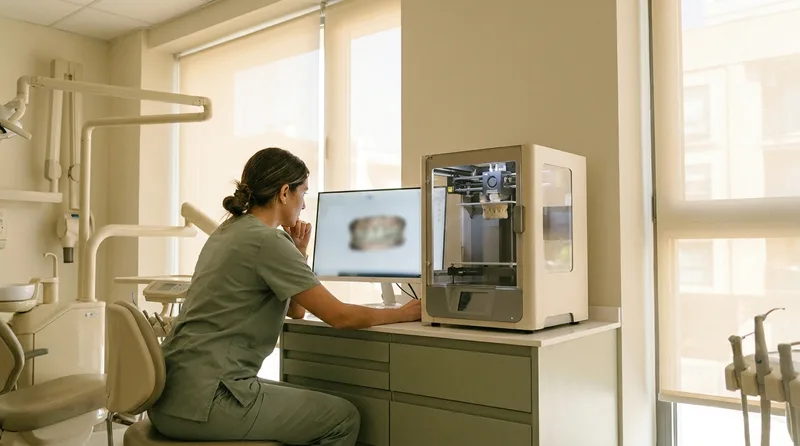
After printing, Dr. Elia bonds the crown, checks your bite, and polishes it. You leave with the finished restoration. There is no temporary crown and no second visit, which is the main reason patients with tight schedules ask about this option.
Because the whole process happens in one place, Dr. Elia can adjust the design while you are in the chair. If a contact feels tight or the shape needs refining, the change happens on screen rather than through a note sent to a lab. That immediacy is one of the clearest advantages of working in one office.
Not every tooth qualifies. Teeth with very little healthy structure left, or cases that need extra planning, may call for a different approach, and Dr. Elia explains that after the exam rather than promising a result in advance.
A lab-made crown is fabricated by a dental technician at an outside laboratory from a scan or impression of your prepared tooth. You wear a temporary crown in the meantime, then return for a second visit to have the permanent crown fitted and bonded.
The lab process has a long track record. Technicians can use a wide range of materials and build up shading by hand, which is why a lab crown is still the right choice for some cases. The tradeoff is time, since the second visit typically falls about two weeks after the first.
During those weeks, the temporary needs gentle care. Sticky foods can pull it loose, and flossing around it takes some caution. If it comes off or breaks, call the office rather than waiting for the next visit, because an exposed tooth can become sensitive or damaged.
Lab crowns remain a standard option that dentists have relied on for decades, which is why choosing one is never a mistake when the case calls for it. The goal is the best result for your tooth, not a preference for one technology.
Both crown types can be durable when they are well designed and well cared for, and dental crowns typically last 10 to 15 years, often longer. The bigger factors are your bite, your habits, and the health of the tooth underneath, not the method of manufacture.
Grinding, clenching, and chewing ice shorten the life of any crown. Regular checkups let Dr. Elia catch early wear or a loose edge before it becomes a bigger repair. For general background, see the American Dental Association's MouthHealthy guide to crowns and Healthline's overview of dental crowns.
If you grind your teeth or have a very heavy bite, mention it at your consultation. Dr. Elia designs every crown with your bite in mind, and she will tell you if a different crown type or an added protective step makes sense for your case.
Material and design still matter. A crown that is too thin in a high-stress area, or a bite that is slightly off, wears faster than one planned carefully. That is why Dr. Elia checks your bite before bonding and again at follow-up visits.
Yes, same-day crowns are matched to your natural teeth and can look very natural, especially on back teeth and everyday restorations. Dr. Elia designs the shape and shade digitally, then checks the result against your neighboring teeth before bonding it.
For a highly visible front tooth, shade matching can be more demanding. A lab technician can build up subtle color layers by hand, and in some cases that extra customization is worth the second visit. Dr. Elia will tell you honestly when your tooth falls into that category.
Her restorative and cosmetic focus is the reason this conversation happens before treatment. You see the plan, understand the tradeoffs, and choose with confidence rather than being steered toward whichever option is faster.
Back teeth and everyday restorations are often the easiest place for a same-day crown to blend in, because shade variation is subtler and the bite takes priority. Dr. Elia shows you the crown on your tooth before it is bonded, so you can speak up if anything looks off.
A same-day crown takes one visit from start to finish, while a lab-made crown typically takes two visits about two weeks apart. The same-day process includes the scan, design, printing, and placement, so you leave with your permanent crown the same day.
Time in the chair is only part of the picture. A lab crown also means arranging a second appointment, and any delay at the lab can stretch the wait. For a cracked tooth that needs attention quickly, finishing in one visit can also reduce the risk of further damage while you wait.
Plan for the visit itself, too. A same-day crown appointment is longer than a simple filling because the scan, design, printing, and placement all happen in one sitting, so bring something to do and avoid scheduling other commitments right afterward.
Cost depends on the tooth, the material, and your insurance plan, so a same-day crown is not automatically more or less expensive than a lab-made crown. We verify your coverage and give you an estimate before treatment begins, so there are no surprises.
Elia Family Dental accepts Delta Dental, Blue Cross Blue Shield, Cigna, Principal, and most PPO plans. Sunbit and CareCredit financing are also available, and Sunbit does not require a hard credit pull. We do not accept HMO, Medicaid, or Medicare plans.
When you compare costs, include the value of your time. A same-day crown saves a second appointment and the hassle of a temporary, which matters to many patients even when the price is similar. Ask for the estimate in writing and compare like with like.
The right crown depends on your tooth, your bite, and your priorities, and Dr. Elia recommends one only after an exam and scan. Same-day crowns suit many everyday restorations, while a lab crown can be better for cases that need extra shade customization.
Questions are always welcome. You can ask how the crown will be designed, what it is made of, how your bite will be checked, and what happens if an adjustment is needed. A clear answer to each one is a good sign of the care you will receive.
Our guide to advanced dental technology in Wall Township shows how the scan, design software, and 3D printer work together, and our root canal guide explains why a crown often follows that treatment.
Before choosing a crown, ask how it will be designed, what it is made of, how your bite will be checked, and what happens if an adjustment is needed. Clear answers to these questions show how carefully your dentist plans and delivers restorations.
Good practices welcome these questions and answer them plainly. At Elia Family Dental, the team explains the plan before anything begins, so you can say yes to treatment because you understand it and not because you felt rushed.
A crown is often one step in a larger plan, such as completing a root canal, protecting a cracked tooth, or restoring a tooth before cosmetic work. Dr. Elia looks at the whole mouth so that each crown supports your bite, your gums, and your long-term goals.
After a root canal, a crown usually protects the treated tooth from fracturing. For worn or damaged teeth across the mouth, crowns can be part of a broader restorative plan. When a smile also needs cosmetic changes, the design can be planned together so the results look cohesive.
Planning ahead saves time and money. A clear sequence, with a crown at the right stage, avoids repeat work and keeps your healthy tooth structure intact. Ask Dr. Elia to walk you through the sequence if more than one tooth needs attention.
For what affects the price of either type, see dental crown cost.
Results may vary. Please consult with your dentist at Elia Family Dental for personalized treatment recommendations.
Ready to Talk Through Your Crown Options?
Book an appointment with Elia Family Dental and Dr. Elia will help you choose the right crown for your tooth.
Book an Appointment →Prefer to talk it through first?
Call 732-681-8604 →Written By
Lead Dentist
Partial denture cost depends on the design, materials and your remaining teeth. See what you pay for and how insurance and financing help.
Dental bridge cost NJ depends on bridge type, materials and your supporting teeth. See what affects the price and how insurance helps.
Inlay onlay cost depends on the material, your tooth and how many visits it takes. See how partial crowns compare with fillings and full crowns.
Book your visit with Dr. Elia online or call us, and we'll take it from there.