Dental Crown Cost: What Affects the Price and Coverage
Dr. Nicole EliaNovember 11, 202612 min read
Key Takeaways
Dental crown cost depends on the material, the size of the tooth, any prep work needed first and how the crown is made, according to Healthline.
Healthline lists porcelain, ceramic, zirconia, metal, composite resin and combination materials, and says your dentist weighs the tooth's location, visibility and how much natural tooth remains.
In a 2015 review of 67 studies, estimated 5-year survival was 94.7% for metal-ceramic crowns and 96.6% for lithium-disilicate-type glass-ceramic crowns, so most material types performed similarly.
Costs can rise if more extensive prep work is needed, such as a root canal, and crowns are recommended after a root canal because the tooth is more fragile, per Healthline.
Elia Family Dental's same-day 3D-printed crowns need no temporary crown and no second appointment, so ask how the cost compares with a lab-made crown.
Insurance may cover all or part of a crown but may only cover certain kinds, per Healthline, and Elia verifies coverage and offers Sunbit and CareCredit plans.
Dental crown cost is one of the first questions people ask when a dentist recommends a crown, and the honest answer is that it depends on your tooth, the material and what needs to happen first. We don't list dollar amounts here, because a fair estimate comes from an exam, not a number quoted over the phone. What we can do is explain what shapes the price, how same-day and lab-made crowns differ and how coverage works. Elia Family Dental's restorative dentistry team gives you clear options and costs before anything begins.
This guide covers what determines the cost, how crown material and prep work affect it, how same-day and lab-made crowns compare, when a crown is needed instead of a filling, how insurance works and how to afford a crown without it. It's general education only, and your dentist can tell you what your own tooth needs after an exam.
Need a Crown and Want Clear Costs?
Book a visit and our team will examine the tooth, explain your options and walk you through your costs and coverage before treatment begins.
Dental crown cost depends on the material, the size and condition of the tooth, any prep work needed first and how the crown is made. Healthline says the price depends on the material used and the size of the tooth, and that costs can rise if more extensive prep work is needed first.
That's why two people can need a crown and receive very different estimates. One may have a sound tooth that needs a simple crown, while another has a tooth that first needs a root canal or rebuilding. A single quoted number can't capture that, which is why Elia Family Dental explains costs after an exam with X-rays, so the figures reflect your own tooth.
Decay is a common reason a tooth ends up needing a crown, and it's widespread. Among US adults aged 20 to 64, 91% have had dental caries, according to the CDC's National Center for Health Statistics (2011 to 2012 data), and 20.5% have untreated tooth decay, according to the CDC's 2024 Oral Health Surveillance Report. Catching problems early often means a smaller restoration, which is easier on both the tooth and the budget.
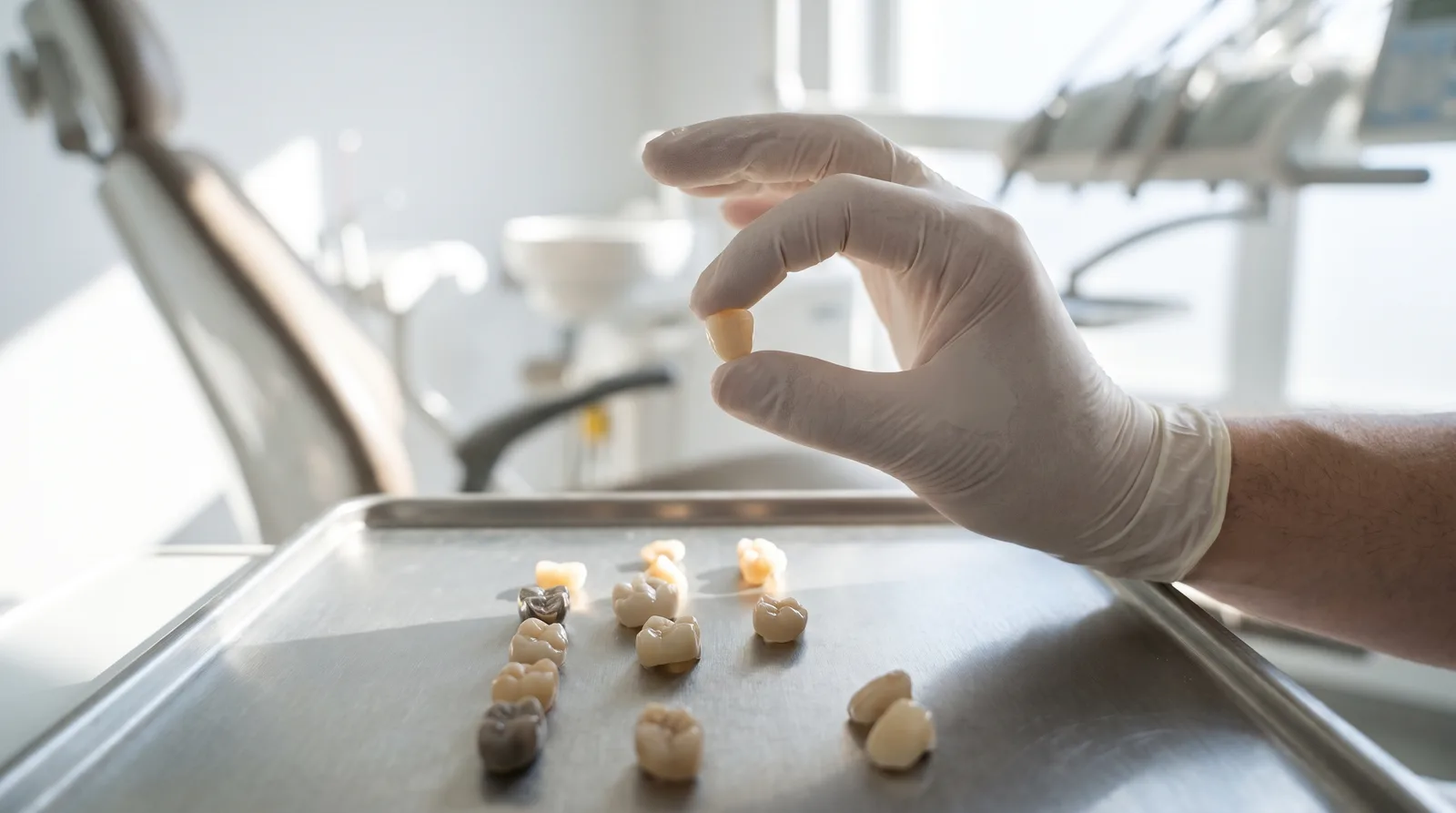
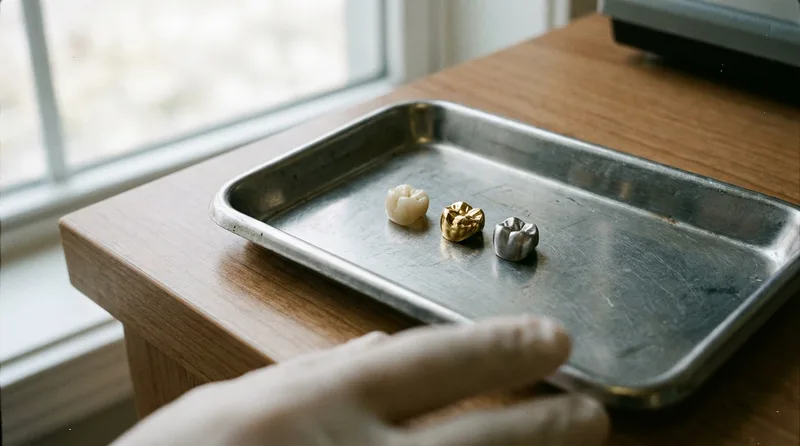
Material is one of the biggest factors, because crowns can be made from porcelain, ceramic, zirconia, metal, composite resin or a combination. Healthline lists all of these, and notes that all-metal crowns are sometimes less costly than gold or porcelain crowns, so the material you choose can change your dental crown cost.
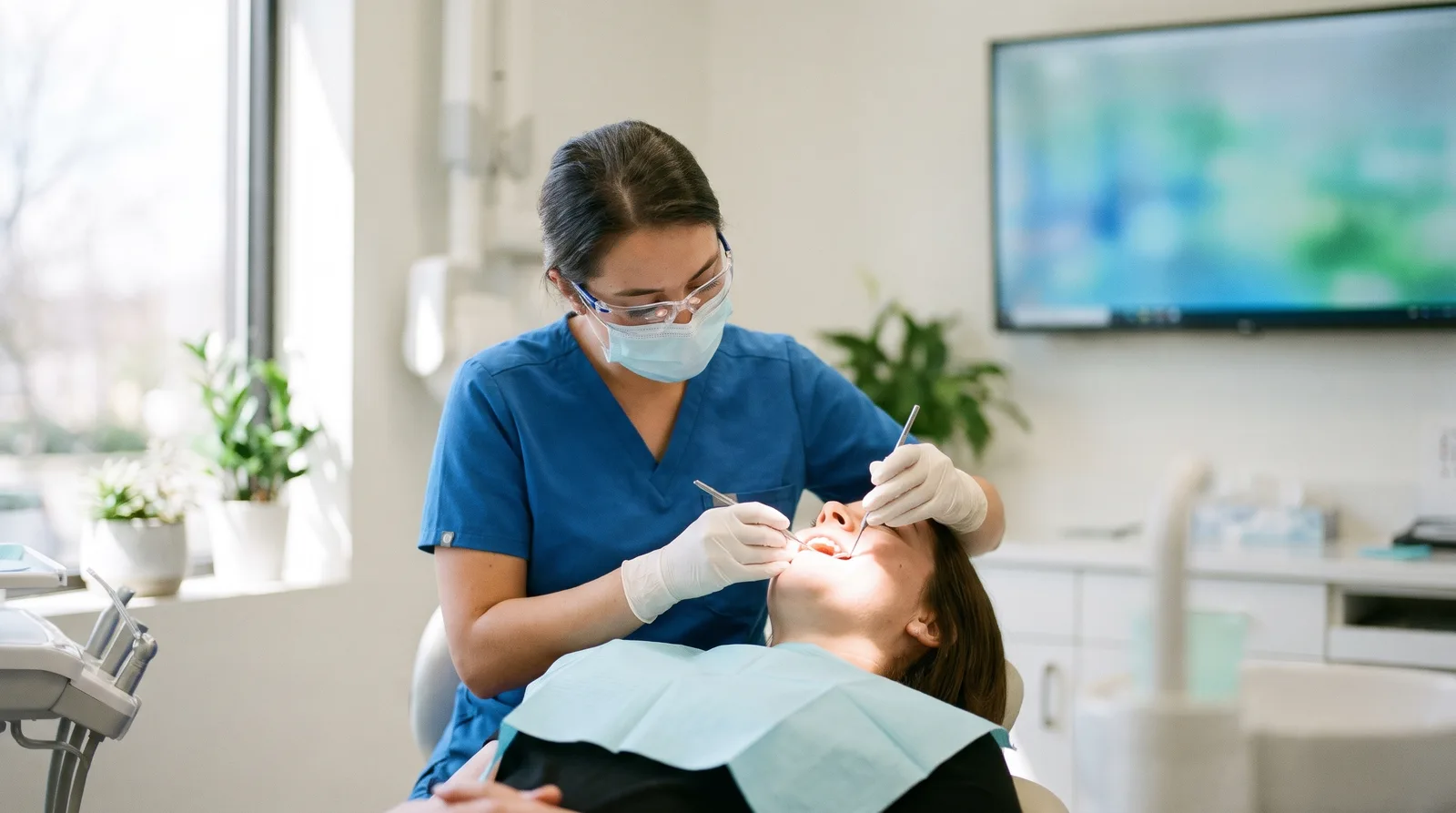
Crowns can be made from porcelain, ceramic, zirconia, metal, resin or a combination.
Material
Strengths
Trade-offs
Metal or gold
Healthline says gold and porcelain-fused-to-metal crowns tend to last the longest
Metal doesn't look like natural tooth color
Porcelain fused to metal
A metal base for strength with porcelain for appearance
The porcelain layer can chip, and Healthline notes it may break away to show metal
All-ceramic or porcelain
Often looks the most natural, which suits visible teeth
Healthline says these are usually not as strong as metal or porcelain-fused-to-metal, and all-porcelain crowns are more vulnerable to chipping
Zirconia
A very hard ceramic, listed by Healthline among the common materials
Choice depends on the tooth and the bite, so ask your dentist
Composite resin
Can be color-matched
Healthline says all-resin crowns tend to wear down faster
Your dentist chooses with your tooth in mind. Healthline says they consider the tooth's location, how much of the tooth shows when you smile, the position of your gum tissue, the function of the tooth, how much natural tooth remains and the color of the surrounding teeth. That's why the lowest-priced option on paper isn't always the right one. Our guide to zirconia vs porcelain crowns compares two common choices in detail.
Research also suggests that most material types perform similarly. A 2015 systematic review of 67 studies found an estimated 5-year survival rate of 94.7% for metal-ceramic single crowns and 96.6% for lithium-disilicate-type glass-ceramic crowns, with zirconia-based crowns at 92.1%, which the authors linked to technical problems. That review covered zirconia crowns studied up to 2013, so ask your dentist what's used and recommended today. The takeaway is that a higher price doesn't automatically mean a longer-lasting crown.
How Do Same-Day and Lab-Made Crowns Compare on Cost?
Same-day crowns skip the temporary crown and the second visit, and Healthline advises asking whether the option is available and what it costs, especially if you don't have insurance. At Elia Family Dental, a same-day 3D-printed crown means no temporary, no second appointment and no waiting on an outside lab.
Healthline describes the two routes. With a traditional crown, you visit twice: the dentist prepares the tooth, takes an impression, places a temporary crown and sends the impression to a lab, which may take several weeks, and you return to have the crown cemented. With a same-day procedure, the dentist takes digital pictures, creates the crown in the office, and the entire process takes about 2 to 4 hours. Healthline also notes that not all dentists have the technology to make same-day crowns, and that depending on the material best suited to your needs, you may be a candidate for a same-day crown or your dentist may fit it over two appointments, as its guide to crown prep explains.
Digital scan. The iTero scanner captures a detailed 3D model of your tooth in minutes, with no goopy molds.
On-screen design. Dr. Elia designs your crown digitally, fine-tuning its shape, size and bite.
In-office 3D printing. The printer produces your crown from durable, natural-looking material.
Same-day placement. The crown is bonded, your bite is checked and it's polished, so you leave with the finished restoration.
A digital scan and on-screen design replace messy molds and a wait for an outside lab.
Does that change the price? It can, either way, and it depends on the office and the material, so ask for both estimates and compare what each includes. A same-day crown can mean fewer visits and less time away from work, and a lab-made crown can still be the right choice for some teeth. Our guides to same-day crowns vs lab crowns and same-day dental crowns explain the differences, and temporary crown care tips helps if you do need a temporary.
What Prep Work Can Add to the Price?
Prep work can add to the price when a tooth needs more than a simple reshaping. Healthline says costs may rise if the dentist has to do more extensive prep work before the crown, such as a root canal, and that crowns are recommended after a root canal because the tooth is more fragile and needs protection.
Root canal treatment: a tooth with an infected or damaged nerve may need this before it's crowned.
Removing decay: any cavity or failing old filling is cleaned out so the crown has a sound base.
Rebuilding the tooth: Healthline says there may be some need to build up a broken-down tooth and strengthen it so it can support the crown.
X-rays and imaging: these show what's under old fillings or below the gumline.
Treating gum or bone problems: a crown needs healthy support to last.
None of this is an upsell. These steps decide whether a crown can last, which is why they come first. Our guides to crown after root canal and dead tooth symptoms explain when a tooth needs a root canal and why a crown usually follows, and root canal vs extraction covers the alternative when a tooth can't be saved. The ADA describes root canals as a way to repair and save a tooth instead of removing it.
Ask your dentist to explain each step in your estimate and why it's needed. A clear plan lists the prep work separately from the crown itself, so you can see exactly what you're paying for and why. If something isn't clear, ask for it to be explained, because a good office is glad to.
When Do You Need a Crown Instead of a Filling?
You need a crown when a tooth is too damaged for a filling to protect it. Healthline says a cavity too big for a filling may call for a crown, and crowns are also recommended for teeth that are severely worn, cracked or weakened, after a root canal and to cap an implant or anchor a bridge.
Healthline also notes that some crowns only cover part of the tooth. If you don't need a full crown, your dentist might suggest an onlay or three-quarter crown instead, which may change both the work involved and the cost. Whether a smaller restoration is possible depends on how much sound tooth remains, which is why the exam comes first. The ADA also notes that a crown is a good way to cover teeth that are discolored or badly shaped, which is another reason a dentist may recommend one.
The decision isn't only about cost. A restoration that's too small for the damage can fail, and a failed filling can end up needing a crown anyway. Our guides to crown vs filling, chipped tooth repair options and dental crown vs bridge explain how dentists weigh these choices, so you can ask informed questions at your visit.
Does Dental Insurance Cover Crowns?
Often in part, but plans differ. Healthline says dental insurance may cover all or part of the cost of your crown, though your plan may only cover certain kinds of crowns, so it advises checking with your insurance company for the details. Elia Family Dental accepts Delta Dental, Blue Cross Blue Shield, Cigna, Principal and most PPO plans.
The team verifies your coverage before treatment begins, and out-of-network patients are welcome. What you pay usually depends on your deductible, your coinsurance share, your annual maximum and whether the office is in your network. Our guides to dental insurance explained and dentists that accept your insurance cover how those pieces work.
Are crowns covered, and at what level? Ask whether the material affects coverage.
Which types does my plan cover? Healthline notes some plans cover only certain kinds.
How often can a crown be replaced? Some plans limit replacement frequency.
What are my deductible and annual maximum? They affect what you pay first.
Is prep work covered separately? A root canal or buildup may be categorized differently.
Insurance details change from plan to plan and year to year, so it's worth confirming your benefits close to your appointment. Call 732-681-8604 and the team will verify your coverage, so you know your portion before treatment. If you're comparing offices, ask each one for an itemized estimate, so you can see which parts are the crown itself, which are prep work and which are your insurance's share.
How Can You Afford a Crown Without Insurance?
Without insurance, flexible payment plans are the main option. Elia Family Dental works with Sunbit and CareCredit, which offer monthly payment plans, and Sunbit doesn't require a hard credit check. Our guides to dental care without insurance, CareCredit vs Sunbit and dental financing with Sunbit explain how each works.
The most helpful step is to ask early. Tell the team you're paying without insurance when you book, and ask for the estimate in writing before the day of treatment. A clear number, and a plan for how to pay it, lets you plan your dental crown cost without worrying about surprises, and it lets you compare options on what they include, not only on the first figure.
What type of crown do you recommend, and why? Ask how the material suits your tooth.
What does the estimate include? Ask about the exam, imaging, prep work, the crown and follow-up.
Is a same-day crown available, and how is it priced? Ask for it compared with a lab-made crown.
What could add to the cost? Ask about a root canal, a buildup or gum treatment.
What will my insurance pay? Ask the office to verify your coverage first.
How can I pay my share? Ask about Sunbit, CareCredit and other options.
Don't let cost alone delay care for a cracked or broken tooth. A tooth that's left can break further or become infected, and either can make the eventual treatment more involved. If cost is the obstacle, say so, because the team would rather help you find a workable plan than have you put off treatment.
What Is the First Step at Elia Family Dental?
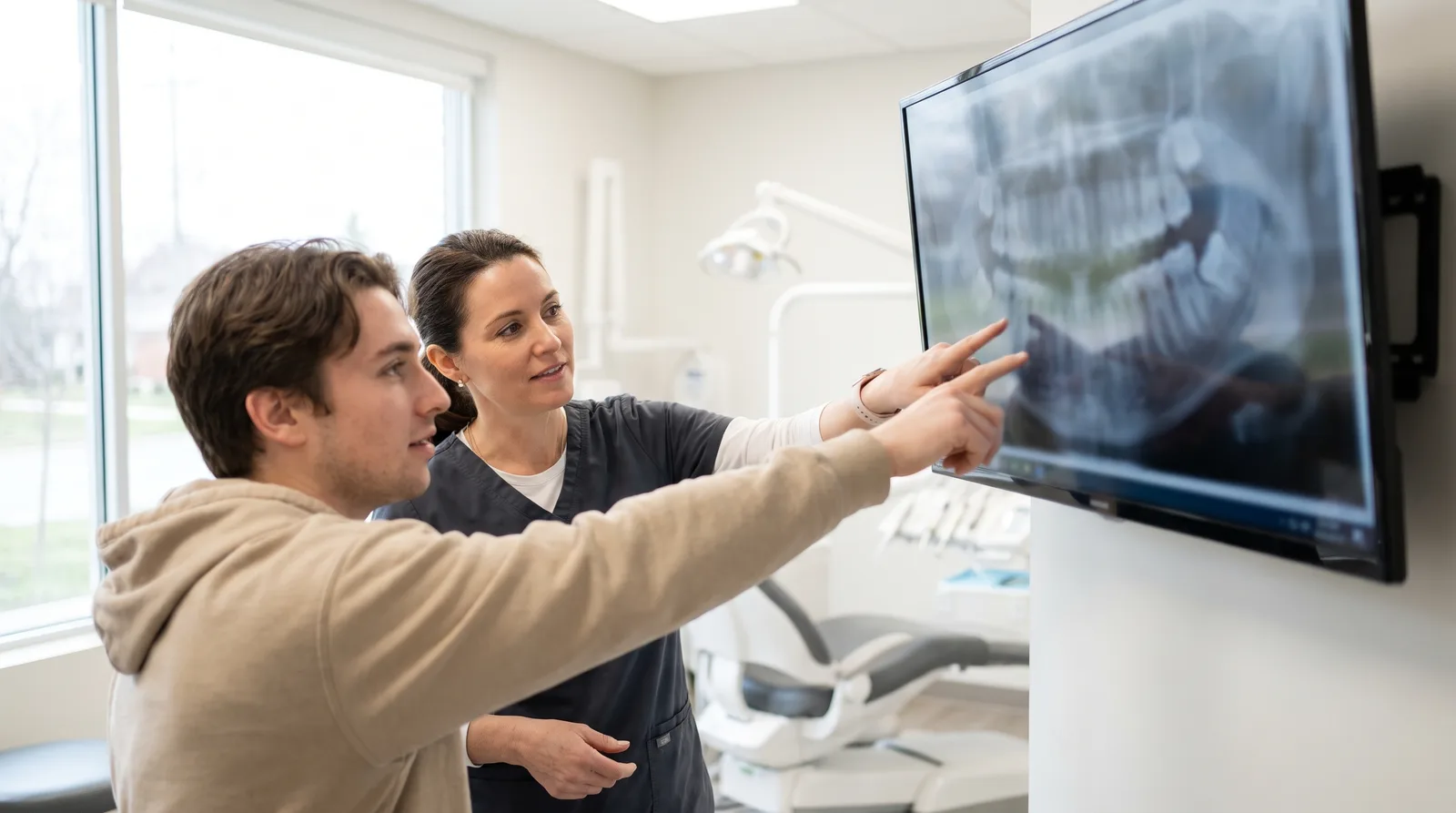
The first step is an evaluation with digital X-rays and 3D imaging, so the team can assess the tooth precisely, explain your options and give you clear costs before anything begins. If a same-day crown is right for your tooth, you can leave with the finished restoration in a single visit. Learn more about same-day 3D-printed crowns.
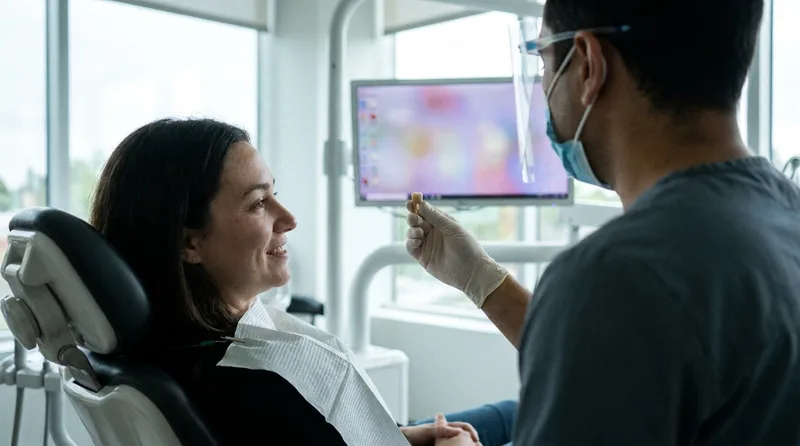
An evaluation with imaging is the first step in planning your crown and your costs.
Dr. Elia's care is backed by advanced training, and the team numbs the area thoroughly first so you're comfortable. Bring your insurance details, a list of your medications and any questions about materials or cost. Our guide to dental crown recovery explains what the first week looks like, and you can start with a conversation, with no obligation to proceed.
Dental cleaning cost without insurance depends on what your visit includes. See what a cleaning covers and why exams and X-rays differ, in Wall Township.
Wisdom tooth removal cost depends on impaction, imaging, anesthesia and insurance. See what affects the final price and your options in Wall Township, NJ.
Nov 11, 202612 min read
Ready When You Are
Book your visit with Dr. Elia online or call us, and we'll take it from there.