Emergency Dental Care
Crown Fell Off What to Do: A Calm First-Hour Guide
Crown fell off what to do: save the crown, protect the tooth, skip the superglue and call early. Same-day emergency care in Wall Township, NJ.
Oct 28, 202610 min read



Root canal vs extraction is one of the hardest calls in dentistry, because both paths solve the same problem in very different ways. In short, a root canal keeps your tooth and an extraction removes it, and the right choice depends on whether the tooth can be restored. At Elia Family Dental in Wall Township, Dr. Nicole Elia offers both, including root canal treatment that saves your natural tooth.
Picture a molar that has throbbed for a week. The X-ray is up on the screen, and two options are on the table. One keeps the tooth you were born with. The other removes it and starts a replacement plan. Neither is automatically better.
This guide walks through how each option works, when each makes sense, how healing compares, and how to decide. It's general education only, and your exam findings decide the plan.
Facing a Root Canal or Extraction Decision?
Dr. Elia can examine the tooth, review 3D imaging and explain both options before you commit to either.
Book Appointment →A root canal removes the infected tissue inside a tooth and seals it, so you keep your natural tooth, while an extraction removes the whole tooth and leaves a gap to replace. According to the ADA's MouthHealthy guide to root canals, root canals repair and save a tooth instead of removing it.
Inside every tooth is the pulp, soft tissue that holds nerves and blood vessels. A deep cavity, a crack or an injury can infect it. A root canal clears that infection and keeps the outer tooth in place.
At Elia Family Dental, a root canal follows four clear steps:
An extraction works differently. The whole tooth comes out, and the plan shifts to healing and replacement. Both are routine procedures. They simply point in opposite directions.
A root canal can usually save a tooth when enough healthy structure remains and the surrounding bone can still support it. Dr. Elia uses 3D endodontic imaging to see the infection and the inside of the tooth before recommending anything.

The ADA lists several reasons the pulp becomes infected, and each one is a common root canal starting point:
If untreated, the infection can spread to the tissues around the root, and an abscess may form. Not sure you're there yet? Our guide to signs you need a root canal covers the warning signs in detail.
Saving the tooth has a real upside. Your natural tooth keeps working with your bite, your jaw and your neighbors, which is hard to fully copy. With proper care, the ADA says a restored tooth can last a lifetime.
Some practices refer complex cases to an endodontist, a dentist who specializes in saving teeth, according to the ADA. At Elia Family Dental, Dr. Elia performs root canal treatment herself, backed by advanced training and 3D imaging.
Extraction is the better choice when a tooth can't be restored, such as when it's fractured below the gumline, has too little healthy structure left, or has lost too much supporting bone. As Elia's oral surgery page puts it, sometimes the healthiest thing for your mouth is to remove a tooth.
Elia Family Dental handles both simple and surgical extractions, uses digital X-rays and 3D imaging to plan the safest approach, and preserves surrounding bone and tissue wherever possible. Same-day emergency extractions are available when a tooth can't wait.
Wisdom teeth are the classic example. An impacted wisdom tooth often can't be treated the way a front tooth can, so evaluation and removal are part of what Elia's oral surgery service covers.
Choosing extraction isn't a failure. It's sometimes the cleaner path, especially when saving the tooth would mean repeated treatment with a poor outlook.
Root canal recovery is usually shorter, while extraction healing involves the socket closing and, if you replace the tooth, added steps. The ADA notes the treated tooth may feel sensitive for a few days, and you'll need a follow-up visit for a filling or crown.
| Factor | Root canal | Extraction |
|---|---|---|
| Natural tooth | Kept | Removed |
| Visits | Usually 1 or 2 office visits, per the ADA | One visit to remove the tooth, plus any replacement visits |
| After the visit | A crown or filling protects the tooth | A plan to replace the tooth |
| Aftercare | Sensitivity for a few days | Clear written aftercare instructions and a check-in |
| Long-term plan | Care for the restored tooth | Implant, bridge or denture |
At Elia Family Dental, a root canal is often completed in a single visit. For extractions, you'll leave with clear written instructions, and the team checks in to make sure you're healing well.
Either way, follow the aftercare plan closely. Skipping it is the easiest way to turn a routine recovery into a longer one.
After an extraction, you can replace the tooth with a dental implant, a fixed bridge or a removable denture. A missing tooth can change how you chew and speak, which is why Elia's oral surgery page promises a clear plan for replacing the tooth.
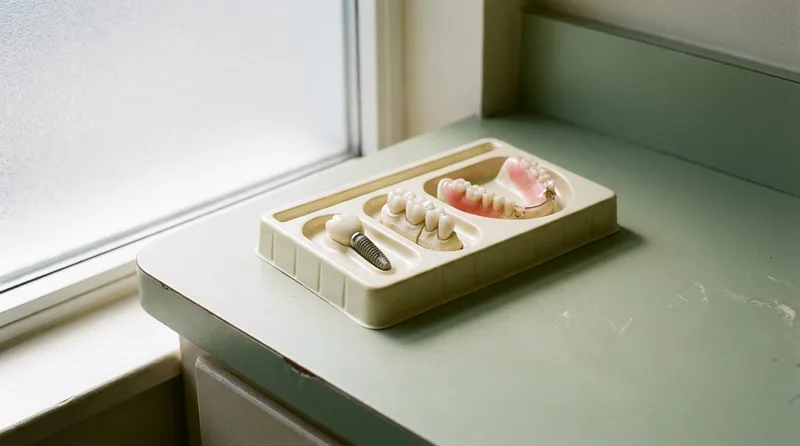
Implants have a success rate of 95-98% over 10 years, according to the Journal of Oral and Maxillofacial Surgery, and implant-supported teeth can restore up to 90% of natural chewing power, according to the AAID. The ADA adds that bone grows around the implant in a process that can take up to several months. Our dental implant process guide maps out each stage.
At Elia Family Dental, the team splits the work. Our periodontist places the implant, and Dr. Elia designs and completes the crown using iTero digital impressions. She also restores implants placed by other providers.
A bridge relies on healthy neighboring teeth, according to the ADA, so its success depends on that foundation. According to the American College of Prosthodontists, 120 million Americans are missing at least one tooth, so you're far from alone.
Decide by asking three questions: can the tooth be restored, is the bone around it healthy, and what is your plan for that space if the tooth goes? Dr. Elia answers the first two with an exam and 3D imaging, then helps you weigh the third.

A few common scenarios show how this plays out:
The root canal vs extraction decision also depends on what you value. Some patients want to keep every natural tooth they can. Others prefer a clean break from a tooth that has caused repeated trouble. Both are reasonable, as long as the choice rests on facts.
Ask for the complete picture before you decide. That means what happens next, what it costs, and what could go wrong with each path.
Waiting rarely makes the decision easier, because infections tend to grow. A dental abscess can spread to other parts of the body within 48 hours if untreated, according to JADA, and the ADA warns that bacteria can damage the bone that holds your tooth in place.
Dental problems also fill emergency rooms. About 2 million emergency room visits per year in the US are for dental issues, according to the ADA Health Policy Institute. An emergency room can ease an emergency, but it can't fix the tooth.
If you've already been told you need treatment, don't let fear of the procedure make the decision. Elia describes a calm, gentle visit with the area numbed first. And think about the cost of delay in practical terms: a tooth that could have been saved with a root canal can become one that needs an extraction and a replacement.
Cost depends on the tooth, the treatment and your plan, so the clearest answer is a verified estimate. Elia Family Dental accepts Delta Dental, Blue Cross Blue Shield, Cigna, Principal and most PPO plans, and verifies your coverage before treatment begins.
Compare total cost, not just the first bill. An extraction can look less expensive upfront, but replacing the tooth with an implant, bridge or denture adds to it. A root canal and crown have their own total. Ask for both paths in writing.
When you request estimates, ask for each of these:
Sunbit and CareCredit financing are available, and Sunbit doesn't require a hard credit check. We don't accept HMO, Medicaid or Medicare plans, so call us if you're unsure which category your plan falls into.
The root canal vs extraction question rarely has one right answer for everyone. It has a right answer for your tooth. Book an exam, and Dr. Elia will show you the imaging, explain both paths and help you choose with confidence.
Results may vary. Please consult with your dentist at Elia Family Dental for personalized treatment recommendations.
Ready to Decide With Confidence?
Book an appointment with Elia Family Dental and Dr. Elia will examine your tooth and walk you through both options.
Book an Appointment →Prefer to talk it through first?
Call 732-681-8604 →Written By
Lead Dentist
Crown fell off what to do: save the crown, protect the tooth, skip the superglue and call early. Same-day emergency care in Wall Township, NJ.
Signs of sleep apnea dentist exams can reveal, from dry mouth to worn teeth. Learn when to get a sleep study and how oral appliances can help.
Sleep apnea oral appliance vs CPAP: compare comfort, noise and travel, and see who each suits. Learn how Dr. Elia fits a custom appliance in Wall Township.
Book your visit with Dr. Elia online or call us, and we'll take it from there.