Emergency Dental Care
Crown Fell Off What to Do: A Calm First-Hour Guide
Crown fell off what to do: save the crown, protect the tooth, skip the superglue and call early. Same-day emergency care in Wall Township, NJ.
Oct 28, 202610 min read


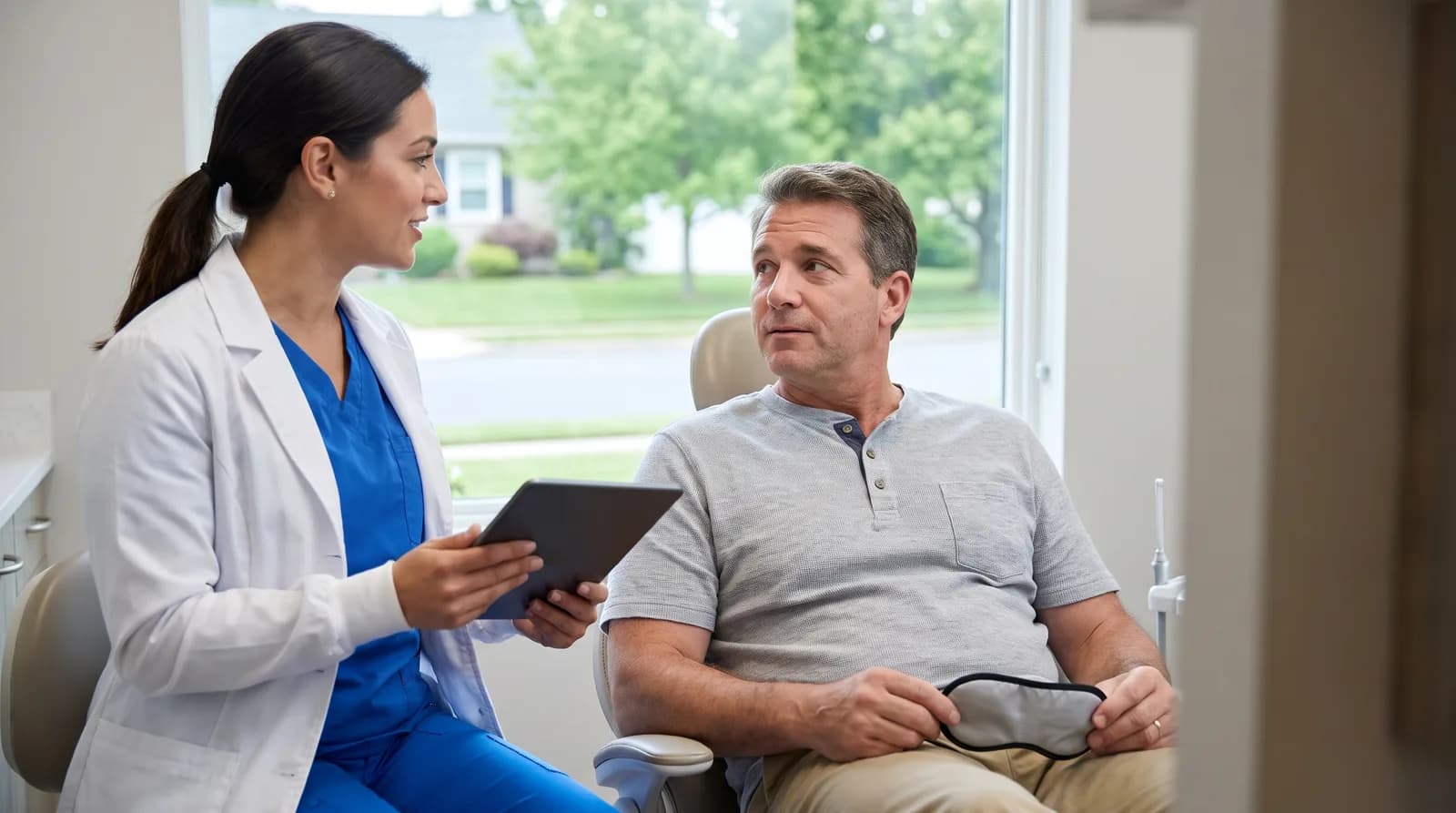
Signs of sleep apnea dentist exams can reveal are clues, not a diagnosis, because only a sleep study confirms sleep apnea. Those clues often have little to do with teeth. At Elia Family Dental in Wall Township, Dr. Nicole Elia fits custom sleep apnea oral appliances once a physician has made the diagnosis.
Many people go years without knowing. The breathing pauses happen while you sleep, so nobody sees them but a bed partner. That's why a routine dental visit, where someone actually looks at your mouth and asks about your health, can be a useful nudge.
This guide explains which signs matter, what a dentist can and can't tell you, and when to ask for a sleep study. It's general education only, and a physician makes the diagnosis.
Noticed Loud Snoring or Constant Tiredness?
Mention it at your next visit. Dr. Elia can talk through your symptoms and what to ask your physician about testing.
Book Appointment →Sleep apnea causes repeated pauses in breathing during sleep, and its signs range from loud snoring and gasping to dry mouth and daytime tiredness. According to the National Heart, Lung, and Blood Institute, you may not know you have these symptoms until someone tells you.
The NHLBI separates the signs into two groups. While you sleep:
And the ones you may notice yourself, while awake:
Notice how ordinary most of these sound. That's the problem. Tiredness gets blamed on a busy week, and snoring gets joked about. When several signs show up together, though, they deserve a real conversation with a healthcare provider.
Symptoms also differ between men and women, according to the NHLBI. Loud snoring is more common in men, while fatigue, headaches and insomnia are more common in women. That's why your description and a partner's description can both matter.
A dentist may notice clues such as dry mouth, worn tooth surfaces, a scalloped tongue, or a narrow airway during a routine exam. These are signals, not a diagnosis. They simply tell your dentist that a conversation about your sleep is worth having.
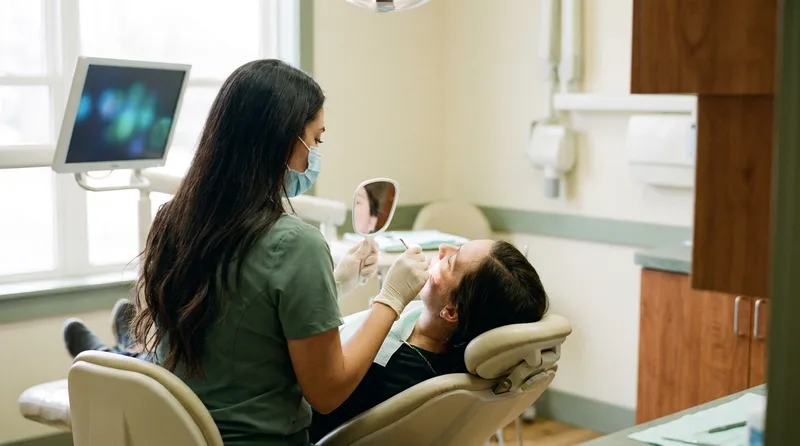
None of these proves sleep apnea. Worn teeth can come from many causes, and a dry mouth has plenty of others. What matters is the pattern, combined with what you and your bed partner describe.
Why would a dentist look at all? The mouth and throat sit at the start of the airway, so the tongue, jaw and soft tissues a dentist sees every visit can offer hints about how much room the airway has. That doesn't make a dentist a sleep doctor. It makes a dentist a good first set of eyes.
Your dentist also asks about your health history, and sleep belongs in that conversation. If you snore loudly or wake up exhausted, say so. It's one of the most useful things you can share.
No, snoring isn't always a sign of sleep apnea, but frequent loud snoring is one of the symptoms the NHLBI lists, especially when it comes with gasping or daytime sleepiness. The combination matters more than the noise itself.
Sleep position, nasal congestion and evening alcohol can all make snoring louder on a given night. One noisy night proves little, while months of loud snoring with tiredness is worth testing.
Occasional snoring after a cold or a late dinner is common. What changes the picture is the pattern. If it's frequent, loud and paired with tiredness, treat it as a reason to ask questions.
No, a dentist can't diagnose sleep apnea. Diagnosis takes a sleep study, usually arranged through a physician or sleep specialist, and only that testing shows which type of sleep apnea you have and how serious it is.
The NHLBI explains that your healthcare provider starts by asking about your symptoms, risk factors and family history. They may then send you to a sleep specialist or a sleep center for a study. They may also order other tests, since other medical conditions can cause sleep apnea.
So what does a dentist add? Awareness, mostly. A dentist can notice clues, ask the right questions and encourage you to talk with your physician about testing. Once you have a diagnosis, a dentist trained in oral appliance therapy can help with treatment.
That division of roles protects you. A dentist who claims to diagnose sleep apnea is overstepping, and a dentist who ignores obvious signs is missing a chance to help.
A routine dental exam matters because it puts a trained set of eyes in your mouth on a regular schedule, with a health history alongside. According to the American Dental Association, regular dental visits can catch 80% of oral health issues before they become serious.
Americans who see a dentist regularly are also 60% less likely to lose teeth, according to the Journal of Dental Research. Regular visits build a baseline, so a change in your mouth or your health stands out. The ADA's MouthHealthy guide to dental visits explains what to expect.
Not sure how often to come in? Our guide to how often you should get your teeth cleaned gives a straight answer. For most adults, steady visits mean someone is paying attention long enough to notice when something changes.
There's a practical side too. A dentist who has seen your teeth across several visits can tell when wear or dryness is new. Without that history, a single exam only shows one snapshot.
Get a sleep study when you have symptoms such as loud snoring, gasping or daytime sleepiness, or when a partner notices your breathing starts and stops. The NHLBI advises talking with your healthcare provider about your symptoms, since you may need a sleep study to diagnose the condition.
The NHLBI also suggests that a sleep diary can help. Track how long and how well you sleep, plus how sleepy you feel during the day. Those details give your provider a fuller picture.
Don't wait for symptoms to get severe. Daytime sleepiness affects driving, work and mood, and the NHLBI notes it can lead to problems with learning, focusing and reacting. If tiredness is already affecting your day, that alone is a good reason to ask about testing.
A sleep study can show which type of sleep apnea you have and how serious it is, according to the NHLBI. That result drives every treatment decision that follows.
Tell your dentist about snoring, gasping, daytime tiredness, headaches and dry mouth, plus anything your bed partner has noticed. Specific details help far more than a general worry, and they give your dentist and physician something concrete to work with.
Think of it like describing a car noise to a mechanic. "Something sounds off" gets you nowhere. "A rattle at low speeds, mostly in the morning" gets you answers. Your sleep symptoms work the same way.
Bring your bed partner's observations if you can. A short note like "snores loudly most nights and stops breathing twice during the night" is more useful than "sleeps badly." If your partner can't come, ask them to write it down.
Mention your medicines and health conditions, too. The NHLBI notes that providers ask whether you use medicines, such as opioids, that could affect your sleep or cause breathing symptoms. A complete picture helps every provider you see.
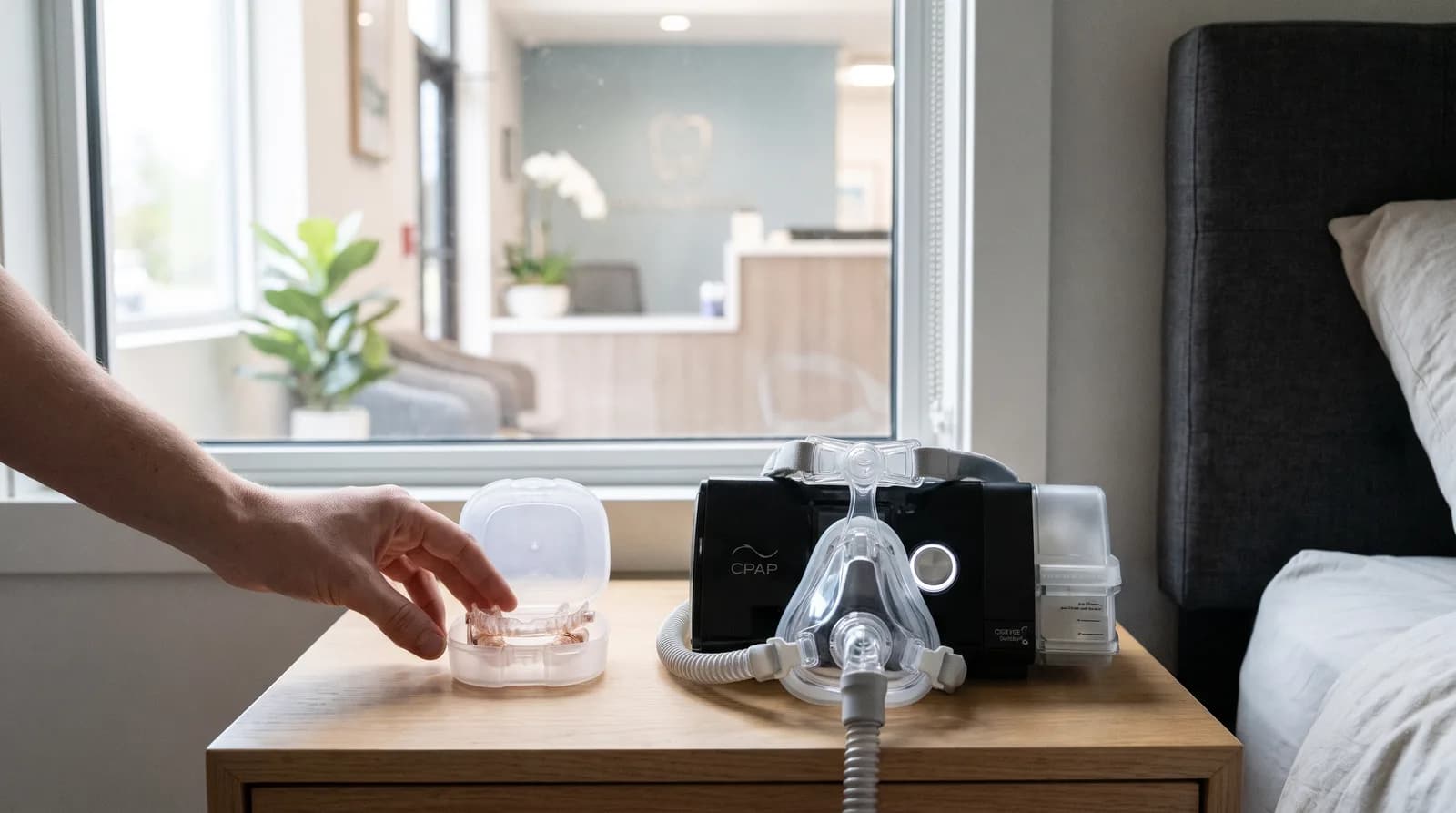
After a diagnosis, treatment options include lifestyle changes, a PAP machine such as CPAP, and oral appliances, depending on your results. The NHLBI calls a PAP machine the most common treatment, and your healthcare provider helps match the option to your sleep apnea.
| Option | What it is | Worth knowing |
|---|---|---|
| Lifestyle changes | Lifelong healthy habits your provider may discuss | Often part of the plan alongside a device |
| CPAP | A machine that provides constant air pressure through the mouth and/or nose | The most common treatment, per the NHLBI |
| Oral appliance | A mouthpiece that holds the lower jaw to keep the airway open | Fitted by a dentist, often considered for mild to moderate OSA |
If CPAP feels like too much, you're not alone. Our comparison of a sleep apnea oral appliance vs CPAP covers comfort, noise and travel in detail. The key point: the best treatment is the one you'll use every night, chosen with your physician.
Lifestyle changes deserve more credit than they get. The NHLBI notes that after a diagnosis your provider may talk with you about making lifelong healthy lifestyle changes. Those changes can work alongside a device rather than replace it.
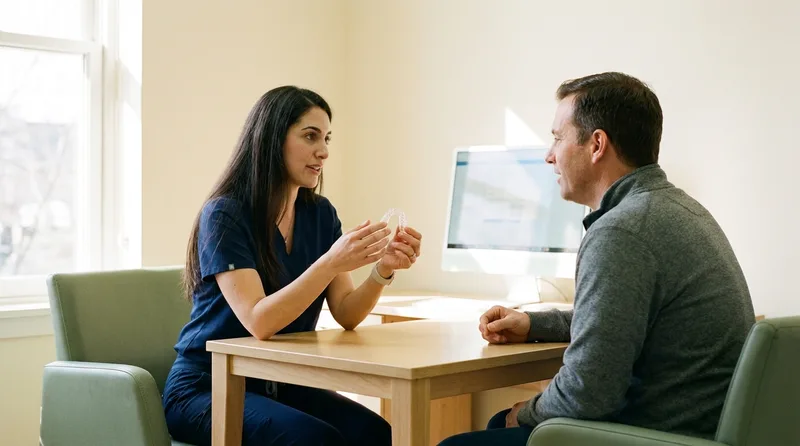
Oral appliance therapy fits in after your diagnosis: Dr. Elia fits a custom, silent, travel-friendly appliance for patients with mild to moderate sleep apnea, especially when CPAP isn't working. The consultation starts with your diagnosis, symptoms and CPAP history.
Insurance is a fair question. Elia Family Dental accepts Delta Dental, Blue Cross Blue Shield, Cigna, Principal and most PPO plans, and verifies your coverage before treatment begins. Sleep studies are usually a medical service, and some plans treat appliances as a medical benefit, so bring both insurance cards.
The signs of sleep apnea dentist visits can surface are only the starting point. A sleep study confirms the diagnosis, and a physician guides treatment. If an oral appliance fits your case, Dr. Elia can take it from there.
Results may vary. Please consult with your dentist at Elia Family Dental for personalized treatment recommendations.
Ready to Talk About Better Sleep?
Book an appointment with Elia Family Dental and Dr. Elia will review your symptoms and diagnosis.
Book an Appointment →Prefer to talk it through first?
Call 732-681-8604 →Written By
Lead Dentist
Crown fell off what to do: save the crown, protect the tooth, skip the superglue and call early. Same-day emergency care in Wall Township, NJ.
Root canal vs extraction: compare saving your tooth with removing it, plus healing, replacement options and cost. See how Dr. Elia helps you decide.
Sleep apnea oral appliance vs CPAP: compare comfort, noise and travel, and see who each suits. Learn how Dr. Elia fits a custom appliance in Wall Township.
Book your visit with Dr. Elia online or call us, and we'll take it from there.