Emergency Dental Care
Crown Fell Off What to Do: A Calm First-Hour Guide
Crown fell off what to do: save the crown, protect the tooth, skip the superglue and call early. Same-day emergency care in Wall Township, NJ.
Oct 28, 202610 min read

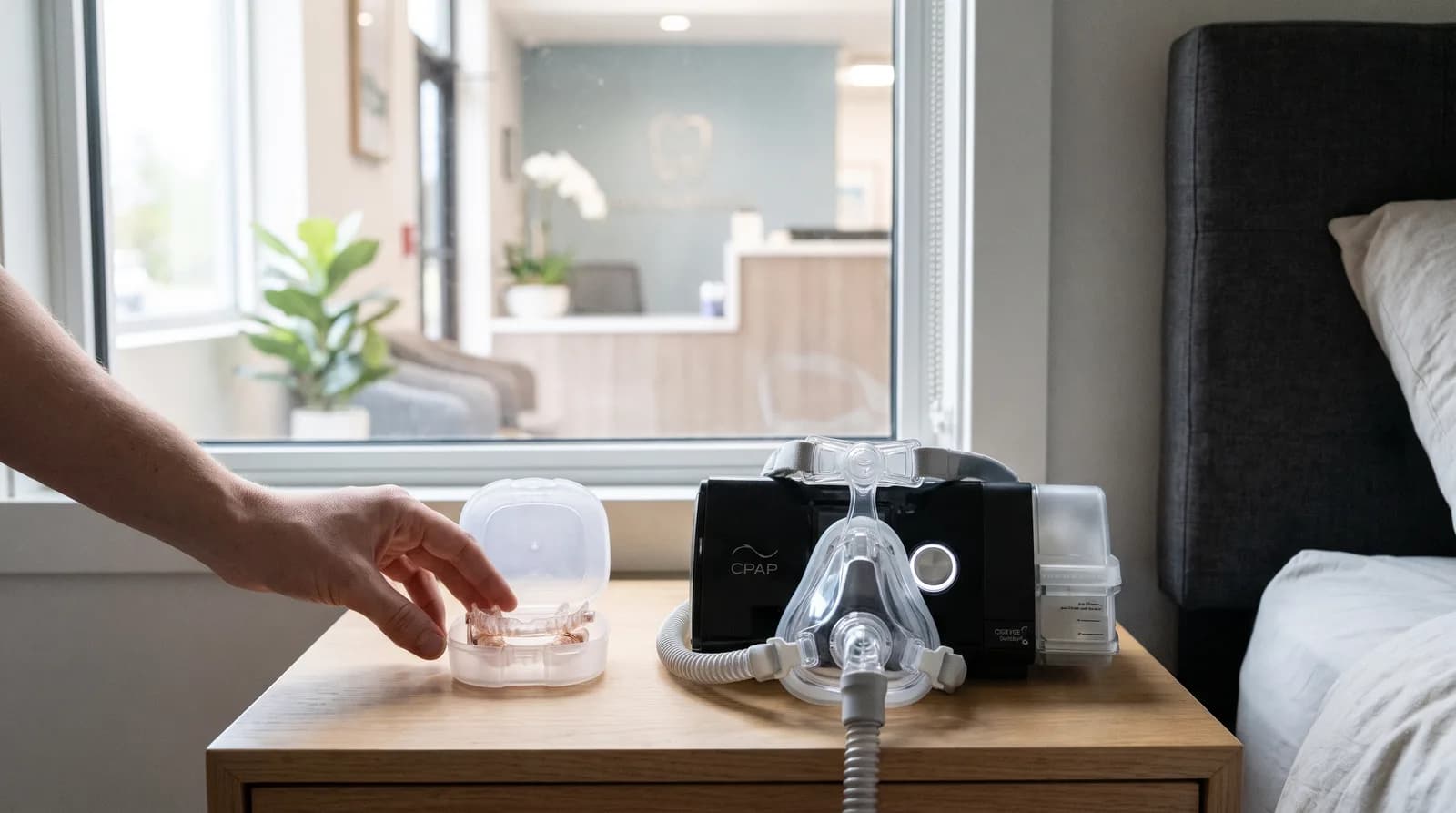
Sleep apnea oral appliance vs CPAP is a choice that comes down to one question: which treatment will you actually wear every night? At Elia Family Dental in Wall Township, Dr. Nicole Elia fits custom sleep apnea oral appliances for patients who can't get comfortable with a mask and hose.
Picture a typical night. You strap on the mask, the hose tangles around your arm, and the machine hums until, around 2 a.m., you take the mask off and set it on the nightstand. That story is common. It matters, because sleep apnea treatment only works on the nights you use it.
This guide compares the two options side by side, explains who an oral appliance suits, and shows how Dr. Elia fits one. It's general education only, and a sleep physician makes the diagnosis.
Struggling With CPAP? Ask About an Oral Appliance
Bring your sleep study results and CPAP history, and Dr. Elia will tell you honestly whether an oral appliance could fit your case.
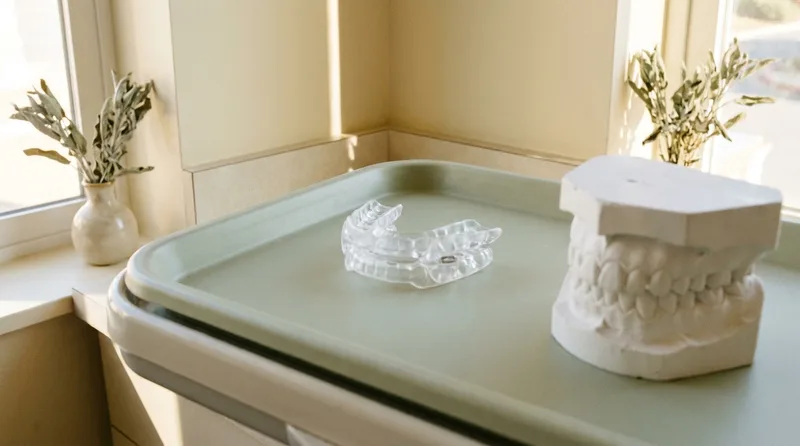
Book Appointment →A sleep apnea oral appliance is a custom mouthpiece worn at night that positions your lower jaw to keep the airway open. According to the National Heart, Lung, and Blood Institute, these devices keep the jaw from sliding backward and blocking the upper airway while you sleep.
Obstructive sleep apnea (OSA) causes repeated pauses in breathing during sleep. The NHLBI lists frequent loud snoring, gasping, daytime sleepiness, dry mouth and headaches among the signs. Many people don't know they have them until a partner mentions it. Over time, untreated OSA is linked to serious health risks such as heart disease and stroke.
Dr. Elia builds each appliance around you. Here's what sets this option apart:
That scan is the same technology behind our guide to iTero 3D scanning without goopy impressions.
The principle is the same for every appliance: a steady jaw position keeps the airway open. Dr. Elia positions the jaw for your anatomy at the fitting visit, then checks the result at follow-up.
CPAP delivers constant air pressure through a mask, while an oral appliance repositions your jaw with no machine at all. The NHLBI calls a PAP machine the most common sleep apnea treatment, so the real comparison is about comfort, noise, and how easily you'll use it every night.
| Feature | CPAP | Custom oral appliance |
|---|---|---|
| How it works | Constant air pressure through a mask | Positions your lower jaw to keep the airway open |
| Noise | Machine and airflow sounds | Completely silent |
| Hoses and power | Hose, mask and a power source | None, with no motor or hoses |
| Travel | Machine and accessories to pack | Compact and travel-friendly |
| How it is fitted | Mask fitting and pressure settings | Custom-made from an iTero 3D scan |
| Best known for | The most common treatment, per the NHLBI | Mild to moderate OSA, or trouble using CPAP |
Notice what's missing from the table: a winner. CPAP has the longer track record and remains the first choice for many people, especially with more severe sleep apnea. An oral appliance earns its place when comfort is the reason treatment stops. The best option is the one that keeps your breathing steady all night, every night.
Frequent travelers feel the difference first. A compact appliance fits in a small case, with nothing to plug in.
Upkeep differs too. CPAP means ongoing supplies and cleaning a mask, tubing and machine. An appliance is a single custom device, cleaned and stored in a case, though it still needs periodic checkups.
Some people struggle with CPAP because the mask, hose and constant airflow can feel confining, noisy or awkward to travel with. Sleep apnea treatment only works on the nights you use it, so comfort matters as much as effectiveness.
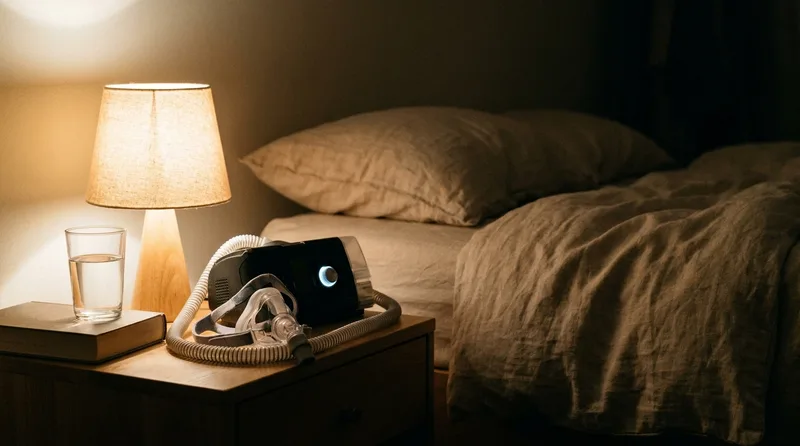
The common frustrations are easy to recognize:
Before you give up, talk to your sleep physician. Mask style, fit and settings can often be adjusted, and some patients do better after changes. If CPAP still isn't working, that history becomes useful information for an oral appliance consultation.
Don't just stop on your own. Untreated sleep apnea keeps breathing interrupted all night.
The cost of quitting is real. Skipped nights mean the airway can collapse repeatedly, and the daytime sleepiness the NHLBI describes can return. That's why a comfortable alternative, chosen with your physician, deserves a serious look.
For many people, yes, because an oral appliance is silent, needs no power, and travels in a small case. Those details sound minor until you're packing for a trip or sharing a bedroom with a light sleeper.
Take a salesperson who flies twice a month. A mask, hose and machine mean an extra bag and a hunt for an outlet in every hotel room. A compact appliance case slides into a jacket pocket.
Comfort still takes some adjustment, which is why follow-up visits are built into the process. Dr. Elia fine-tunes the fit as your needs change, so small annoyances get fixed instead of ignored.
None of this replaces medical guidance. If your physician recommends CPAP for your severity, an appliance isn't a substitute, and convenience only matters if the treatment controls your breathing.
A good candidate has a sleep apnea diagnosis from a physician, mild to moderate obstructive sleep apnea, and trouble using CPAP. Dr. Elia reviews your diagnosis, symptoms and CPAP history at your consultation to decide whether an oral appliance is the right fit.
An appliance relies on your teeth and jaw, so Dr. Elia checks your oral health first. Gum problems or loose teeth may need attention before an appliance is fitted.
Those checks matter more than you might think. Nearly 1 in 4 adults in the US has untreated tooth decay, according to the CDC's National Center for Health Statistics, and 42% of adults aged 30 and older have some form of periodontal disease, according to CDC 2024 data.
Dr. Elia offers this therapy as a clinically proven option for mild to moderate OSA. Severe sleep apnea is a different conversation, which brings us to CPAP.
CPAP is often the better choice when your sleep physician recommends it, which commonly applies to more severe sleep apnea. An oral appliance isn't a shortcut around a diagnosis, and your sleep study results should guide the decision, not preference alone.
According to the NHLBI, diagnosis involves a sleep study, often arranged through a sleep specialist. That specialist can match treatment to severity. Dr. Elia works alongside your physician's recommendations, not around them.
The NHLBI also notes that lifestyle changes may be part of treatment after a diagnosis. Ask your physician what else could help alongside any device, whether that's CPAP, an oral appliance or both over time.
Think of it as a partnership. Your physician owns the diagnosis and the overall treatment plan, while a dentist handles the fitting, adjustment and follow-up of an appliance. When both sides share information, you get more consistent care.
Bring these questions to your next sleep appointment:
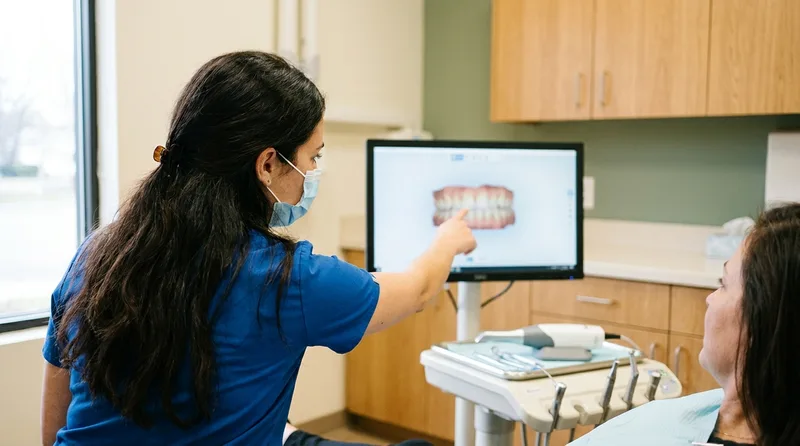
Fitting a custom oral appliance takes five steps: consultation, digital impressions, custom fabrication, fitting and adjustment, and follow-up. Dr. Elia guides each one, from reviewing your diagnosis to confirming the appliance does its job over time.
Nothing about this is rushed. Each visit has a clear purpose, and you'll know what comes next before you leave.
The iTero scan makes the process more comfortable and more precise than putty. It captures your upper and lower teeth digitally, so the appliance is crafted to their exact contours rather than a rough mold.
Plan on a few visits rather than one. Fitting, adjustment and follow-up are separate steps for a reason, because a good fit usually takes some fine-tuning.
Expect an adjustment period while your mouth gets used to the appliance, plus return visits so Dr. Elia can confirm the fit and fine-tune it. Tell the office about any jaw soreness or bite changes, because small adjustments often solve them.
Track a few things so your follow-up visits are productive:
Your sleep physician may also order a follow-up sleep study to confirm the appliance is controlling your breathing. That objective check matters more than how you feel.
Keep up with regular checkups, too. According to the American Dental Association, regular dental visits can catch 80% of oral health issues before they become serious, and the ADA's MouthHealthy guide to dental visits explains what to expect. Americans who see a dentist regularly are also 60% less likely to lose teeth, according to the Journal of Dental Research. That matters when your appliance depends on healthy teeth.
Not sure how often to come in? Our guide to dental checkup frequency for adults gives a straight answer.
Coverage varies by plan, so the safest step is having the office check your benefits before treatment begins. Elia Family Dental accepts Delta Dental, Blue Cross Blue Shield, Cigna, Principal and most PPO plans, and verifies your coverage up front.
Some plans treat sleep apnea appliances as a medical benefit rather than a dental one. Bring your medical insurance card along with your dental card. We don't accept HMO, Medicaid or Medicare plans, so call us if you're unsure which category your plan falls into.
Financing is available through Sunbit and CareCredit, and Sunbit doesn't require a hard credit check. At your consultation, bring:
The sleep apnea oral appliance vs CPAP decision isn't about which device is trendier. It's about which one you'll keep wearing, with a diagnosis and a physician's guidance behind it. If CPAP isn't working for you, an appliance fitted by Dr. Elia may be the quieter, easier path to restful sleep.
Bring your sleep study results and CPAP history to a consultation, and Dr. Elia will tell you honestly whether an oral appliance fits your case.
Results may vary. Please consult with your dentist at Elia Family Dental for personalized treatment recommendations.
Ready to Talk About Better Sleep?
Book an appointment with Elia Family Dental and Dr. Elia will review your diagnosis and CPAP history.
Book an Appointment →Prefer to talk it through first?
Call 732-681-8604 →Written By
Lead Dentist
Crown fell off what to do: save the crown, protect the tooth, skip the superglue and call early. Same-day emergency care in Wall Township, NJ.
Root canal vs extraction: compare saving your tooth with removing it, plus healing, replacement options and cost. See how Dr. Elia helps you decide.
Signs of sleep apnea dentist exams can reveal, from dry mouth to worn teeth. Learn when to get a sleep study and how oral appliances can help.
Book your visit with Dr. Elia online or call us, and we'll take it from there.