Orthodontics
Invisalign Lisp: How Long Does It Last and What Helps?
Invisalign lisp is common and often temporary. See what studies say about how long it lasts, what helps and when to call Elia Family Dental, Wall Township.
Nov 8, 202612 min read


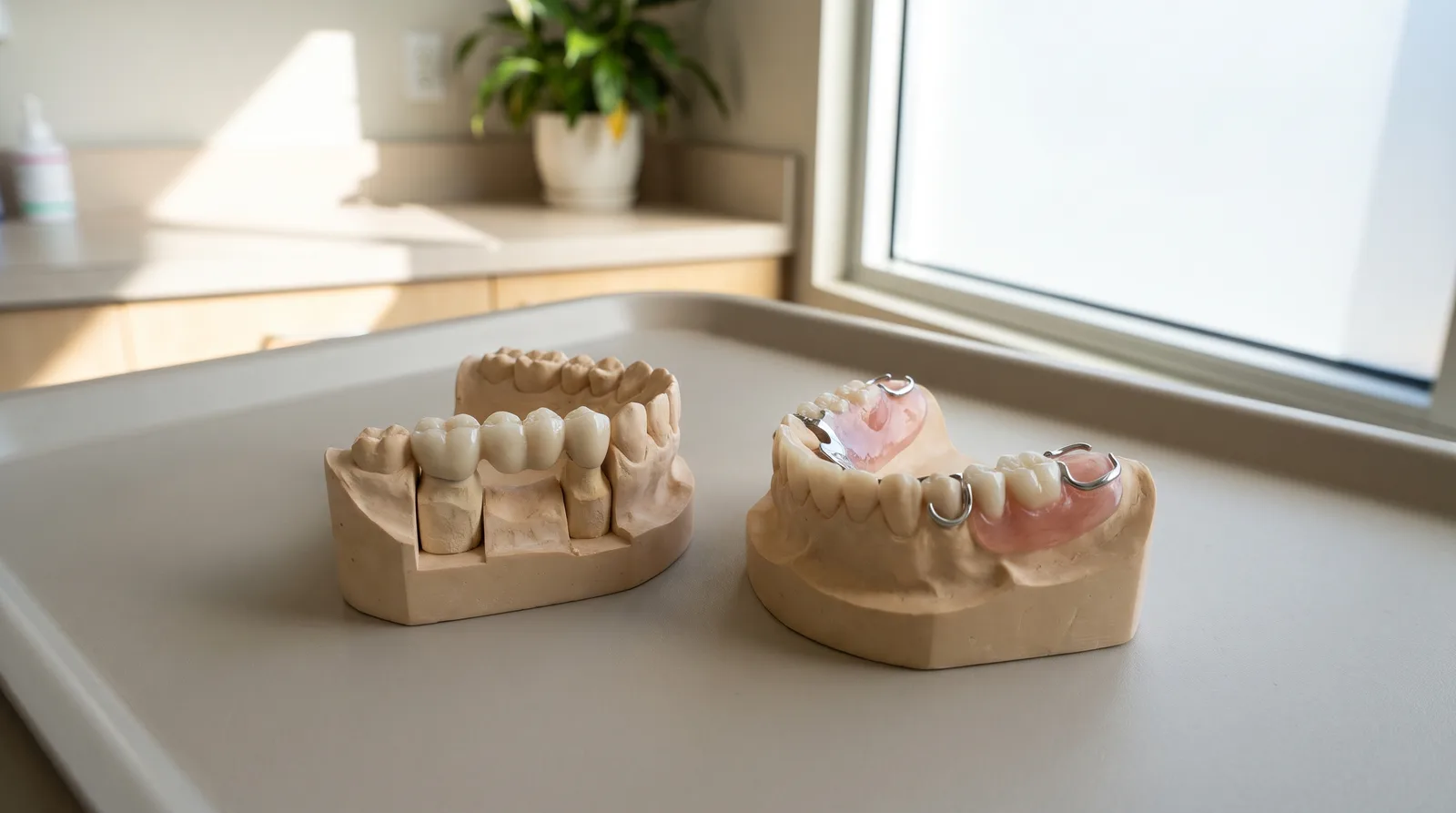
Bridge vs partial denture is really a choice between a replacement that stays in your mouth and one you take out every day, and the right answer depends on your remaining teeth, your gums and your routine. Both replace missing teeth without surgery. Elia Family Dental's restorative dentistry includes bridges and dentures, so Dr. Elia can explain both after an exam.
If you've lost a tooth or two, you may have heard both terms and wondered which one fits. The ADA describes a bridge as a fixed partial denture that replaces missing teeth and literally "bridges" the gap. It also notes that, unlike a removable bridge you can take out and clean, a fixed bridge can only be removed by a dentist. That one difference changes how each option is held, cleaned and adjusted.
This guide explains how each option works, what each asks of your remaining teeth, how they compare day to day and how to decide. It's general education only, and your dentist can tell you which option fits your mouth after an exam and X-rays.
Missing a Tooth and Not Sure Which Option Fits?
Book a consultation and Dr. Elia will examine your teeth and gums, explain your options and give you clear timelines and costs.
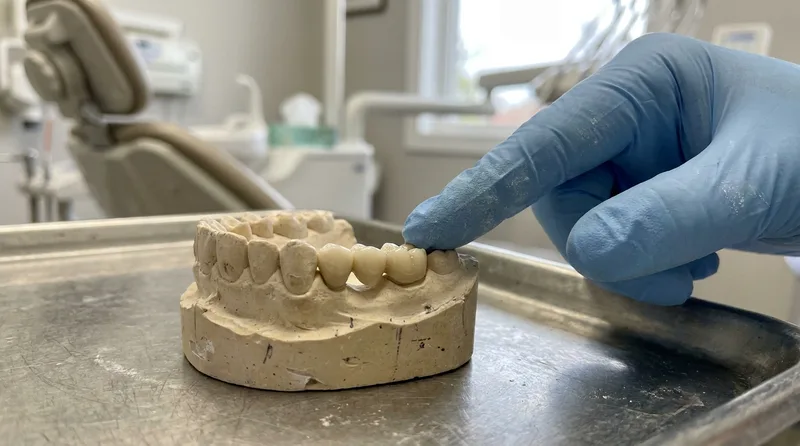
Book Appointment →A fixed bridge replaces missing teeth by attaching artificial teeth to the natural teeth around the gap, literally bridging the space. The ADA notes that bridges can be made from gold, alloys, porcelain or a combination of these, and that only a dentist can remove a fixed bridge.
A fixed bridge is sometimes called a fixed partial denture. It has artificial teeth in the gap and is attached to the surrounding teeth for support, which means those teeth act as the foundation. The ADA is direct about what that implies: the success of a bridge depends on that foundation, so it's very important to keep your remaining teeth healthy and strong.
The ADA also describes an implant bridge, which attaches the artificial teeth directly to the jaw or under the gum tissue instead of relying on neighboring teeth. That's a different kind of treatment, and our guides to dental bridge vs implant and dental implants vs bridge cover it in depth. This article stays with the two non-implant options.
Planning starts with an exam, digital X-rays and a close look at the teeth on both sides of the gap. At Elia Family Dental, iTero 3D scanning means no goopy impression molds, and the visit begins with thorough numbing so you stay comfortable. For a closer look at how a bridge differs from a single crown, see dental crown vs bridge: the real difference.
A removable partial denture usually consists of replacement teeth attached to a gum-colored plastic base, often with a metal framework and clasps that connect to your natural teeth. You can take it out and put it back yourself, and some are made with precision attachments instead of clasps.
The ADA's page on removable partial dentures says your dentist designs the partial denture for your needs. Precision attachments are generally more esthetic than clasps, and partial dentures with precision attachments generally cost more than those with clasps. Crowns on your natural teeth are sometimes needed to improve the fit, and they're usually required with precision attachments, so it's worth asking early what your design would involve.
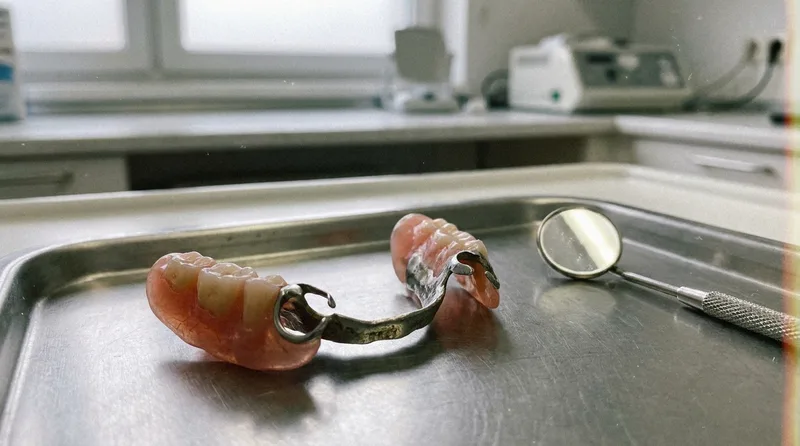
Cleveland Clinic explains that partial dentures may be an option if you're missing several or most of your teeth in one or both jaws. They rely on your gums and underlying bone for support, and special clasps hook around your remaining natural teeth for additional stability. Your dentist will tell you whether a partial denture, a bridge or something else fits the pattern of teeth you're missing.
For people who have lost all of their teeth, the ADA describes conventional, immediate and overdenture types of dentures, and our guide to dentures vs dental implants explains how those compare with implants. A partial denture sits at the other end of that range, replacing some teeth while your natural teeth stay in place.
Both options lean on your remaining teeth. A fixed bridge uses the teeth beside the gap as its foundation, and a partial denture's clasps hold onto teeth on each side, so weak, decayed or gum-diseased teeth can limit either choice. Your dentist will check them first.
That matters because gum disease and decay are common. An estimated 42% of dentate US adults aged 30 or older have periodontitis, according to an analysis of national survey data from 2009 to 2014 by CDC researchers, published in the Journal of the American Dental Association. Separately, 20.5% of dentate adults aged 20 to 64 have untreated tooth decay, according to the CDC's 2024 Oral Health Surveillance Report. That's why any bridge vs partial denture comparison starts with the health of your teeth and gums.
If your teeth or gums need attention, that usually comes first. Gum treatment, fillings or root canals may be needed before a bridge or partial denture, and our guide to the stages of gum disease treatment explains what gum care can involve. The ADA's pages on gum disease and cavities explain how each develops and how it's treated.
A good plan treats preparatory steps as part of the timeline and the cost, not as surprises. The ADA notes that crowns on natural teeth are sometimes needed to improve the fit of a removable partial denture, so even that option can involve work on the teeth around the gap. Your exam will show which of your teeth are strong enough to act as a foundation or to carry clasps, and which need work first.
Day to day, the biggest difference is that a fixed bridge stays in place while a partial denture comes out for cleaning and, usually, at night. A partial may feel awkward or bulky at first, which the ADA calls normal, and your dentist adjusts it if any spot becomes sore.
| Feature | Fixed bridge | Removable partial denture |
|---|---|---|
| Fixed or removable | Fixed. Only a dentist can remove it | Removable. You take it out and put it back |
| How it is held | Attached to the surrounding teeth for support | Metal framework and clasps connect to your teeth, or precision attachments are used |
| What it depends on | The foundation: healthy, strong teeth beside the gap | Teeth that can carry clasps or attachments, plus a well-fitting base |
| Getting used to it | Ask your dentist what to expect in your case | May feel awkward or bulky at first, which the ADA calls normal |
| Adjustments | Checked at follow-up visits | Your dentist adjusts it if a spot becomes sore |
| Daily care | Cleaned in place with your remaining teeth | Cleaned outside the mouth and usually taken out at night |
Practice is part of the process. The ADA says inserting and removing a partial denture takes practice, it should fit into place with relative ease, and you should never force it into position by biting down, because that could bend or break the clasps. If certain words are hard to pronounce, practice reading out loud and repeat the words that give you trouble, and over time you'll become accustomed to speaking with it.
Your dentist may ask you to wear the partial denture all the time at first. That can be uncomfortable, but the ADA calls it the quickest way to find areas that need adjustment, because if the denture puts too much pressure on one spot, that spot becomes sore and your dentist can adjust the fit. Start with soft foods cut into small pieces, chew on both sides of your mouth and avoid very sticky or hard foods. The ADA adds that saliva flow may temporarily increase with new dentures and that follow-up appointments are generally needed. Our guide to adjusting to new dentures in the first month covers the early weeks.
A fixed bridge has its own adjustment period, which your dentist will go over with you, and it's checked at follow-up visits like any other restoration. It's worth asking what the first few weeks are likely to feel like in your case, so nothing about the process catches you off guard.
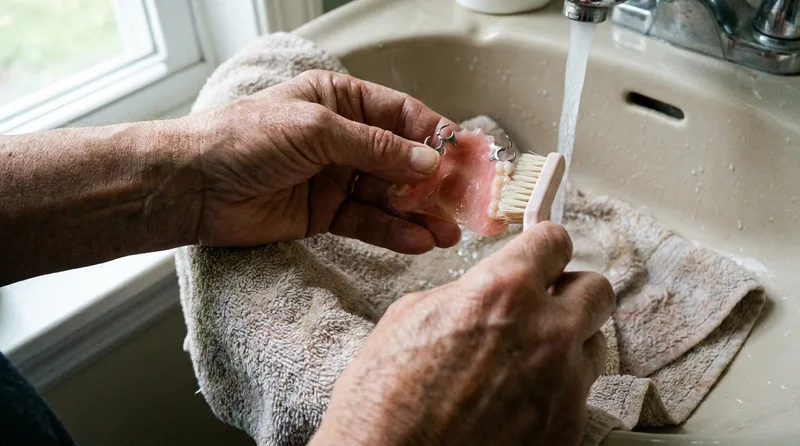
A partial denture is cleaned outside your mouth every day, while a fixed bridge is cleaned in place along with your remaining teeth. For a partial, use a denture cleaner your dentist recommends, ideally one with the ADA Seal of Acceptance, and don't use toothpaste, which can be too harsh.
The ADA suggests standing over a folded towel or a sink of water while you clean a partial denture, in case you drop it. It also notes that dentures should be kept in a safe place covered in water when you're not wearing them, so they don't warp, and that after adjustments your dentist will probably recommend taking the partial out before bed and putting it back in the morning. Your dentist can recommend cleansers that suit your appliance.
A fixed bridge can't be taken out, so the cleaning happens in your mouth, and the ADA's reminder is the important one: its success depends on its foundation, so keeping your remaining teeth healthy and strong is the real job. Your dentist or hygienist can show you how to clean around and under it. Regular professional cleanings help, and our guide to how often to get your teeth cleaned explains how to choose a schedule.
With either option, regular checkups matter. About 65.5% of US adults had a dental exam or cleaning in the past year, according to CDC data for 2023. The dentist can check that a partial still fits properly and that the teeth supporting a bridge or holding clasps are staying healthy. If a denture or partial stops fitting well or becomes damaged, the ADA advises contacting your dentist.
In a bridge vs partial denture decision, neither option is better for everyone. A fixed bridge is often considered when the teeth beside a gap are healthy and strong, while a partial denture can be an option when a bridge isn't possible, for example when there are no suitable teeth next to the gap.
Whatever you choose, you're far from alone. An estimated 120 million people in the United States are missing at least one tooth, according to the American College of Prosthodontists, so this is a decision many people face. The goal isn't to pick the option that sounds best on paper. It's to pick the one your teeth, gums and daily routine can support for the long term.
Implants are a third path. Our guides on bridges vs implants, dentures vs implants, implant-supported overdentures and mini dental implants for dentures explain how they compare when you want to weigh a removable appliance against an implant-based one. The ADA's page on dental implants is a good neutral place to start reading.
Ask which teeth would support each option, what preparatory work is needed, how long each takes and how it would be adjusted over time. Getting the answers in a written plan lets you compare a bridge and a partial denture fairly.
Coverage varies by plan, and many plans have a yearly maximum. Elia Family Dental accepts Delta Dental, Blue Cross Blue Shield, Cigna, Principal and most PPO plans and verifies your coverage before treatment begins. Sunbit and CareCredit offer monthly payment plans, and Sunbit doesn't require a hard credit check. Our comparison of CareCredit vs Sunbit explains the difference. We don't list dollar amounts here, because the right price depends on your plan.
If your plan involves several teeth, our guide to full mouth restoration cost explains what moves the total. Be wary of any quote that skips the exam. A fair comparison needs the same level of detail for each option, and a good office is comfortable if you take the plan home and come back with questions.
The first step is an exam with digital X-rays, so Dr. Elia can check the teeth and gums around the gap and explain which options are realistic for you. You leave with clear choices, timelines and costs, and there's no obligation to proceed.
Bring your questions and, if you have them, your insurance details and any past X-rays. Mention anything that worries you, whether it's cost, comfort or how long treatment will take. Elia's team uses thorough numbing and gentle techniques, and will walk you through each step.
If your gums need attention first, our periodontist is in the same office, so treatment can be planned together from the same scans. You'll leave knowing which of your teeth are strong enough to support a replacement, what preparatory care is needed and how each option would work day to day.
That's more useful than any answer over the phone, and it's the only honest way to settle bridge vs partial denture for your own mouth.
Results may vary. Please consult with your dentist at Elia Family Dental for personalized treatment recommendations.
Ready to Compare Your Options?
Book a consultation with Elia Family Dental and Dr. Elia will help you choose between a bridge and a partial denture, with clear timelines and costs.
Book an Appointment →Prefer to talk it through first?
Call 732-681-8604 →Written By
Lead Dentist
Invisalign lisp is common and often temporary. See what studies say about how long it lasts, what helps and when to call Elia Family Dental, Wall Township.
Invisalign not fitting? Learn what's normal with a new set, how chewies help and when to call Elia Family Dental in Wall Township, NJ.
Does teeth whitening work on crowns? Learn why crowns, veneers and fillings keep their shade and how to plan around them in Wall Township, NJ.
Book your visit with Dr. Elia online or call us, and we'll take it from there.