Orthodontics
Invisalign Lisp: How Long Does It Last and What Helps?
Invisalign lisp is common and often temporary. See what studies say about how long it lasts, what helps and when to call Elia Family Dental, Wall Township.
Nov 8, 202612 min read


Does teeth whitening work on crowns? No. Whitening changes the color of natural teeth, but it won't change a crown, a veneer or a filling, so those can end up looking darker than your newly brightened teeth. Elia Family Dental offers professional teeth whitening, and the plan starts with a shade check.
The ADA is clear on this point: whitening will not work on caps, veneers, crowns or fillings. That surprises many patients, and it can be costly if you whiten first and notice the mismatch afterward. This guide explains why it happens, what the ADA says whitening can and cannot do, how to plan the order of treatment and what a dentist can do if a restoration no longer matches.
It's general education only, and your dentist can tell you what to expect after an exam and a shade check.
Planning to Whiten With Crowns, Veneers or Fillings?
Book a consultation and Dr. Elia will check your shade, look at your existing dental work and explain what to expect before you whiten.
Book Appointment →Whitening doesn't work on crowns, veneers or fillings because whitening products bleach natural tooth structure, and these restorations are made of porcelain, composite or other materials. The ADA says whitening products use hydrogen peroxide or carbamide peroxide, and it states that whitening will not work on caps, veneers, crowns or fillings.
The ADA explains that these bleaches break stains into smaller pieces, which makes the color less concentrated and your teeth brighter. Everyday stains, such as coffee, tea and red wine, attach to the outer enamel of your natural teeth. A crown, a porcelain veneer or the tooth-colored material in a filling isn't natural enamel, so there's very little for the bleach to act on, and the shade stays where it was when the restoration was made.
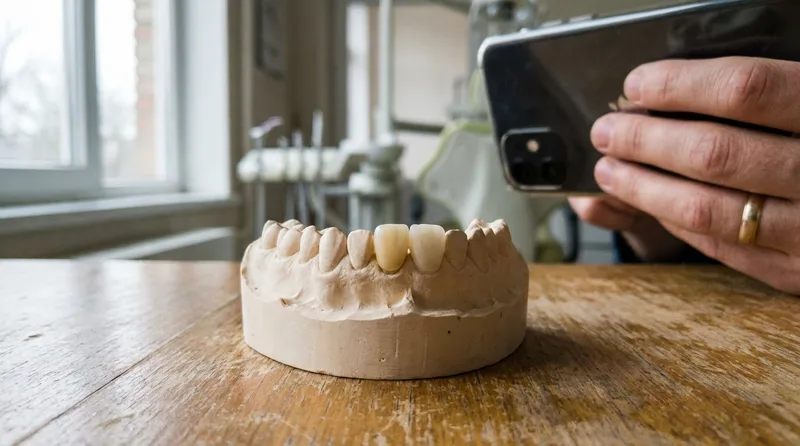
Veneers deserve a closer look. The ADA describes veneers as natural-looking coverings that cover only the front surface of a tooth. Porcelain veneers are strong, long-lasting and natural-looking, while composite veneers are made from a tooth-colored filling material bonded to the tooth, and they're easier to fix if damaged but not as stain- or wear-resistant. Our guide to composite vs porcelain veneers compares the two, and the ADA's page on veneers explains how each is placed.
Crowns follow the same logic. The ADA notes that a crown is a good way to cover teeth that are discolored or badly shaped, and a crown is made in a shade chosen to match your teeth at the time. That shade doesn't brighten later. See the ADA's overview of crowns and our guides to same day dental crowns and crown vs filling for more on how each is used.
The ADA says whitening works best on natural teeth with yellow tones, may not work as well on brown teeth and may not work at all on teeth with gray tones. It also says whitening won't be effective for discoloration caused by medications or a tooth injury, and it can't change caps, veneers, crowns or fillings.
That's why the ADA advises talking to your dentist before you whiten, since whiteners may not correct every type of discoloration. Common causes of change in tooth color include coffee, tea and red wine, tobacco, age as the enamel thins and more of the yellowish dentin shows through, trauma, and certain medications. Knowing the cause helps predict how well a tooth will respond. So when patients ask does teeth whitening work on crowns, the practical answer is that it works on the natural tooth, not the restoration.
Interest in whiter teeth is high. When the American Academy of Cosmetic Dentistry asked people what they'd most like to improve about their smile, the most common response was whiter teeth, and the American Association of Orthodontists found that nearly 90% of patients requested tooth whitening, according to the ADA. Separately, 99.7% of Americans believe a smile is an important social asset, according to the American Academy of Cosmetic Dentistry.
The ADA lists four ways to brighten a smile: stain-removal toothpastes with the ADA Seal of Acceptance, which only lift surface stain and don't change the color of teeth; in-office bleaching, which usually takes one visit; at-home bleaching with custom trays from your dentist; and over-the-counter bleaching. For how Elia's in-office option works, see our guide to GLO teeth whitening.
The simplest way is to ask your dentist to point out every restoration in your mouth, because well-matched crowns, veneers and fillings can be hard to spot by eye. Digital X-rays and your chart show where they are, including the ones that blend in with your natural teeth.
Start by thinking about which teeth people see when you smile. Restorations on your front teeth matter most for color, while fillings on the back teeth may never be visible. The types of dental work that won't change color with whitening are the same ones the ADA names: caps, veneers, crowns and fillings. Tooth-colored composite used for bonding is made from the same kind of material as a composite filling, so ask about it too. Fillings are common: 91% of adults aged 20 to 64 have had dental caries, according to the CDC's National Center for Health Statistics (2011 to 2012 data), and 20.5% have untreated decay, according to the CDC's 2024 Oral Health Surveillance Report.
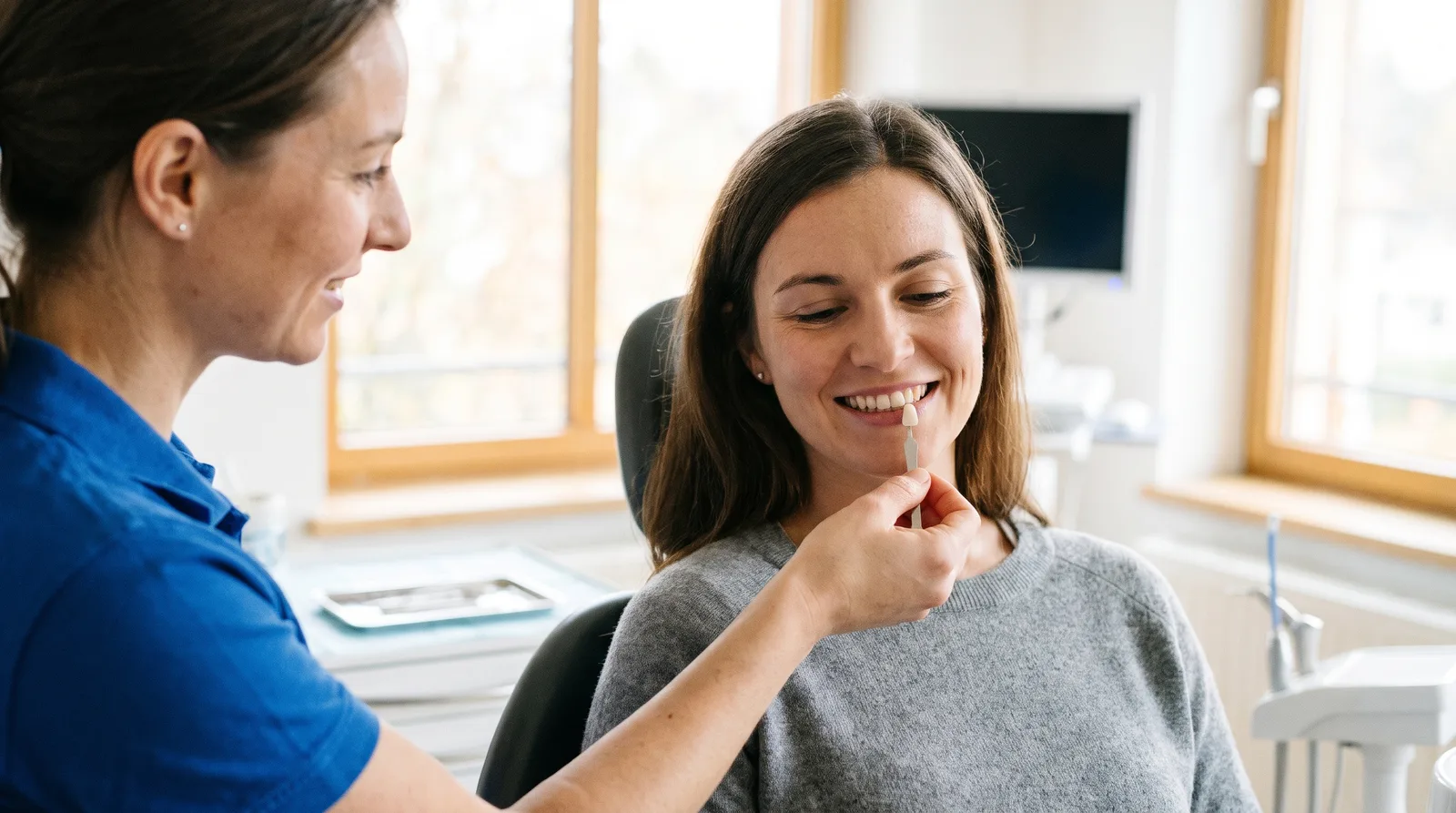
At Elia Family Dental, the first step of whitening is a shade assessment. Dr. Elia checks your starting shade and talks through your goals, so you know what to expect before anything is applied. That's also the moment to ask which of your teeth have work that won't lighten.
The natural teeth get lighter, and the crowns, veneers and fillings stay the same shade, so a restoration can look darker or simply different next to your brighter teeth. The difference is most noticeable on front teeth, where restorations are seen the most.
| What you have | What whitening does | Worth knowing |
|---|---|---|
| Natural enamel | Gets lighter, depending on the cause of the stain | Yellow teeth probably bleach well, brown teeth may not respond as well, gray-toned teeth may not bleach at all |
| Crown or cap | Does not change | Its shade was chosen when it was made |
| Porcelain veneer | Does not change | Strong, long-lasting and natural-looking, per the ADA |
| Composite veneer or filling | Does not change | Not as stain- or wear-resistant as porcelain, per the ADA |
| Stain-removal toothpaste | Lifts surface stain only | It does not change the color of teeth |
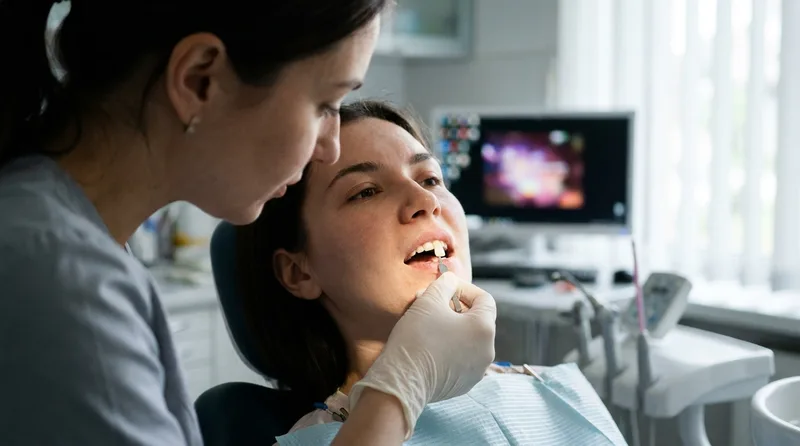
A mismatch isn't an emergency, and it isn't always visible. How much it stands out depends on how far apart the shades are, where the restoration sits and how much of it shows when you smile. That's why a shade check before whitening is useful, and why it helps to understand the order of treatment before you begin. Ask your dentist to show you in a mirror which teeth would stay the same shade, so there are no surprises.
If you're whitening for an event, plan early so nothing has to be redone. Our guide to the whitening timeline before a wedding walks through how to schedule it, and teeth whitening vs veneers helps if you're deciding between brightening your own teeth and covering them.
In most cases, whiten first and then match any new restoration to your final shade. Because whitening can't change a crown, veneer or filling, deciding on whitening before new dental work lets your dentist choose a shade that matches your brightened natural teeth.
The ADA notes that placing a veneer includes picking the best color shade to match your natural teeth, and that your dentist helps you make that decision. If your teeth are going to get lighter, the shade should be picked after that change, not before. If you need a crown, veneer or filling soon, tell your dentist you plan to whiten, and ask how long to wait before the shade is matched.
Elia Family Dental makes restorations in-office with a 3D printer, planned with iTero 3D scanning and made from tooth-colored materials, and a crown is often ready the same day. That can simplify the timing, because a new crown can be made and matched in one visit once your natural teeth are at the shade you want. Our guide to same day dental crowns explains the process.
If you have no restorations and your teeth are simply stained, whitening may be all you need. If you have a mix of stained natural teeth and older work, your dentist may suggest a combination, and our guide to veneers vs crowns explains when each is the better fit.
A dentist can replace a visible crown, veneer or filling so it matches your brighter natural teeth, or leave it alone if the difference is minor. Whether replacement is worthwhile depends on how noticeable the mismatch is, where the restoration sits and how old it is.
Age matters too. Fillings and crowns wear over time, and a restoration that's due for replacement anyway is the easiest one to match. Our guides to how long composite fillings last and how long dental crowns last explain the signs that a restoration may need attention. The ADA's page on cavities notes that over the years, fillings may weaken and tend to fracture and leak around the edges, which is one reason older fillings get replaced.
Cost depends on what you choose. Whitening is usually a cosmetic, out-of-pocket service, and coverage for replacing a restoration varies by plan. Elia Family Dental accepts Delta Dental, Blue Cross Blue Shield, Cigna, Principal and most PPO plans and verifies your coverage before treatment begins. We don't list dollar amounts here, because the right price depends on your plan.
Professional whitening is the safer way to plan around dental work, because your dentist can check your shade and your existing restorations before anything is applied. Elia uses GLO, a heat-and-light system designed to brighten teeth while keeping sensitivity low, and over-the-counter products can't tell a natural tooth from a crown.
The ADA says in-office bleaching usually takes one visit, with the dentist protecting your gums with a gel or a rubber shield. Take-home options from your dentist use custom trays, and the ADA notes that out-of-office bleaching can take anywhere from a few days to a few weeks. Elia's process includes a take-home kit to extend your results.
If you're comparing options, our guides to GLO vs over-the-counter strips and whitening for sensitive teeth cover the practical differences. Whichever route you choose, the key step is the same: know where your restorations are before you begin, so the result looks even from tooth to tooth.
The first step is a shade assessment and exam, where Dr. Elia checks your starting shade, looks at any crowns, veneers or fillings and talks through your goals so you know what to expect. You leave with a clear plan, clear costs and no obligation to proceed.
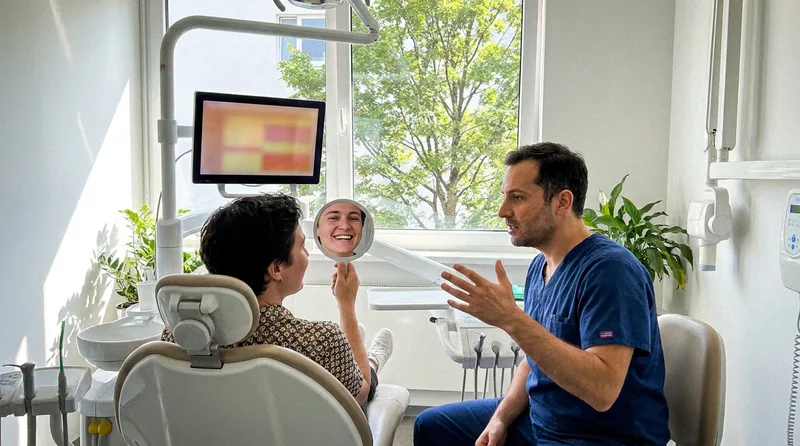
Bring a list of any dental work you remember, such as crowns, veneers or root canals, and tell the team how white you'd like your smile to be. Mention anything that worries you, whether it's sensitivity, cost or timing. About 65.5% of US adults had a dental exam or cleaning in the past year, according to CDC data for 2023, and a routine visit is a good time to ask which of your teeth have dental work. Whitening is usually a cosmetic, out-of-pocket service, and Elia is clear about cost up front.
If restorative work turns out to be part of the plan, Elia's team uses thorough numbing and gentle techniques and will walk you through each step. About 74% of adults feel an unattractive smile can limit a person's chances for career success, according to the American Academy of Cosmetic Dentistry, so getting the whole smile to match is worth planning carefully. That's the honest answer to does teeth whitening work on crowns for your own mouth: it depends on which of your teeth are natural.
Results may vary. Please consult with your dentist at Elia Family Dental for personalized treatment recommendations.
Ready to Whiten With a Plan?
Book a consultation with Elia Family Dental and Dr. Elia will check your shade, review your dental work and plan your whitening so everything matches.
Book an Appointment →Prefer to talk it through first?
Call 732-681-8604 →Written By
Lead Dentist
Invisalign lisp is common and often temporary. See what studies say about how long it lasts, what helps and when to call Elia Family Dental, Wall Township.
Invisalign not fitting? Learn what's normal with a new set, how chewies help and when to call Elia Family Dental in Wall Township, NJ.
Bridge vs partial denture: compare how each replaces missing teeth, how they feel day to day and how to choose, with Elia Family Dental in Wall Township.
Book your visit with Dr. Elia online or call us, and we'll take it from there.