Orthodontics
Invisalign Lisp: How Long Does It Last and What Helps?
Invisalign lisp is common and often temporary. See what studies say about how long it lasts, what helps and when to call Elia Family Dental, Wall Township.
Nov 8, 202612 min read


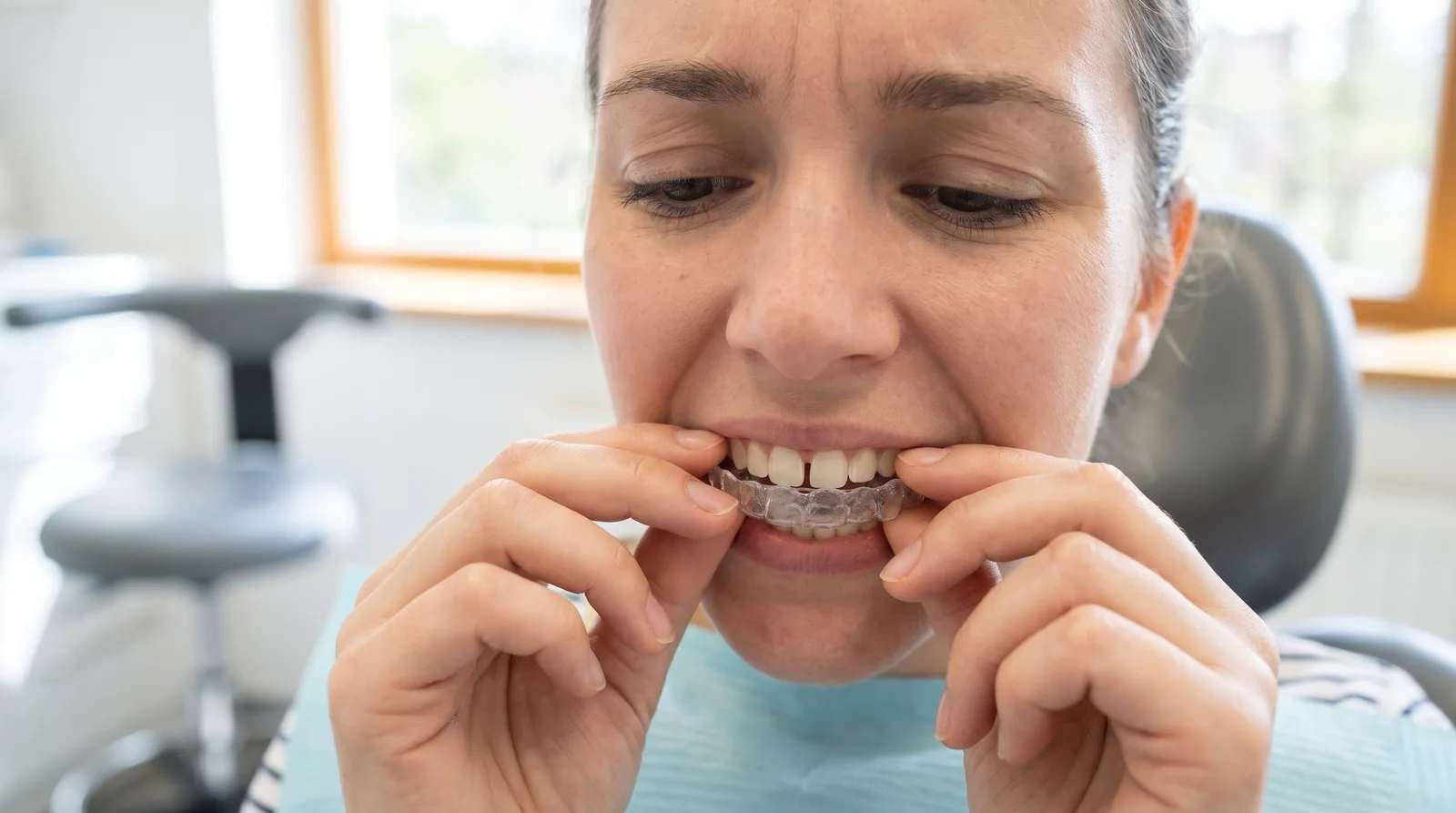
Invisalign not fitting usually means a new aligner feels tight, leaves a small gap or won't click all the way into place, and it's often something you can sort out at home with a few simple steps. It can also be a sign your dentist needs to take a look. Elia Family Dental's Invisalign treatment includes video consultations for convenient check-ins, so you don't have to wait for your next visit.
A new set is designed to move your teeth slightly from where they are today, so a snug feeling is expected. What's not expected is an aligner that leaves a visible gap or won't seat after you've followed your dentist's instructions. This guide explains what's normal, how to check your fit, what you can do at home, how attachments fit in and when to call.
It's general education only, and your dentist should always be your first call for a fit that doesn't seem right.
Aligner Not Seating? Reach Out Before It Slows Your Progress
Call Elia Family Dental or ask about a video consultation, and the team will tell you whether to keep going or come in.
Book Appointment →Yes, a new aligner usually feels snug, because each set is designed to move your teeth slightly from where they are now. Healthline notes that each new aligner differs ever so slightly from the current position of your teeth, which can make it a little difficult to get the aligner properly seated.
That small difference is the whole point. Aligners apply gentle pressure to move teeth into new positions, and the pressure is strongest when you switch to a new set. Healthline says discomfort is common when you're just starting or when you've switched to a new aligner, and that discomfort from a new aligner typically goes away over time. At Elia Family Dental, you wear each set for about two weeks before moving to the next, so a snug first few days is part of the rhythm.
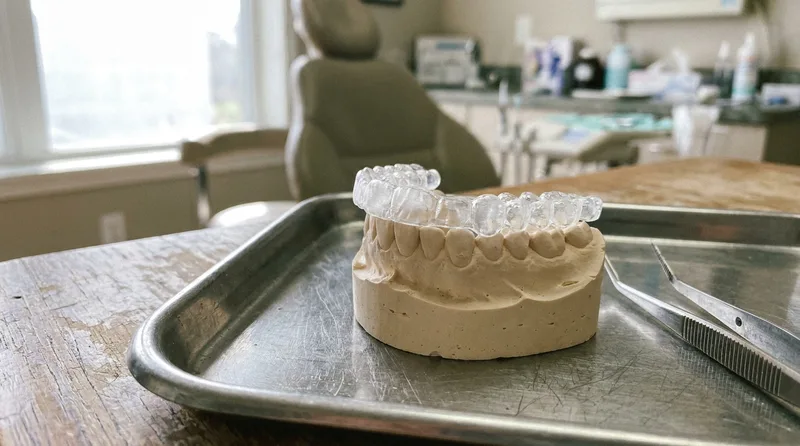
What matters is the difference between snug and not seated. A snug aligner still sits fully over your teeth. An aligner that leaves a visible gap, or that won't go on, needs attention. If you're newer to treatment, our guides to Invisalign for adults and Invisalign for crowded teeth explain what to expect as your teeth move.
Most people want to know whether their experience is typical. In a cross-sectional survey of 200 patients, satisfaction rates were 92% for clear aligners and 76% for traditional braces, which suggests that most patients find the day-to-day experience manageable. Even so, a fit that feels off deserves a quick check rather than a wait-and-see approach.
A properly seated aligner fits snugly over your teeth with no visible gap between the aligner and your teeth. Healthline describes a visible "air gap" as the sign that an aligner isn't fitting well, and it says your aligner needs to fit snugly each time you put it in to work well.
Check in a mirror in good light, right after you put the aligner in, and look along the edges where the aligner meets your teeth. Compare each area with the others, because a problem often shows up on one tooth or one side rather than everywhere. It helps to check after meals as well, since you put the aligner back in several times a day.
Take a clear photo of any gap, with the aligner in. A photo helps the team see exactly what you're seeing, whether you're calling, sending a message or joining a video check-in, and it saves you from trying to describe the spot in words.
Start by following your dentist's instructions for putting the aligner in, then use aligner seaters called chewies. Healthline says you bite down on a chewie, a soft plastic cylinder about the size of a cotton roll, for several minutes so the aligner conforms better to your teeth.
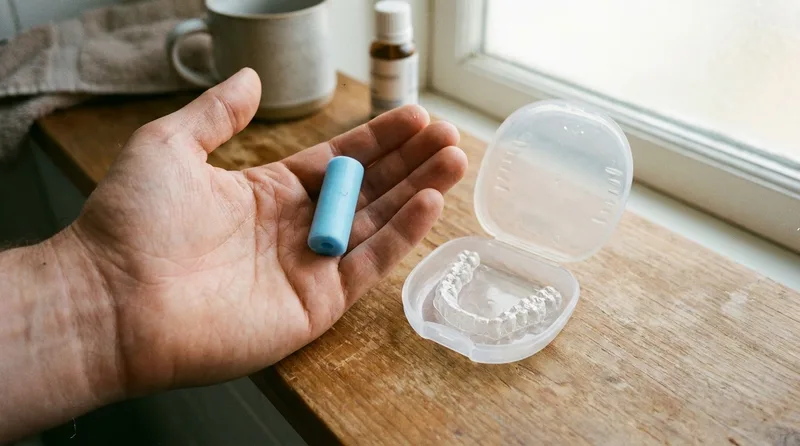
Healthline lists three moments when chewies are especially useful: when you're starting a new aligner, when you're putting an aligner back in after a meal or cleaning your teeth, and when you notice an area where the aligner doesn't seem to fit well. Your dentist may give you a first supply of chewies and specific instructions, and other aligner seaters, such as edible mints or silicone options, work on the same principle.
Chewies can leave your jaw a little sore, because they involve repeated biting, so don't overdo it. If your jaw feels sore, or if you have a history of jaw problems, ask your dentist how to seat an aligner in a way that suits you. And if the aligner still doesn't appear to fit after you've followed the instructions, stop troubleshooting at home and contact the office.
Yes, an aligner that doesn't fit snugly can slow treatment, according to Healthline. Aligners need to fit properly over your teeth and stay in place to apply their gentle pressure, so a poor fit means the pressure isn't reaching the teeth the way the plan intended.
| What you notice | What it may mean | What to do |
|---|---|---|
| Snug, fully seated, with pressure for a few days | A normal response to a new set | Keep wearing it as directed and give it time |
| A small visible gap in one area of a new set | The aligner may need help seating | Use chewies as directed and recheck in a mirror |
| A gap that remains, or an aligner that still doesn't appear to fit | The fit needs a professional look | Contact the office, as Healthline advises |
| Discomfort that doesn't ease over time | Something may not be right | Call the office and describe what you feel |
| A cracked, bent or damaged aligner | The aligner may not work as designed | Call the office before continuing |
| An attachment that has come off | The aligner has nothing to grip in that spot | Call the office so it can be replaced |
The table isn't a diagnosis, and every mouth is different. Its purpose is to show that most fit problems fall into two groups: ones you can try to fix with seating help, and ones that need your dentist. If you're unsure which group your Invisalign not fitting problem falls into, assume the second and call, because an early check costs less time than a stalled stage.
Staying on schedule matters because the plan is built stage by stage. The ADA's page on braces notes that most people are in orthodontic treatment for one to three years, followed by a retainer that holds teeth in their new positions, and our guide to Invisalign retainers explains what happens after your last aligner.
Attachments are small tooth-colored bumps bonded to certain teeth that give the aligner grip points for more complex movements, so an aligner that sits over every tooth and attachment is seated correctly. If an attachment comes off, or the aligner no longer sits over it, tell your office.
Our guide to Invisalign attachments explained describes attachments as small composite bumps placed at strategic points, which let the aligner direct force in ways a smooth surface can't, such as rotating a tooth or moving it vertically. They're placed at the beginning of treatment or added mid-treatment when the plan calls for them, and they're removed completely at the end, leaving no permanent marks on the tooth.
That's why an attachment problem shows up as a fit problem. If a bump has broken or come off, the aligner can lose its grip in that area and may look or feel loose there. If a tooth hasn't moved as far as planned, the aligner may not sit over its attachment as it should. In both cases, it's better to have the team look than to keep forcing the aligner.
Refinements are a normal part of treatment too. Elia's own guide explains that refinements, which are additional aligners made after your current set, are a standard tool for finishing movements, not a sign that something went wrong. If your dentist mentions one after a fit problem, it's a way to bring the plan back on track.
Call when an aligner still doesn't fit after you've followed your dentist's seating instructions, when discomfort is persistent, or when an aligner is cracked, bent or missing an attachment. Healthline advises talking with your orthodontist if discomfort is persistent or your aligner still doesn't appear to fit properly.
You don't have to wait for your next scheduled visit. Elia Family Dental offers video consultations for convenient check-ins, so you can show the team the fit on camera and hear whether to keep going, try a different approach or come in. Having your set number, how long you've worn it and a photo of the gap ready makes the conversation faster.
Calling early is also kinder to your teeth. Forcing an aligner into place, or skipping ahead to the next set to escape a tight fit, can work against the plan. Your dentist designed each stage to build on the one before, so the safest move is to ask before changing the order.
Your dentist will compare how your teeth have moved with the plan and decide on the next step, which might include more time in the current set, help with seating, repairing an attachment or updating your aligners. The right choice depends on what they find at your check-in.
At Elia Family Dental, Invisalign is planned with an iTero 3D scanner, which creates a precise 3D model of your teeth, so Dr. Elia can see exactly where things stand. That precision helps when a stage isn't going as expected, because the conversation starts from your actual teeth, not a guess. The team can then explain what's happening in plain language and what the options are.
Most fit problems are fixable, and most don't change the end result. If what's bothering you is how you sound rather than how the aligner sits, our guide to Invisalign lisp explains what to expect. If you're comparing options, our guide to Invisalign vs braces for adults explains how aligners and braces differ in everyday use, including how often you'll check in and what each asks of you between visits.
For general background on orthodontic care, the ADA's page on orthodontics is a good neutral place to start, and the ADA's guide to going to the dentist explains what to expect from regular visits, which is where aligner progress is normally checked.
The first step is to check for a gap, try your chewies as directed and, if the aligner still doesn't sit, contact Elia Family Dental. A quick call or a video consultation lets the team see what's happening and tell you whether to keep going or come in.

When Invisalign not fitting is the issue, have a few details ready: which set you're on, how long you've been wearing it, where the gap is and whether you've used chewies. A photo helps. Mention anything else that seems different, such as a missing attachment or discomfort that isn't settling, so the team can give you a useful answer the first time.
If you're not yet an Invisalign patient, the process starts with a free consultation, where Dr. Elia looks at your smile, talks through your goals and confirms whether Invisalign is the right fit. Elia Family Dental accepts Delta Dental, Blue Cross Blue Shield, Cigna, Principal and most PPO plans, and Sunbit and CareCredit offer monthly payment plans, with no hard credit check for Sunbit.
Results may vary. Please consult with your dentist at Elia Family Dental for personalized treatment recommendations.
Aligner Not Fitting? Let Us Take a Look
Call Elia Family Dental or ask about a video consultation, and the team will help you get your Invisalign back on track.
Book an Appointment →Prefer to talk it through first?
Call 732-681-8604 →Written By
Lead Dentist
Invisalign lisp is common and often temporary. See what studies say about how long it lasts, what helps and when to call Elia Family Dental, Wall Township.
Does teeth whitening work on crowns? Learn why crowns, veneers and fillings keep their shade and how to plan around them in Wall Township, NJ.
Bridge vs partial denture: compare how each replaces missing teeth, how they feel day to day and how to choose, with Elia Family Dental in Wall Township.
Book your visit with Dr. Elia online or call us, and we'll take it from there.