Dental Implants
Socket Preservation After Extraction: Do You Need It?
Socket preservation after extraction can limit bone loss before an implant. Learn who needs it, how it works and what to expect in Wall Township.
Nov 2, 202610 min read



If you have avoided the dentist for longer than you would like to admit. The main thing standing between you and making an appointment is the thought of what the dentist is going to say, this article is written for you. Dental anxiety is one of the most common reasons people put off care. The fear of judgment from a provider is one of its most specific and underacknowledged forms. The honest truth is that dentists who work with anxious or long-absent patients every day are not surprised by how long it has been. They have seen longer. The question at Elia Family Dental is never how long it has been. It is where to start, and how to make the next visit easier than the last one you remember. These dental anxiety tips are a starting point for anyone who needs them.
Dental anxiety exists on a spectrum from mild apprehension to phobic avoidance. Approximately 36% of adults experience some degree of dental anxiety, and about 12% avoid care entirely due to phobia, according to published epidemiological data. The shame that often accompanies avoidance adds a second barrier on top of the fear itself.
Dental anxiety exists on a spectrum, from mild apprehension before an appointment to phobic avoidance that prevents any dental care for years or decades. Wherever a person falls on that spectrum, the experience is real and the avoidance it produces has real consequences for oral health. The shame that often accompanies dental avoidance, the sense that a reasonable adult should simply be able to schedule a cleaning, is one of the most counterproductive aspects of the problem because it adds a second barrier on top of the fear itself.
According to published research on dental anxiety and care access, approximately 36% of adults in the United States experience some degree of dental anxiety, and approximately 12% experience dental phobia severe enough to avoid care entirely, according to that epidemiological data. These are not rare or unusual responses. They are common human experiences that dentists who work with anxious patients have seen and understand.
The factors that most commonly drive dental anxiety include negative past experiences with dental care, fear of pain, embarrassment about the current state of the teeth, fear of the sounds and sensations associated with dental work, and a general sense of loss of control in the dental chair. Each of these is addressable with the right approach, but only at a practice that takes them seriously rather than dismissing them as something to push through.
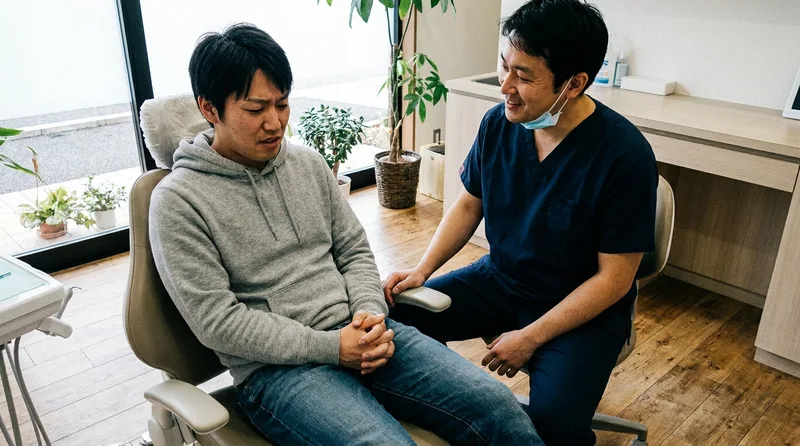
In practice, it means the difference between a provider who lectures about past decisions and one who focuses on current options. Patients who come in after a long absence are told what the situation looks like today and what the most sensible next steps are, without commentary on what should have been done differently.
Judgment-free is a phrase that gets used in dental marketing. Patients who have had discouraging experiences in the past are right to be skeptical of it as a descriptor. What it actually means in practice is the difference between a provider whose first response to a long gap in care is a lecture about what should have been done differently. A provider whose first response is to understand the situation and figure out how to help from where things currently are.
At Elia Family Dental, patients who come in after a long absence are not told what they should have done. They are told what the current situation looks like, what the options are, and what the most sensible next steps are given where things stand today. The judgment about whether care was handled well in the past is irrelevant to the task of addressing the situation in the present. Dr. Elia and the team's job is to help, not to evaluate whether help should have been sought sooner.
This is not the same as pretending that delayed care has no consequences. Sometimes it does, and patients deserve an honest account of that. But there is a difference between clinically relevant information about how a condition has progressed and a moral judgment about the person who was too anxious or too overwhelmed to address it earlier. The former is part of the clinical conversation; the latter has no place in it.
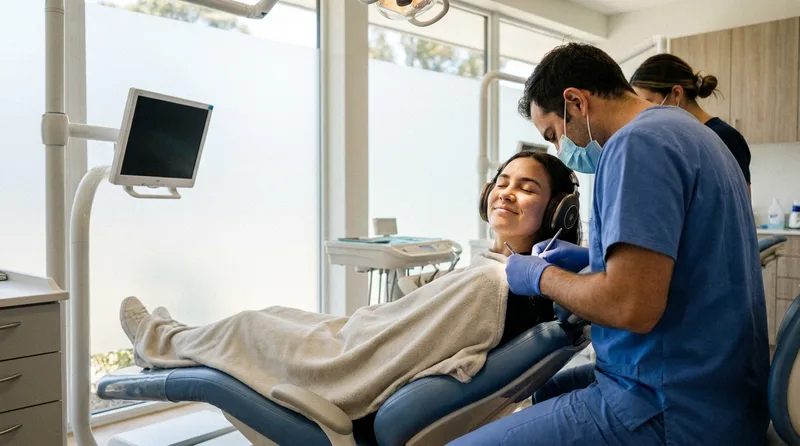
Managing dental anxiety is not about telling yourself not to be anxious. It is about putting specific practices in place that reduce the factors driving the anxiety and give you tools for the moments when it spikes.
Strategies that help:
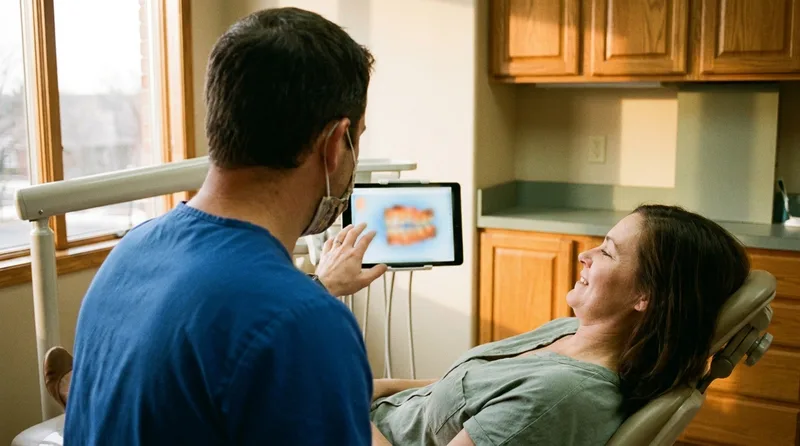
Thorough numbing and an unhurried pace help anxious patients because they remove the two biggest unknowns: whether treatment will be uncomfortable and how long it will last. At Elia Family Dental, the area is numbed thoroughly before treatment begins, and each step is explained first.
A calm visit starts with time. Dr. Elia does not rush appointments, and the team explains what each step involves before it happens, so nothing arrives as a surprise. If you agreed on a pause signal when you booked, you can use it at any point, and treatment stops until you are ready to continue.
Modern tools also shorten the less pleasant parts of a visit. iTero 3D scanning replaces gag-inducing impression trays, and laser dentistry can mean less bleeding and a quieter visit for many soft-tissue procedures. If one specific step worries you, say so when you book, and the team will plan around it.
If it has been five, ten, or more years since your last dental visit, the situation is almost certainly manageable, and starting now is better than continuing to wait. A long absence means a thorough first appointment: X-rays, a comprehensive examination. An honest conversation about options, conducted without commentary on the gap.
The patients who are most hesitant to come in are often the ones who most need reassurance that showing up is the right move regardless of what has happened before. If it has been five years, ten years, or longer since your last dental visit, the most important thing to understand is this: the situation is almost certainly manageable, and starting now is better than continuing to wait. Whatever has happened to the teeth in the interval since the last visit does not become easier to address by delaying further.
A long absence does not mean a catastrophic appointment. It means a thorough first appointment: a complete set of X-rays, a comprehensive examination. An honest conversation about what is present and what the options are. At Elia Family Dental, that appointment is conducted without commentary on how long it has been, without comparison to how things should look, and without pressure to commit to any treatment at that first visit. The information from that appointment belongs to you, and what you choose to do with it is your decision.
According to the American Dental Association, patients who return to regular dental care after a long absence and maintain consistent appointments going forward achieve oral health outcomes comparable to those who maintained continuous care, and early return to care prevents conditions from advancing to more complex treatment needs.
Before your appointment, tell the team about your anxiety so they know how to support you. Ask them to explain each step before it happens, and agree on a simple signal, such as raising your hand, so you can pause at any time. Knowing you have some control often makes a visit easier.
Small preparations help too. Eat something beforehand if you are able, get a good night of sleep, and plan the day so you are not rushed. Slow breathing before and during the visit can steady your nerves.
It can also help to book a time of day when you feel calmest and to ask whether a short first visit, such as a conversation and exam, is possible. Starting small can make later visits feel more manageable.
These dental anxiety tips work best when you try them together, and you do not need to use all of them. Pick the two or three that feel most useful, tell the team what you chose, and adjust from there as you get more comfortable.
If you are ready to come back, or to come for the first time, the easiest next step is to call or message the office and say what you said to yourself while reading this. The team at Elia Family Dental is used to this conversation and knows how to make it comfortable.
Contact the office at eliafamilydental.com/contact to book, or reach out through the contact form on the website. If it is easier to send a message than to call, that is fine too.
According to the National Institute of Dental and Craniofacial Research, finding a dental provider who takes dental anxiety seriously and offers accommodations for anxious patients is one of the most important factors in helping people return to regular care after a period of avoidance. That description fits Elia Family Dental.
It has been a while. That's okay.
Elia Family Dental in Wall Township, NJ is a judgment-free practice. Call or book online and tell us what you need. We will take it from there.
Book an AppointmentGetting back to dental care connects to several practical patient resource topics at Elia Family Dental.
Results may vary. Please consult with your dentist at Elia Family Dental for personalized treatment recommendations.
Written By
Lead Dentist
Socket preservation after extraction can limit bone loss before an implant. Learn who needs it, how it works and what to expect in Wall Township.
Screw-retained vs cemented implant crowns explained: how each attaches, what research shows, and how Elia Family Dental chooses for your implant.
Toothache relief at home starts with a warm rinse and gentle flossing. See what helps, what to avoid, and when to call a Wall Township dentist.
Book your visit with Dr. Elia online or call us, and we'll take it from there.