
Dental Implants
Socket Preservation After Extraction: Do You Need It?
Socket preservation after extraction can limit bone loss before an implant. Learn who needs it, how it works and what to expect in Wall Township.
Nov 2, 202610 min read


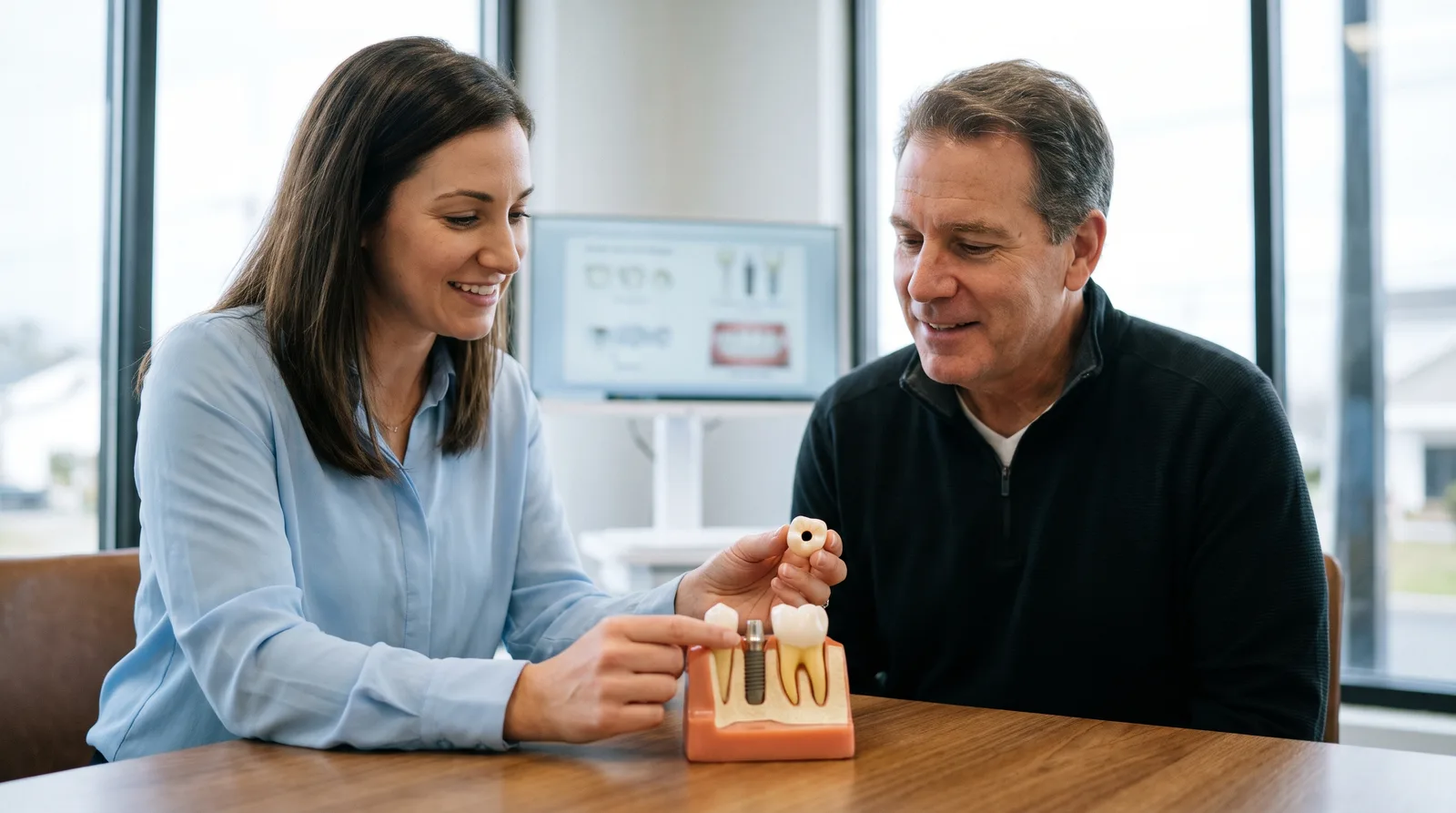
Screw-retained vs cemented implant crowns comes down to how the crown attaches to your implant: a small screw holds one in place, and dental cement holds the other. Both are proven options, and which one fits depends on your implant's position, your bite and how easily the crown may need to be removed later. At Elia Family Dental in Wall Township, Dr. Nicole Elia restores implants with either method as part of her implant crown and restoration care.
Your implant has healed, and the crown appointment is next. Then someone asks whether you'd like it screw-retained or cemented, and you realize you have no idea what that means. That's completely normal. Most patients don't know there's a choice until they're asked.
This guide explains what each method is, how they compare, what the research says, and which questions to ask before your crown is placed. It's general education only, and your dentist chooses based on your implant and your bite.
Planning an Implant Crown?
Book a visit and Dr. Elia will check your implant, review your X-rays and explain which attachment fits your case.
Book Appointment →An implant crown is the tooth-shaped restoration that sits on top of a healed dental implant. It attaches in one of two ways: a screw holds it directly, or it's cemented onto an abutment that is itself screwed into the implant. A review in Periodontology 2000 describes exactly those two routes.
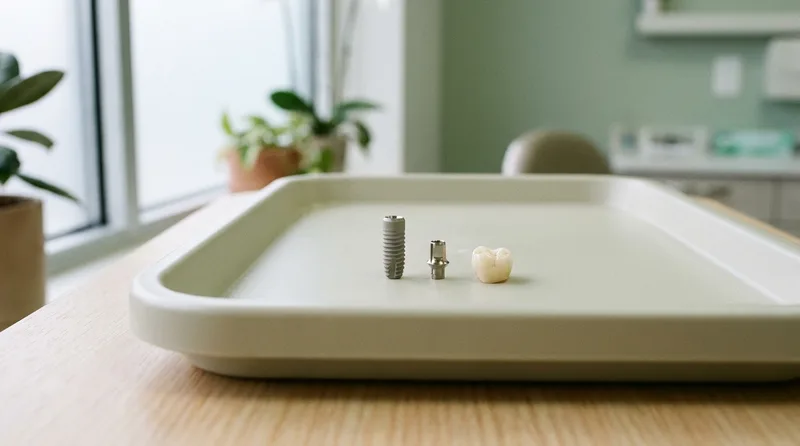
Think of the implant as the root and the abutment as the connector. The crown is the visible tooth. What differs is how that visible tooth is fastened to the connector, and that single detail changes how the crown looks, how it can be removed, and what to watch for over the years.
At Elia Family Dental, the work is divided between two doctors. Our periodontist places the implant, and Dr. Elia completes it. She also restores implants placed by any provider, so a crown isn't limited to implants placed in our office. Our guide to the dental implant process shows where this step fits. And if the implant is being planned after an extraction, our guide to socket preservation after extraction explains how the bone can be protected beforehand.
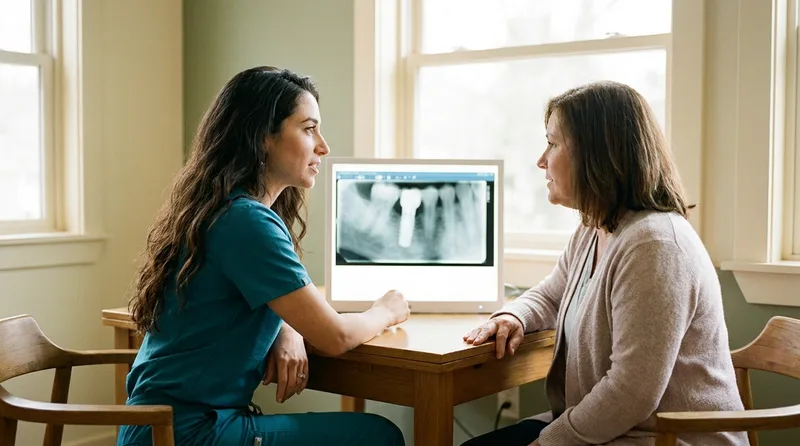
The crown visit follows four clear steps: an evaluation with digital X-rays to confirm the implant is ready, an iTero digital impression with no messy molds, design and crafting of the crown, and placement with follow-up care to confirm the fit and function.
A screw-retained crown is held on the implant by a small screw that passes through the crown, and the access opening is typically sealed afterward with tooth-colored material. Its biggest advantage is that the crown can generally be unscrewed later for cleaning or repair, and no cement is used at all.
The tradeoff is the access opening. When the implant sits at a steep angle, the screw hole can fall on the front surface of a tooth, which is a concern for visible teeth. Modern components can angle the screw channel to move that opening, but it depends on the implant's position.
Screws can occasionally loosen over time. Because the crown is retrievable, that is usually a straightforward fix rather than a replacement. It's also one more reason follow-up visits matter.
A cemented crown is bonded with dental cement onto an abutment that is screwed into the implant, so there's no access opening on the chewing or front surface. Its main advantages are a clean look and a simple fit, and its main concern is cement that gets left below the gumline.
That concern is well documented. In a 2009 study of 39 patients, researchers found excess cement in 34 of 42 implants with signs of peri-implant disease and in none of the 20 healthy controls. Excess cement was associated with signs of disease in the majority (81%) of cases, and signs were absent in 74% of test implants after the cement was removed, according to the Journal of Periodontology study.
Read that carefully. The study looked at implants that already had signs of disease, so it doesn't show that cemented crowns usually cause problems. It shows why dentists take care to remove every trace of cement, check the margins, and confirm with X-rays after cementing.
Peri-implant disease is the same gum-and-bone problem our guide to dental implant maintenance describes, and the implant failure warning signs checklist shows what to watch for. Careful placement and regular checkups are the best protection with either method.
Neither lasts meaningfully longer, according to research. A systematic review found five-year survival rates of 96.03% for cemented and 95.55% for screw-retained reconstructions, with no statistically significant difference, though screw-retained restorations showed fewer technical and biologic complications overall.
| Factor | Screw-retained | Cemented |
|---|---|---|
| How it attaches | A small screw through the crown | Dental cement on an abutment |
| Removal later | Generally can be unscrewed | Usually harder to retrieve |
| Appearance | Small access opening, sealed and shade-matched | No access opening |
| Cement below the gumline | None | A risk if any is left behind |
| Survival after five years | 95.55% in the 2014 review | 96.03% in the 2014 review |
| Complications overall | Fewer technical and biologic complications in that review | More, in that review |
The 2017 review in Periodontology 2000 reaches a similar conclusion. It says the choice of retention type might not influence the overall survival of the restoration, but may be responsible for the development of certain complications, and that the decision depends on technical feasibility and on weighing the pros and cons.
In plain terms: both work, so the right question isn't which one wins. It's which one fits your implant's position, your bite, the look you want and the way you want the crown to be maintained. Those percentages also come from published research on groups of patients. They aren't a promise for any one implant, and your own result depends on your gums, your bite and your care.
Front teeth often favor a cemented crown or an angled screw channel for appearance, back teeth often favor screw retention because it's retrievable and avoids hidden cement, and larger bridges often favor screws. Your implant's angle and depth decide what's actually feasible for you.
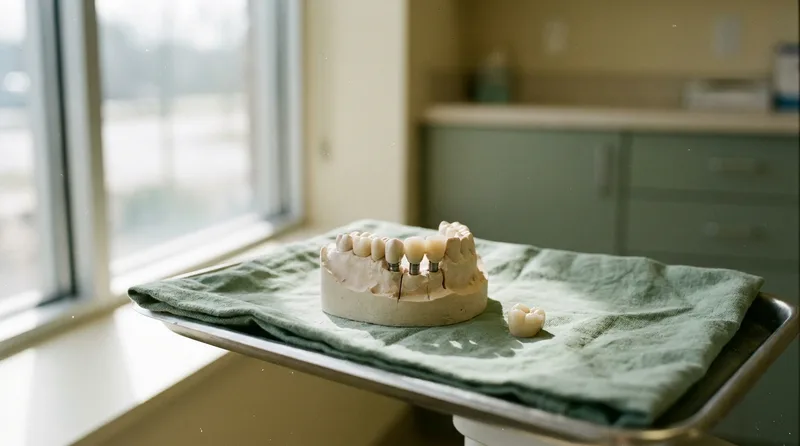
Those are tendencies, not rules. Dr. Elia checks digital X-rays and your bite, then tells you which she recommends and why. Multiple missing teeth change the math. When several implants support one bridge, being able to remove the bridge for cleaning and maintenance is a big practical advantage, which is why screw retention is common for bridges. A single crown has more flexibility, so appearance and implant position usually decide. If you're still earlier in the process, our guide to single tooth implant cost in NJ explains what drives the overall plan.
Yes, in most cases, though it's easier with a screw-retained crown. A screw-retained crown can generally be unscrewed for cleaning or repair, while a cemented crown can be harder to retrieve, which is why some dentists use a temporary cement so the crown can come off later.
Why would a crown ever need to come off? Common reasons include a chipped surface, a loose screw, a need to clean around the abutment, or a change in the surrounding gums. Having an easy way in can turn what might be a replacement into a short visit.
Follow-up care is built into the process at Elia Family Dental, and the team confirms fit and function after your crown is placed. Report anything that feels different, such as a crown that rocks slightly, gums that bleed or a bite that feels off.
The practical takeaway: if future flexibility matters to you, say so at the planning stage. It's one of the clearest differences between the two methods, and it's easy to weigh before the crown is made.
Brush and floss around the implant daily, keep regular checkups and cleanings, and report any bleeding, swelling or looseness. Gum health around an implant matters as much as it does around natural teeth, and the care routine is the same whichever way the crown is attached.
Gum problems are common. Some 42% of adults aged 30 and older have some form of periodontal disease, according to CDC 2024 data, and implants need healthy gums to last. That's why your dentist checks the tissue around the crown at every visit, not just the crown itself.
According to the American Dental Association, regular dental visits can catch 80% of oral health issues before they become serious. For an implant, that can mean catching a loose screw, a bite change or early gum inflammation while it's still easy to manage.
Avoid habits that stress the crown, such as chewing ice or hard candy, and tell your dentist if you clench or grind your teeth. Those forces can wear any restoration, and knowing about them helps your dentist plan.
Ask whether the crown will be screw-retained or cemented and why, how the access opening will look, whether the crown can be removed later, how cement will be checked if it's used, and what follow-up visits are planned. A good dentist answers these plainly.
Insurance matters too. Elia Family Dental accepts Delta Dental, Blue Cross Blue Shield, Cigna, Principal and most PPO plans, and we verify your coverage before treatment begins. Sunbit and CareCredit financing are available, and Sunbit doesn't require a hard credit check. We don't accept HMO, Medicaid or Medicare plans.
For screw-retained vs cemented implant crowns, the honest answer is that both work well when they're planned and placed carefully. Book a visit, and Dr. Elia will check your implant, show you the X-rays and explain which method suits your case.
Results may vary. Please consult with your dentist at Elia Family Dental for personalized treatment recommendations.
Ready to Finish Your Implant?
Book an appointment with Elia Family Dental and Dr. Elia will explain your crown options.
Book an Appointment →Prefer to talk it through first?
Call 732-681-8604 →Written By
Lead Dentist
Socket preservation after extraction can limit bone loss before an implant. Learn who needs it, how it works and what to expect in Wall Township.
Toothache relief at home starts with a warm rinse and gentle flossing. See what helps, what to avoid, and when to call a Wall Township dentist.
Toothache near me? Learn the signs that mean call today, safe steps until your visit, and how same-day emergency care works in Wall Township.
Book your visit with Dr. Elia online or call us, and we'll take it from there.