teeth-whitening
Teeth Whitening for Sensitive Teeth: Can You Do It Safely?
Teeth whitening for sensitive teeth is possible with the right plan. Learn why sensitivity happens, what to ask first, and how GLO whitening fits.
Oct 29, 20269 min read


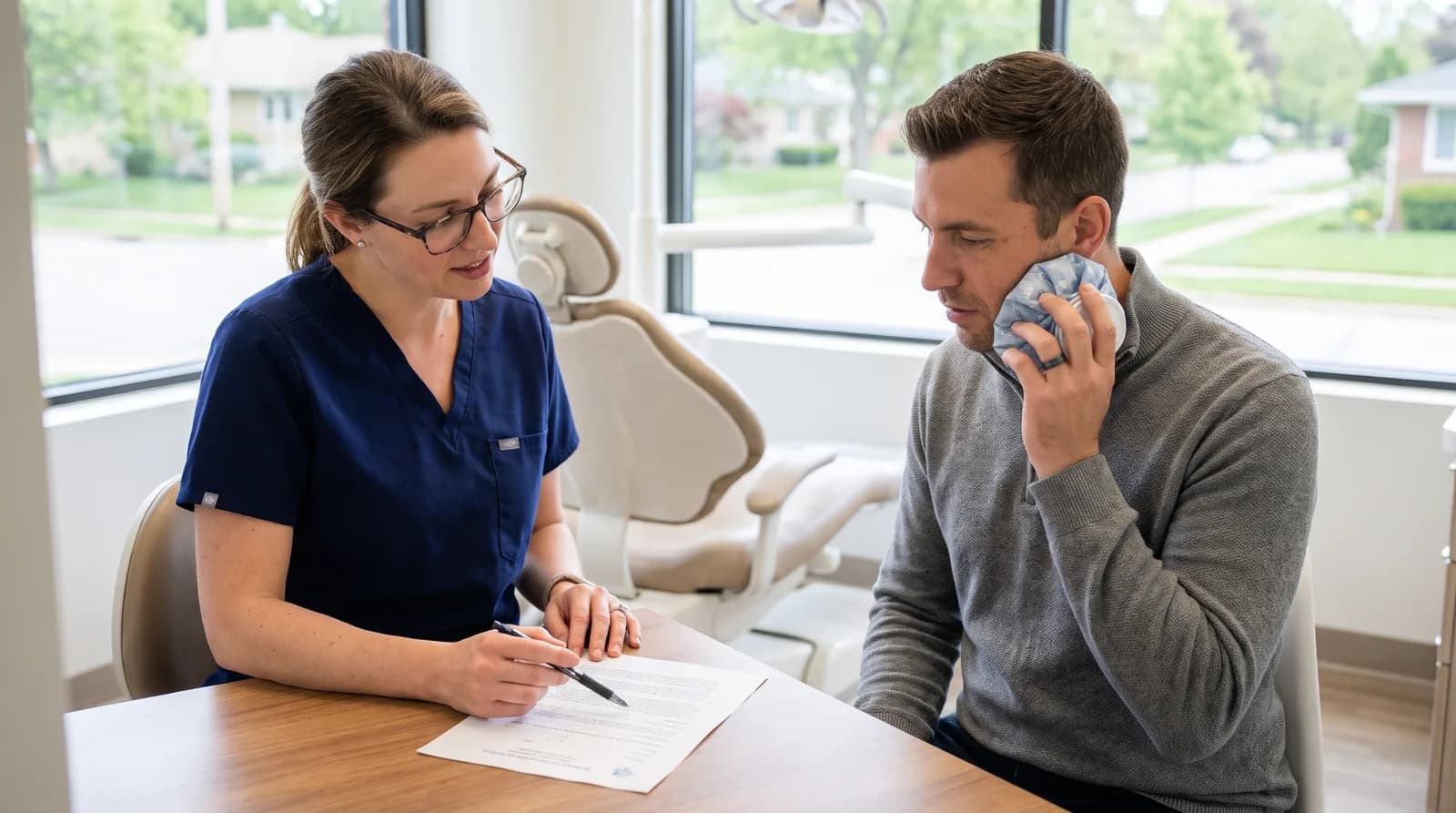
Dry socket symptoms are discomfort that gets worse instead of better a few days after an extraction, a socket that looks empty, and a bad taste or odor. It's the one extraction complication worth knowing about, and it's preventable and treatable. At Elia Family Dental in Wall Township, Dr. Nicole Elia handles extractions and oral surgery, including same-day emergency extractions.
Picture day three after a tooth comes out. The first couple of days went fine, with a little soreness and some gauze. Then the discomfort starts climbing, and nothing you take seems to touch it. That pattern, improvement followed by a setback, is what makes dry socket stand out.
This guide covers what dry socket is, the symptoms to watch for, how to prevent it, and when to call. It's general education only, and your dentist decides on treatment.
Worried About Healing After an Extraction?
Call the office and describe what you notice. The team can tell you whether to come in and when.
Book Appointment →Dry socket is a condition that sometimes occurs after a tooth is extracted, when the blood clot over the socket is displaced and leaves bone and nerves exposed. According to the ADA's MouthHealthy guide to dry socket, if this happens you should notify your dentist.
The clot matters because it's the foundation of healing. The ADA explains that after an extraction your mouth slowly fills in the bone where the tooth root was through the formation of a blood clot. Lose the clot early, and the exposed area becomes very uncomfortable.
The same habits the ADA tells you to avoid after an extraction are the ones that put the clot at risk: smoking, rinsing vigorously and drinking through a straw. The ADA also notes that tobacco use can delay healing, which makes dry socket treatment harder.
Think of the clot as a scab inside your mouth. You wouldn't pick at a scab on your arm, and the same logic applies here. Our guide to the tooth extraction recovery timeline explains how the clot forms and what a normal first week looks like.
Dry socket symptoms usually include intense discomfort that worsens a few days after an extraction, a socket that looks empty with bone showing, and a bad taste or odor. Only a dentist can confirm it, so call if healing seems to be going backward.

| What you notice | Normal healing | Possible dry socket |
|---|---|---|
| Discomfort | Eases day by day | Gets worse a few days after the extraction |
| The socket | Looks filled with a dark clot | Looks empty, with bone visible |
| Taste or odor | Mostly normal | A bad taste or odor from the site |
| Bleeding | A small amount is normal at first, per the ADA | Not the main sign |
| Medicine | Usually helps | Doesn't seem to touch it |
Some soreness is normal after any extraction. The ADA notes that a small amount of bleeding is normal too. What matters is direction: normal healing improves, and dry socket tends to be the opposite. If you're unsure, a quick call is better than a long guess.
Don't poke at the area to check it. Looking is fine, and touching it with fingers, your tongue or a cotton swab risks disturbing whatever clot is left. Let your dentist look instead.
Timing helps too. Dry socket typically shows up a few days after the extraction rather than right away, which is why the first day or two can feel fine. The discomfort often arrives at night, when it's harder to reach anyone, so keep the office number handy.
You can lower your risk by protecting the blood clot: skip smoking and tobacco, avoid straws for 24 hours, rinse gently instead of vigorously, and follow the diet and aftercare your dentist gives you. These steps come straight from the ADA's extraction advice.

Eating well matters during recovery. Our guide on what to eat after dental surgery has soft, spoon-friendly ideas, and explains why a straw is the one tool to skip.
At Elia Family Dental, you leave with clear written aftercare instructions, and the team checks in to make sure you're healing well. Follow them closely, especially in the first 24 to 72 hours, when the clot is most fragile. Small habits in those days do most of the protecting.
A few extra habits help. Avoid spitting forcefully, which creates suction, and skip hot, crunchy or sticky foods that can irritate the area. If you use tobacco, talk to your dentist before the extraction about how to manage the days afterward.
Call your dentist as soon as you suspect dry socket, because it can be treated. The ADA says treatment may include cleaning the extraction site and placing a medicated dressing in the socket, and Dr. Elia will examine the area and tell you what you need.
The ADA describes the usual path. The dentist cleans the site and places a medicated dressing, which is then changed daily until the discomfort diminishes and the socket begins to heal. The dentist may also recommend medication for relief.
Bring a list of what you've taken for discomfort and when. It tells your dentist how you've been coping and what to adjust. Mention any smoking since the extraction, too, because honest details lead to better care.
Don't wait it out hoping it will pass. Dry socket doesn't usually fix itself quickly, and every extra day is a day of avoidable discomfort. A short visit can make a big difference.
Call right away for swelling, fever, a bad taste that won't go away, bleeding that won't stop, or discomfort that's getting worse instead of better. The ADA advises applying a cold cloth or ice bag for swelling and calling your dentist right away.
Swelling and fever deserve extra respect, because they can signal infection rather than dry socket. A dental abscess can spread to other parts of the body within 48 hours if untreated, according to JADA. Go to an emergency room if swelling affects your breathing or swallowing.
Dental problems send many people to the emergency room. About 2 million emergency room visits per year in the US are for dental issues, according to the ADA Health Policy Institute. The ADA advises that if your dental office is closed, a local emergency room is the right place for a true emergency.
Fear can delay the call. About 36% of Americans have dental anxiety, according to a 2024 BMC Oral Health study, and many people avoid returning to the office after an extraction for that reason. A short call costs nothing, and the team would much rather hear from you early.
Elia Family Dental offers same-day emergency appointments during business hours for new and existing patients. After hours, call the office and follow the voicemail instructions for guidance and next steps.
Normal healing means a small amount of bleeding at first, soreness that eases each day, and a socket that gradually fills in as a blood clot forms and bone rebuilds. The ADA notes that your mouth slowly fills in the bone where the root was through the formation of that clot.
Expect a little swelling in the first day or two. The ADA suggests a cold cloth or ice bag for swelling, and advises calling your dentist right away if swelling occurs. Rest, soft foods and gentle habits support the process.
Most people feel steadily better as the days go by. If you notice the opposite, a setback after a good start, treat it as information rather than something to tough out. Healing is a trend line, and a trend that turns the wrong way is worth a call.
Keep your follow-up if one was scheduled. At Elia Family Dental, the team checks in to make sure you're healing well, which gives you another chance to ask questions. According to the American Dental Association, regular dental visits can catch 80% of oral health issues before they become serious, so keeping your follow-up is time well spent.
At Elia Family Dental, an extraction starts with an evaluation using digital X-rays and 3D imaging, followed by gentle numbing, careful removal, and clear aftercare. Both simple and surgical extractions are handled in the office, including wisdom tooth evaluation and removal.

Same-day emergency extractions are available when a tooth can't wait, and you'll get a clear plan for replacing the tooth. If you're facing a wisdom tooth, our guide to when wisdom teeth removal is necessary explains how to decide.
New patients are welcome, and bringing your insurance card, a list of medicines and any X-rays you have helps the visit go smoothly. The goal is simple: protect the healing and keep you comfortable.
If you already had your extraction elsewhere and you're worried about healing, call anyway. New patients are welcome for dental emergencies, and an exam is the only way to know what's going on.
Many plans cover part of an extraction and related care, and Elia Family Dental accepts Delta Dental, Blue Cross Blue Shield, Cigna, Principal and most PPO plans. We verify your coverage before treatment begins, and we'll still work with your plan if you're out of network.
Sunbit and CareCredit financing are available for treatment, and Sunbit doesn't require a hard credit check. We don't accept HMO, Medicaid or Medicare plans, so call us if you're unsure which category your plan falls into.
Knowing dry socket symptoms ahead of time turns an unwelcome surprise into a manageable problem. Protect the clot, watch the trend, and call early if healing goes backward. Americans who see a dentist regularly are also 60% less likely to lose teeth, according to the Journal of Dental Research, which means fewer extractions to recover from in the first place. If you're not sure what you're seeing, Dr. Elia can take a look and tell you.
Results may vary. Please consult with your dentist at Elia Family Dental for personalized treatment recommendations.
Need to Be Seen After an Extraction?
Call Elia Family Dental and describe your symptoms. We offer same-day emergency appointments during business hours.
Book an Appointment →Prefer to talk it through first?
Call 732-681-8604 →Written By
Lead Dentist
Teeth whitening for sensitive teeth is possible with the right plan. Learn why sensitivity happens, what to ask first, and how GLO whitening fits.
Close gap between front teeth with bonding, veneers or Invisalign. Compare speed, cost and permanence, and preview the result with Dr. Elia.
Invisalign vs veneers: compare straightening and reshaping for a crooked smile by time, tooth preservation and results. See how Dr. Elia helps you choose.
Book your visit with Dr. Elia online or call us, and we'll take it from there.