Teeth Whitening for Sensitive Teeth: Can You Do It Safely?
Dr. Nicole EliaOctober 29, 20269 min read
Key Takeaways
Whitening sensitivity happens when peroxide passes through enamel to the dentin and irritates the nerve, and the ADA says it is temporary in most cases.
Existing sensitivity from decay, cracks, worn fillings, gum disease or exposed roots should be treated before whitening.
Elia Family Dental uses GLO professional whitening, a heat-and-light system designed to keep sensitivity low, under dental supervision.
Desensitizing toothpaste usually needs several applications before sensitivity drops, according to the ADA.
Some 42% of adults aged 30 and older have periodontal disease, which can contribute to exposed roots and sensitive teeth.
Whitening is usually a cosmetic, out-of-pocket service, and Elia Family Dental is clear about cost up front.
Teeth whitening for sensitive teeth is often possible, but it works best with a plan: an exam first, the right method second, and realistic expectations throughout. At Elia Family Dental in Wall Township, Dr. Nicole Elia uses GLO professional whitening, a heat-and-light system designed to keep sensitivity low, as part of her teeth whitening care.
You've wanted a brighter smile for years, but the last time you tried strips, a sip of cold water felt like a jolt. So you stopped. That's a common reason people skip whitening, and it's usually fixable with the right approach.
This guide explains why sensitivity happens, who should be careful, how professional whitening differs from store strips, and what to ask before you start. It's general education only, and your dentist decides what's safe for your teeth.
Worried Sensitivity Will Spoil Whitening?
Book a consultation and Dr. Elia will check your teeth and talk through the safest way to brighten your smile.
Teeth become sensitive after whitening because the peroxide can pass through the enamel to the dentin and irritate the nerve. According to the ADA's MouthHealthy guide to teeth whitening, this sensitivity is temporary in most cases.
Here's the quick science. Whitening products contain hydrogen peroxide or carbamide peroxide, which break stains into smaller pieces so the color is less concentrated and teeth look brighter. The same ingredient that lifts stain can reach deeper than the surface.
Underneath the enamel is dentin, which contains microscopic tubules, small hollow canals. The ADA explains that when dentin loses its protective covering, those tubules let heat, cold and acidic or sticky foods reach the nerves and cells inside the tooth. That's why a cold drink can feel like a zing.
The good news is that this reaction usually fades. The ADA notes that if sensitivity shows up, you can delay treatment and try again. Overuse is the part to avoid, since overusing whiteners can damage enamel or gums.
Who Should Be Careful With Teeth Whitening for Sensitive Teeth?
People with existing sensitivity should be careful, especially if it comes from decay, fractured teeth, worn fillings, gum disease, worn enamel or an exposed root. The ADA lists these as common causes of sensitive teeth, and whitening should wait until the cause is addressed.
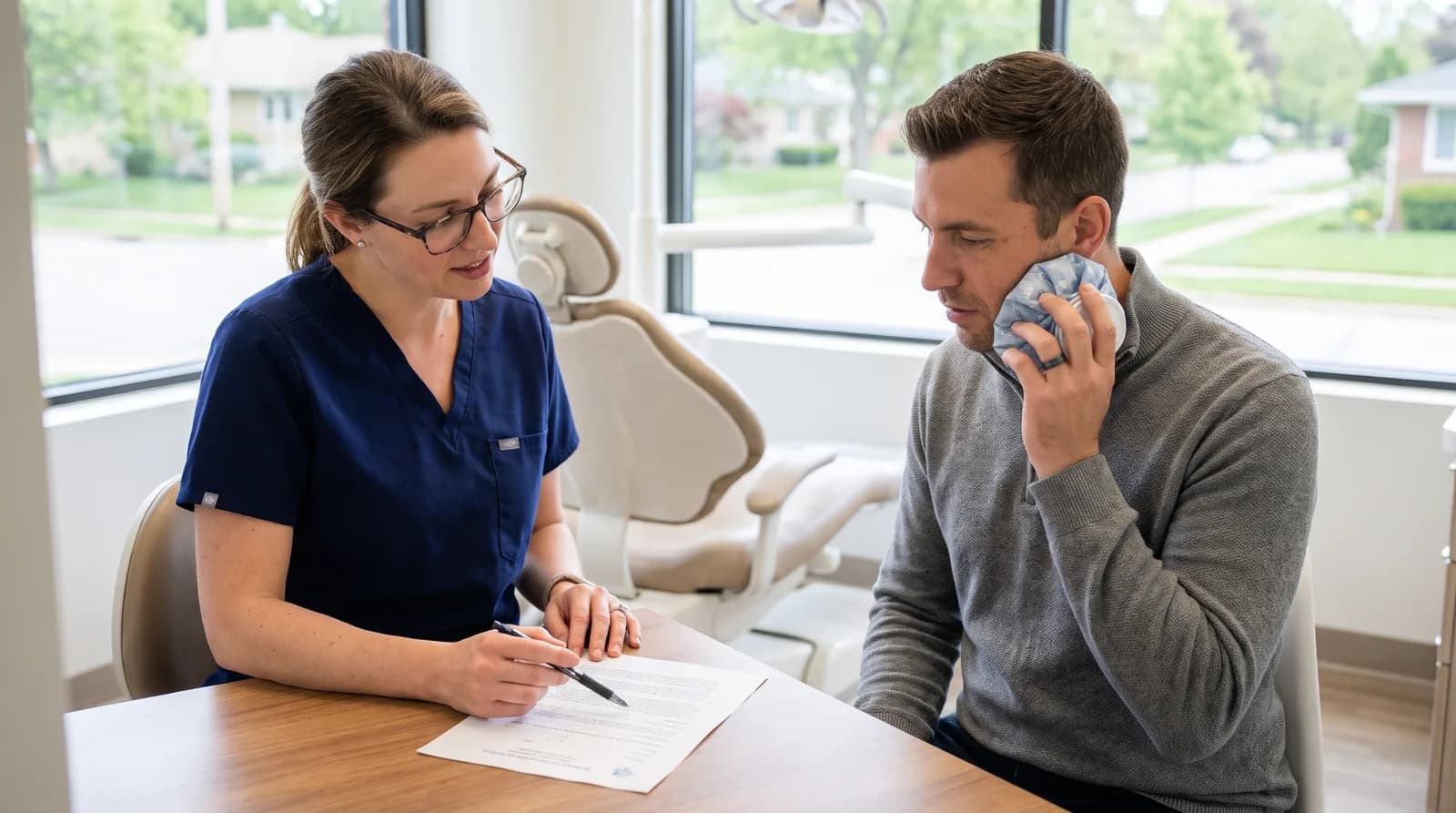
Sensitivity to cold is one of the most common reasons people hold back from whitening.
Tooth decay or cavities that haven't been treated
Fractured teeth or worn fillings
Worn tooth enamel
Gum disease or gum recession that exposes the root
Sensitivity that is already severe or persistent
Gum health deserves a closer look. The National Institute of Dental and Craniofacial Research lists loose or sensitive teeth among the symptoms of gum disease, and the ADA notes that dentin may be exposed when gums recede. Some 42% of adults aged 30 and older have some form of periodontal disease, according to CDC 2024 data.
The ADA also notes that whitening won't work on caps, veneers, crowns or fillings, and it won't help if discoloration comes from medications or a tooth injury. An exam sorts out which situation you're in before you spend time or money on treatment.
How Is Professional GLO Whitening Different From Store Strips?
Professional GLO whitening is done under dental supervision with gum protection and a shade assessment, while store strips are one-size-fits-all products you manage yourself. Elia's GLO system is a heat-and-light method designed to brighten teeth while keeping sensitivity low.
Professional whitening starts with a shade check and protects the gums before any gel goes on.
Shade assessment. Dr. Elia checks your starting shade and talks through your goals, so you know what to expect.
Preparation. Your teeth are cleaned and the surrounding gum tissue is protected before the whitening gel goes on.
GLO treatment. The professional whitening gel is applied and activated with the GLO light-and-heat device.
Results. You see a brighter smile before you leave, and a take-home GLO kit helps extend your results.
The ADA describes in-office bleaching as a procedure that usually needs only one visit, with a protective gel or rubber shield for the gums. It also notes that over-the-counter products contain a lower concentration of bleaching agent than a dentist would use, and recommends looking for the ADA Seal of Acceptance if you choose one.
Elia's whitening needs no messy impressions, and the treatment fits into a short appointment. Our guide to how GLO teeth whitening works covers the process and results in detail, and the GLO vs strips comparison weighs the two approaches side by side.
Another difference is guidance. A professional can adjust the plan if your teeth react, while a drugstore box offers one fixed routine. That flexibility matters when sensitivity is part of the picture.
Can You Whiten Sensitive Teeth Safely?
Often yes, with a dentist's guidance. The safest approach is to find the cause of your sensitivity first, choose a supervised method, and move at a pace your teeth tolerate. Low sensitivity is not the same as none, so honest expectations matter.
Start with an exam, and X-rays if your dentist recommends them
Treat decay, cracks and gum problems before whitening
Choose a supervised method rather than guessing at strength
Follow instructions exactly, since overuse can damage enamel or gums
Pause if sensitivity is strong, and tell your dentist
According to the American Dental Association, regular dental visits can catch 80% of oral health issues before they become serious. That's useful here, because many of the causes of sensitivity are silent until a whitening gel finds them.
Patience is part of safety. If you've had sensitivity before, a gradual approach lets you stop and adjust rather than push through. Telling your dentist about past reactions, such as zings from cold or sweet foods, helps them pick the right pace from the start.
The ADA also describes a slower option. A dentist can provide custom trays for at-home whitening, which can suit people who prefer a gentler pace under guidance. Ask your dentist whether that or an in-office visit fits your teeth better.
What Can Reduce Sensitivity Before and After Whitening?
Desensitizing toothpaste, an in-office fluoride treatment, gentle brushing habits and a slower whitening pace can all reduce sensitivity. The ADA notes desensitizing toothpaste helps block sensation from the tooth surface to the nerve, though it usually needs several applications before sensitivity drops.
Desensitizing toothpaste: contains compounds that help block sensation, and works over several applications, per the ADA
Fluoride gel: an in-office technique that strengthens enamel and reduces sensation, per the ADA
Gentle habits: a soft toothbrush and a light touch are common advice
Easy on the cold: many dentists suggest skipping very cold or acidic drinks for a day or two
A slower pace: spacing treatments gives teeth time to settle
Ask Dr. Elia which steps make sense for you. The right combination depends on why your teeth are sensitive in the first place, and a short exam answers that. If sensitivity is severe and persistent, the ADA notes dentists have other options, from bonding to gum grafts, that address the underlying cause.
Daily habits matter too. Brushing gently, flossing daily and keeping up with cleanings protect enamel and gums, and the ADA notes that proper oral hygiene is the key to preventing sensitive teeth. If you use a desensitizing toothpaste, ask your dentist whether to start it before your appointment, since it usually takes several applications to work.
What Should You Ask Before You Start Whitening?
Ask what's causing your sensitivity, whether your teeth are good candidates, which method is safest for you, and what the aftercare plan is. A good dentist answers these plainly and checks your teeth before any gel goes on.
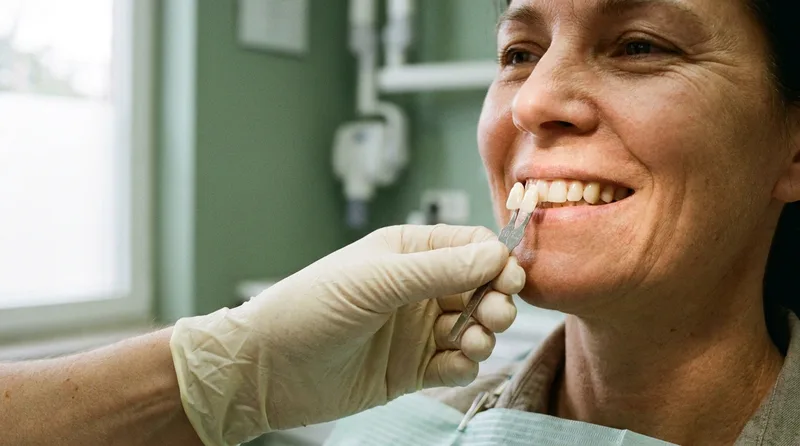
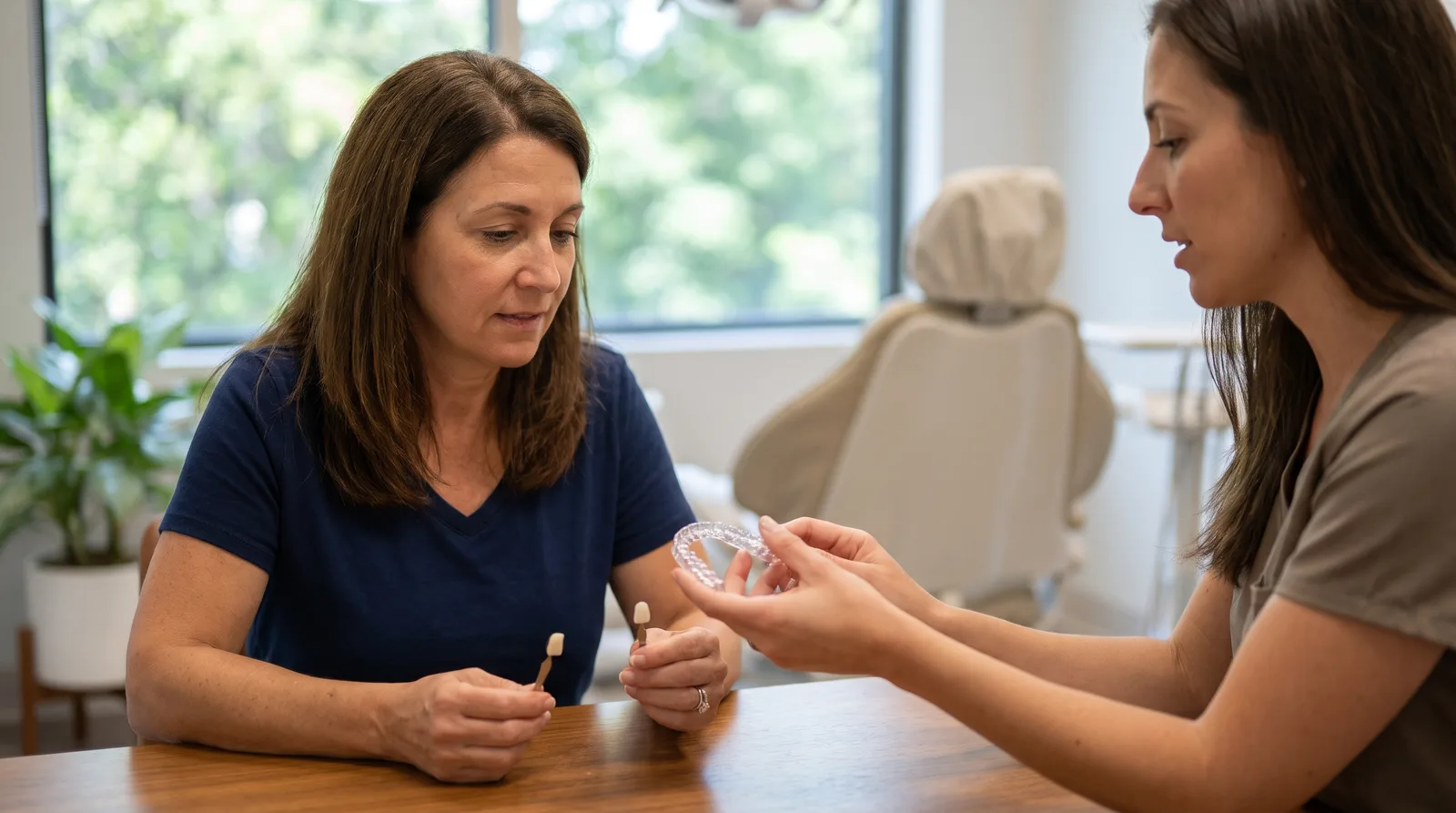
A shade check shows your starting point and what to expect from whitening.
What is causing my sensitivity, and does it need treatment first?
Are my teeth good candidates for whitening?
Which method is safest for my teeth, in-office or at-home?
How will you protect my gums during treatment?
What should I do if sensitivity shows up afterward?
How will whitening look next to my crowns, veneers or fillings?
Candidacy matters because whitening doesn't work equally on every tooth. The ADA says yellow teeth will probably bleach well, brown teeth may not respond as well, and teeth with gray tones may not bleach at all. Knowing that up front prevents disappointment.
If you have crowns, veneers or fillings, they won't change shade, according to the ADA. Your natural teeth could end up brighter than that work, so your dentist should plan around it before you begin.
Don't be shy about the cost question either. A clear price up front is part of a good consultation, and Elia Family Dental is clear about cost before anything starts. Bring any past whitening experiences and products you've used, including strips and toothpastes, so your dentist has the full picture.
How Long Do Results Last, and Can You Touch Up Safely?
Results last as long as your habits allow, and touch-ups can be safe when done as directed. The ADA lists coffee, tea, red wine and tobacco among the major staining culprits, and Elia's take-home GLO kit is designed to help maintain your results.
Professional whitening can improve shade by 4-8 levels in about 2 weeks, according to the ADA. Staining returns gradually if the same habits continue, so the timeline varies from person to person.
Touch-ups deserve caution. The ADA warns that overusing whiteners can damage enamel or gums, so follow directions, and don't stack extra products on top of a supervised plan. If your teeth feel sensitive again, pause and check in with your dentist.
A simple routine protects the investment: brush and floss daily, rinse after coffee or wine, and keep your regular cleanings. Surface stain removal and a bleaching treatment do different jobs, and a dentist can help you keep both in balance.
Does Insurance Cover Teeth Whitening, and What Does It Cost?
Whitening is usually a cosmetic, out-of-pocket service, so insurance typically doesn't cover it, and Elia Family Dental is clear about cost up front. Other visits, such as your exam and cleaning, may be covered by plans like Delta Dental, Blue Cross Blue Shield, Cigna and Principal.
We don't list dollar amounts here, because the right plan depends on your teeth and goals. At your consultation, you'll get a clear price before anything starts. Sunbit and CareCredit financing are available, and Sunbit doesn't require a hard credit check. We don't accept HMO, Medicaid or Medicare plans.
According to the American Academy of Cosmetic Dentistry, 99.7% of Americans believe a smile is an important social asset. Sensitivity shouldn't keep you from yours, and with the right plan it often doesn't.
The best approach to teeth whitening for sensitive teeth is a careful one: an exam first, a supervised method second, and patience throughout. Book a visit, and Dr. Elia will check your teeth and tell you honestly what to expect.
Results may vary. Please consult with your dentist at Elia Family Dental for personalized treatment recommendations.
Ready for a Brighter Smile, Comfortably?
Book an appointment with Elia Family Dental and Dr. Elia will check your teeth and plan your whitening around them.
Dry socket symptoms after tooth extraction: what they feel like, how to prevent them, and when to call. Same-day emergency extractions in Wall Township.
Invisalign vs veneers: compare straightening and reshaping for a crooked smile by time, tooth preservation and results. See how Dr. Elia helps you choose.
Oct 29, 202611 min read
Ready When You Are
Book your visit with Dr. Elia online or call us, and we'll take it from there.