Invisalign vs Veneers: Which Fixes a Crooked Smile Better?
Dr. Nicole EliaOctober 29, 202611 min read
Key Takeaways
Invisalign moves your teeth into better positions, while veneers cover the front surface to change shape, color or appearance.
Clear aligners can treat 90% of mild-to-moderate alignment issues, according to the American Journal of Orthodontics.
Veneers are not reversible because enamel is removed to place them, according to the ADA.
Porcelain veneers can last 10-15 years with proper care, according to the Journal of Prosthetic Dentistry.
Straighter teeth are easier to clean, reducing the risk of cavities and gum disease by up to 30%, according to the ADA.
Dr. Elia offers both treatments, and a Digital Smile Design preview shows your projected smile before you commit.
Invisalign vs veneers is a choice between moving your teeth and reshaping how they look: Invisalign straightens, while veneers cover and refine. At Elia Family Dental in Wall Township, Dr. Nicole Elia offers both, including Invisalign clear aligners and veneers through her cosmetic dentistry care.
Picture a front tooth that sits slightly behind its neighbor, with a small gap on the other side. You've been hiding it in photos for years. Two paths look appealing: aligners that shift everything gradually, or veneers that make the smile look straight in a few visits. Both can work. They solve different problems.
This guide compares them honestly, by what they change, how long they take, how much natural tooth they preserve, and who each suits best. It's general education only, and an exam with imaging decides what fits your teeth.
Not Sure Which Fits Your Smile?
Book a consultation and Dr. Elia will examine your teeth and show you a preview of each option.
Invisalign vs Veneers: What Is the Real Difference?
Invisalign moves your teeth into better positions using clear aligners, while veneers cover the front surface of your teeth to change their shape, color or appearance. According to the ADA's MouthHealthy guide to veneers, they can improve crooked or misshapen teeth and mask gaps.
Think of it like a house. Invisalign adjusts the foundation, so the structure sits where it should. Veneers renovate the facade, so what everyone sees looks better. If the structure is off, a new facade can hide it, but only to a point.
That difference drives every other comparison in this guide, from timing to cost to how much of your natural tooth is involved. Both are well-established options that dentists use every day. What differs is the job each one does.
Because Elia Family Dental offers both treatments, the recommendation isn't tilted toward one product. You get a plan that fits your teeth and your goals, whichever route that turns out to be.
How Does Invisalign Straighten a Crooked Smile?
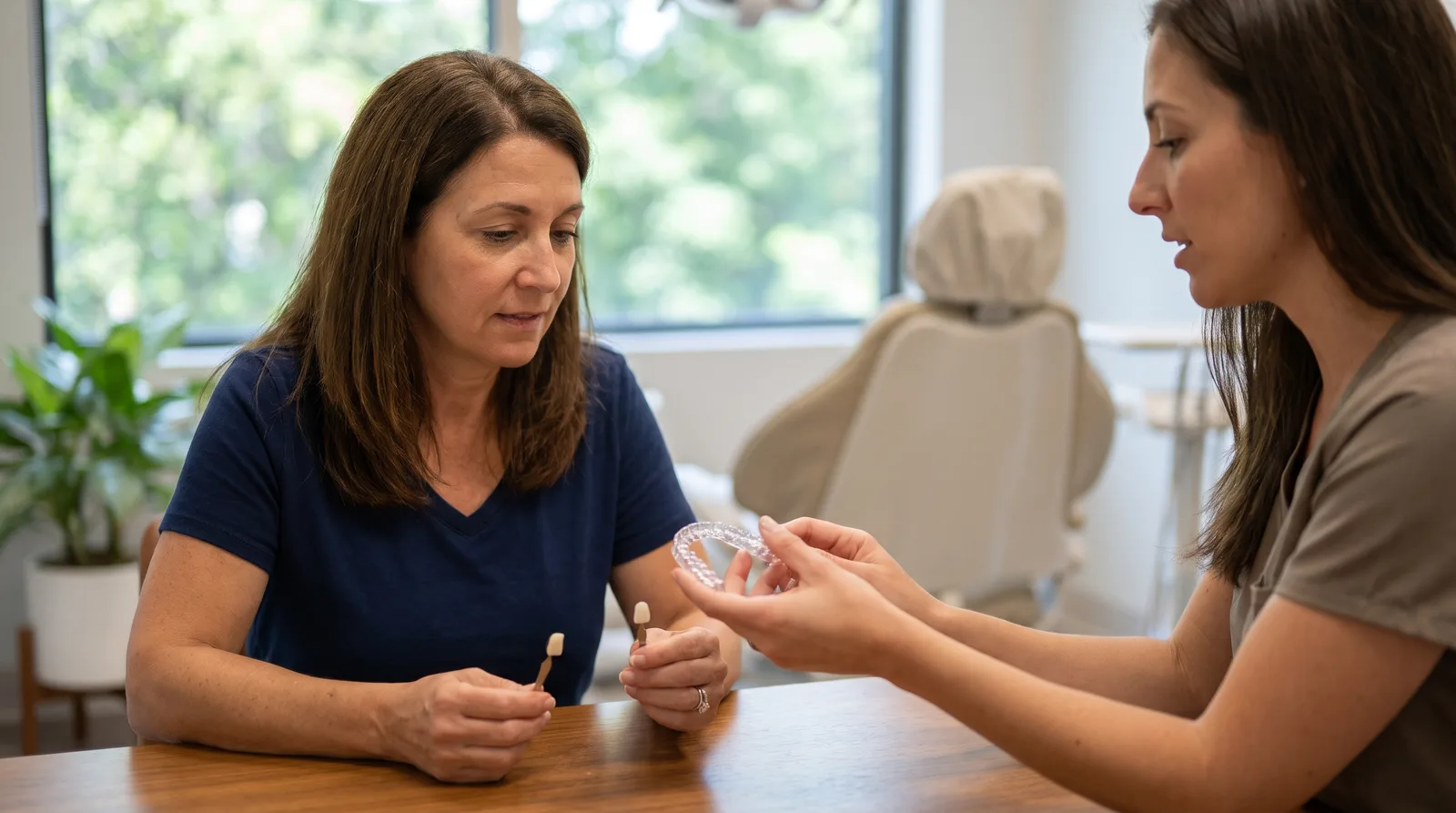
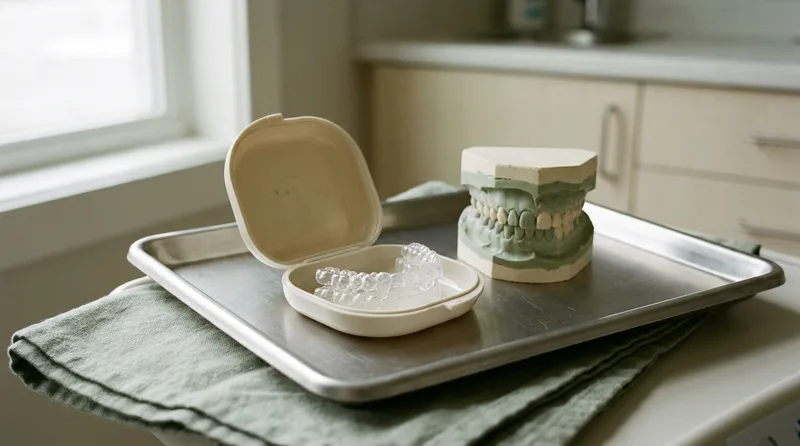
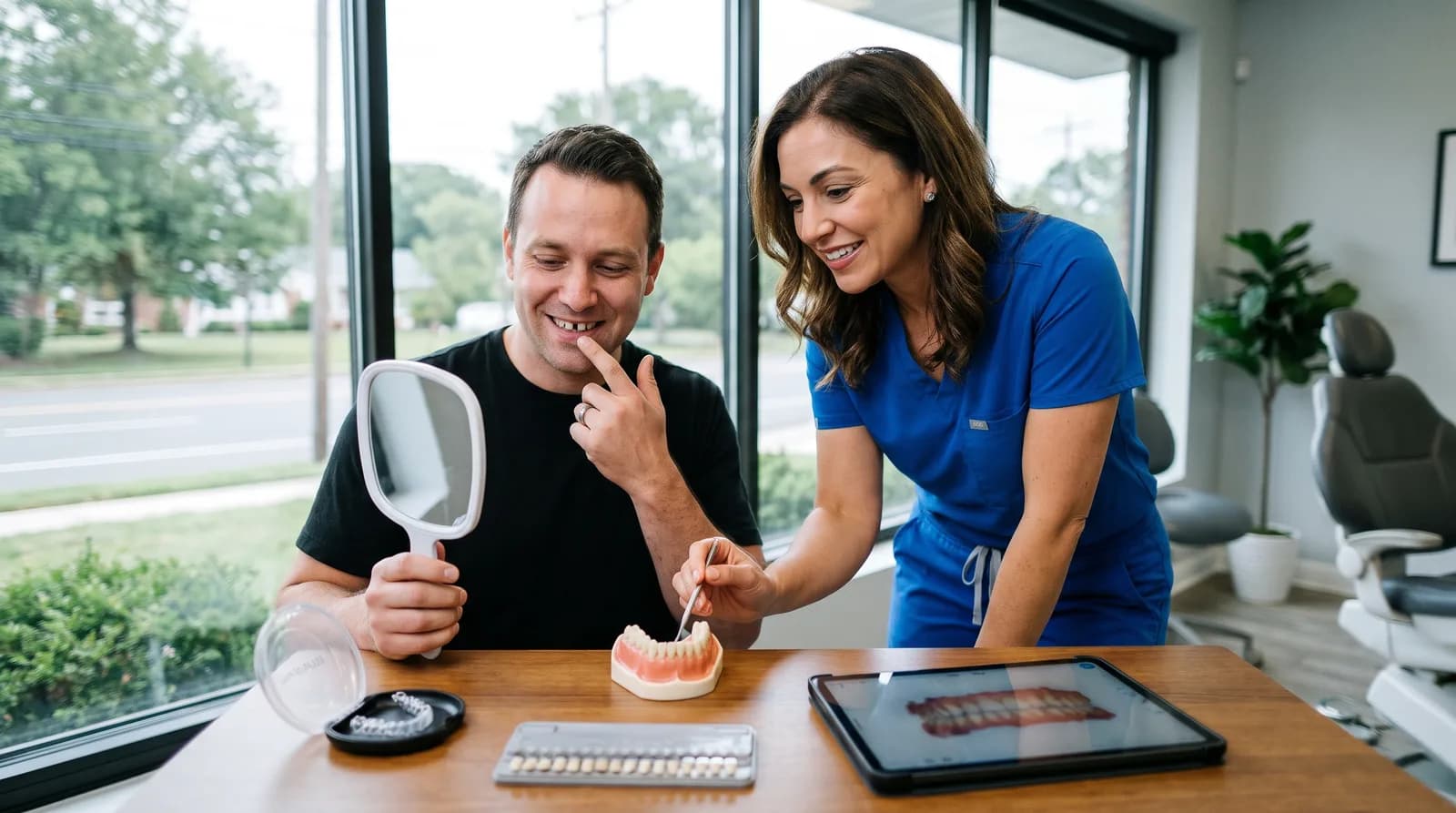
Invisalign straightens teeth with a series of custom clear aligners that gradually move them into place. At Elia Family Dental, the iTero 3D scanner builds a precise model and shows a projected preview of your smile before treatment begins.
Clear aligners are removable for eating, drinking, brushing and flossing.
Consultation. Dr. Elia looks at your smile, talks through your goals and confirms whether Invisalign is the right fit.
3D digital scan. The iTero scanner creates a precise 3D model and a projected preview of your final result.
Custom aligners. Your aligners are made to fit precisely, based on your personalized digital treatment plan.
Wear and progress. You wear each set for about two weeks, then switch to the next as your teeth move into place.
Results and retainer. You finish with a custom retainer to keep your results.
Invisalign treats crowding, spacing and many common bite problems. The aligners are removable for eating, drinking, brushing and flossing, which makes cleaning easier than with fixed braces. Video consultations make check-ins convenient.
Clear aligners can treat 90% of mild-to-moderate alignment issues, according to the American Journal of Orthodontics. The American Association of Orthodontists reports an average of 6-18 months for clear aligner treatment, compared with 18-36 months for traditional braces.
The retainer matters. The ADA notes that retainers preserve and stabilize the results of orthodontic treatment, so wearing yours as directed protects the work you've done.
Wondering whether adults can still straighten their teeth? Our guide to Invisalign for adults answers the "is it too late?" question.
How Do Veneers Change a Crooked Smile?
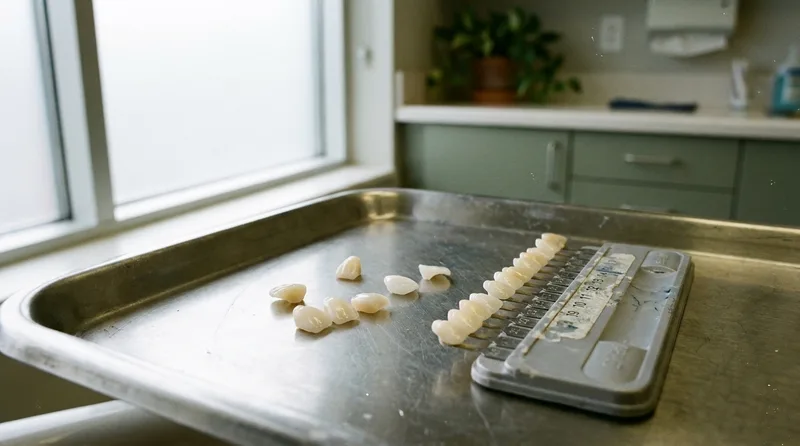
Veneers make crooked teeth look straighter by covering their front surface with custom shells, without moving the teeth underneath. According to the ADA, they cover only the front surface of a tooth, unlike a crown, which covers the whole tooth, and they can also mask gaps.
Veneers cover the front surface of the tooth to change its shape, color or appearance.
The ADA describes two main types. Porcelain veneers are thin custom shells that are strong, long-lasting and natural-looking, though they tend to cost more. Composite veneers are made from tooth-colored filling material bonded to the tooth, and they may need less enamel removal and fewer visits. They are easier to fix if damaged but not as stain- or wear-resistant.
Porcelain veneers can last 10-15 years with proper care, according to the Journal of Prosthetic Dentistry. They can still chip, crack, wear down or loosen over time, and the ADA notes they may need to be re-bonded, repaired or replaced.
Veneers have limits. They change how teeth look, but they don't move the teeth or correct how your upper and lower teeth meet. Moderate crowding or a bite problem usually needs straightening first, which is where Invisalign comes in.
Elia Family Dental offers veneers, bonding, whitening and full smile makeovers, planned with Digital Smile Design so you preview the result first. Our porcelain veneers step-by-step guide walks through the process from start to finish.
Invisalign vs Veneers: How Do Time and Commitment Compare?
Invisalign takes months and daily wear, while veneers take fewer visits but are a one-way change. The AAO reports an average of 6-18 months for clear aligner treatment, and the ADA notes composite veneers can need fewer visits than porcelain.
Factor
Invisalign
Veneers
What it changes
Tooth position
Tooth shape, color and appearance
Typical timeline
Average of 6-18 months for clear aligners, per the AAO
Fewer visits, with a timeline set in your plan
Natural tooth
Enamel is not removed
Enamel is removed, and treatment is not reversible, per the ADA
Removable
Yes, for eating, brushing and flossing
No
Upkeep
A custom retainer to keep results
May chip, crack or wear and need repair or replacement
Best known for
Crowding, spacing and many bite problems
Chipped, stained or misshapen teeth, and masking gaps
Commitment looks different for each. Invisalign asks for discipline: aligners need to be in most of the day, and each set is worn for about two weeks. Veneers ask for a decision: once enamel is removed, the treatment can't be undone.
Then there's upkeep. Aligners end with a retainer you'll keep wearing. Veneers end with checkups and care to protect the shells, including avoiding habits like chewing ice.
Both need healthy teeth and gums first. The ADA says a dentist must treat decay or gum disease before veneers, and placing them over unhealthy teeth may worsen existing problems. Neither option is quick the way a whitening session is, so ask for a timeline in writing.
Which Option Preserves More of Your Natural Teeth?
Invisalign preserves more of your natural teeth because it moves them without removing enamel, while veneers are not reversible because tooth enamel is removed to place them. Composite veneers may require less enamel removal, according to the ADA.
Preserving enamel matters because it doesn't grow back. Once a tooth is prepared for a porcelain veneer, a small amount of enamel is removed from the front and sides, according to the ADA, and that tooth will need a veneer or another restoration from then on.
Straight teeth also help your oral health. They're easier to clean, which can reduce the risk of cavities and gum disease by up to 30%, according to the ADA. The ADA also notes that leaving an abnormal bite uncorrected can lead to problems such as decay, gum disease, tooth loss and abnormal wear to enamel.
That doesn't make Invisalign the automatic winner. If your teeth are already well aligned and you only want a different shape or shade, moving them is unnecessary. Choose the least invasive option that solves your actual concern.
Who Is a Better Fit for Invisalign, and Who for Veneers?
Invisalign fits people whose main concern is crowding, spacing or bite, while veneers fit people whose main concern is the shape, color or size of their teeth. Many crooked smiles need one, and some need both.
Invisalign tends to fit when:
Teeth are crowded or overlapping
There are gaps between teeth
A bite problem needs correcting
You want to keep your natural tooth structure intact
You can wear aligners most of the day
Veneers tend to fit when:
Teeth are chipped, worn or misshapen
Stains won't respond to whitening
Mild crookedness or gaps bother you
You want to change the shape or size of teeth
Your teeth and gums are healthy
Veneers may not be a good choice if you clench or grind your teeth or have a deep overbite, according to the ADA. And if color is your only concern, professional whitening may do the job. The ADA's teeth whitening guide lists coffee, tea, red wine, tobacco and age among the common causes of color change.
Your goals matter as much as your teeth. Some patients want a gradual change with no alteration to their natural teeth. Others want a dramatic change quickly. Dr. Elia listens first, then explains which treatments reach your goal and what each one involves. Be honest about what bothers you most, because the thing you notice first in the mirror often points to the right treatment.
Can You Combine Invisalign and Veneers?
Yes, some patients straighten their teeth with Invisalign first and then use veneers to refine the shape, size or color of specific teeth. Because Dr. Elia offers both, she can plan the two treatments together so the sequence makes sense.
Sequence matters. Moving teeth first gives veneers a better foundation, and it may mean less preparation of the natural tooth. A few veneers on a well-aligned smile generally involve less than veneers placed on every crooked tooth.
A combined plan can be the most conservative path for a smile with both alignment and appearance concerns. Elia's cosmetic process ends in a personalized combination of treatments with clear costs, timelines and expected results, so you can see each stage before it begins.
Not everyone needs both. Many patients choose one path, and an exam shows whether a second step would add anything for you.
Digital Smile Design makes the combined plan visible before you commit. More on that next.
How Does a Digital Smile Design Preview Help You Decide?
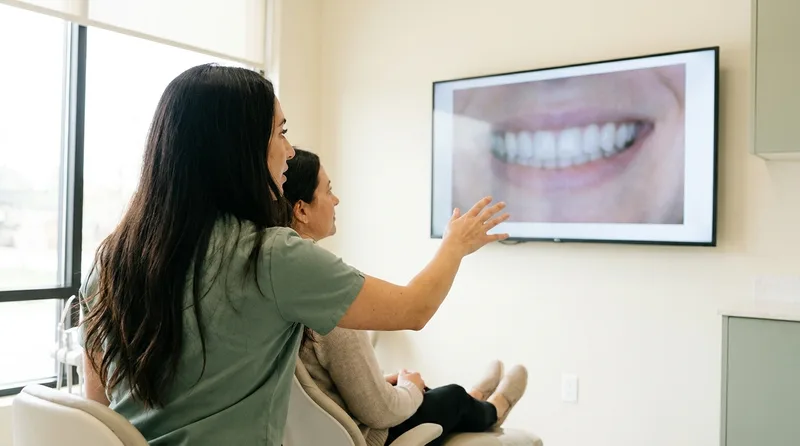
A Digital Smile Design preview shows your projected smile on screen before treatment begins, so you can compare outcomes and approve the plan. At Elia Family Dental, Dr. Elia builds the digital model from photos and scans of your teeth, gums and face.
A Digital Smile Design preview shows your projected smile before treatment begins.
Digital imaging. High-resolution photos and scans capture your teeth, gums and face from several angles.
Digital design. Specialized software maps possible changes to tooth shape, size, alignment and color.
Preview and feedback. You see the projected result on screen, and Dr. Elia reworks it until it's right.
Physical model. A model of your proposed smile lets you see and feel the changes in 3D.
Treatment. Once you approve the design, treatment follows the plan you signed off on.
Invisalign has its own preview, since the iTero scanner shows a projected result before you start. Together, the two previews let you look at both outcomes side by side. Our guide to what a digital smile design mockup actually shows you explains what to look for.
Seeing it matters. According to the American Academy of Cosmetic Dentistry, 99.7% of Americans believe a smile is an important social asset. That's a big decision to make on a hunch, and a preview takes the guesswork out of it. A preview is also a chance to say no. If you don't love what you see, the design changes, and nothing has changed in your mouth yet.
What Does It Cost, and Will Insurance Help?
Cost depends on your plan, the number of teeth treated and the treatment involved, so the clearest answer is a personalized estimate. Elia Family Dental accepts Delta Dental, Blue Cross Blue Shield, Cigna, Principal and most PPO plans, and verifies your coverage before treatment begins.
The ADA notes that veneers are considered cosmetic dentistry, so insurance may not cover them unless they're deemed medically necessary. Invisalign coverage varies, and some plans include orthodontic benefits, so ask your plan for specifics. We'll verify what applies to you.
Elia's cosmetic consultations build a plan around your goals and budget, with clear costs, timelines and expected results. Sunbit and CareCredit financing are available, and Sunbit doesn't require a hard credit check. We don't accept HMO, Medicaid or Medicare plans.
Compare the full picture, not just the first number. Invisalign finishes with a custom retainer to protect your results, and veneers may need maintenance or replacement over the years. Ask for each plan in writing so you can compare like with like.
The Invisalign vs veneers question isn't about which treatment is better in general. It's about which one fits your teeth, your goals and your comfort with change. If you're still unsure, a consultation and a smile preview will make the answer clearer.
Book a visit and Dr. Elia will examine your teeth, show you what each path looks like and help you decide.
Results may vary. Please consult with your dentist at Elia Family Dental for personalized treatment recommendations.
Ready to See Your Options?
Book an appointment with Elia Family Dental and Dr. Elia will preview Invisalign and veneers for your smile.
Dry socket symptoms after tooth extraction: what they feel like, how to prevent them, and when to call. Same-day emergency extractions in Wall Township.