Periodontal Care
Guided Biofilm Therapy vs Deep Cleaning: Which Fits?
Guided biofilm therapy vs deep cleaning: see how each works, what pocket depths decide, and which one your gums may need. Wall Township, NJ.
Nov 9, 202611 min read



Dead tooth symptoms can be easy to miss, because a tooth whose nerve has died may stop sending the warning signals you'd expect. Common signs include a tooth that darkens, swollen gums nearby, a bad taste or breath and tenderness when you bite, though some people notice nothing at all. The good news is that a dead tooth can often be saved. Elia Family Dental's restorative dentistry includes root canal treatment with 3D endodontic imaging, and the tooth is numbed first, so the visit is comfortable.
This guide explains what a dead tooth is, the symptoms to look for, why a dead tooth can go quiet, what causes it, what happens if it's left alone, how it's diagnosed and what your treatment options are. It's general education only, and only a dentist can tell you whether a tooth is dead after an exam and X-rays.
Noticed a Darkening or Swollen Tooth?
Book a visit and Dr. Elia will examine the tooth, take images and explain whether it can be saved.
Book Appointment →A dead tooth is a tooth whose pulp, the inner tissue of nerves and blood vessels, has died, a condition dentists call pulp necrosis. Healthline says pulp necrosis is often the last stage of chronic pulpitis, and that the pulp extends from the root to the crown and helps keep your teeth healthy on the inside.
The ADA describes the pulp as the soft tissue inside your tooth that contains nerves and blood vessels and provides nourishment for the tooth. When it's damaged badly enough, it can become infected and eventually die. The tooth itself is still in your mouth, and in many cases it can be saved, which is why the word "dead" sounds worse than the situation often is.
What matters is that a dead pulp doesn't heal on its own. Healthline says necrotic pulp can't be revived without a root canal and/or extracting the affected tooth. That's why spotting the signs early is worth your attention: the sooner a dentist looks, the more options you tend to have.
If you've wondered whether your tooth needs a root canal, our guide to the signs you need a root canal walks through the common warning signs, and the ADA's page on root canals explains how the treatment saves a tooth instead of removing it.
Common dead tooth symptoms include a tooth that darkens to a grayish color, swollen gums near the tooth, a gum boil that may ooze, a bad taste or breath and tenderness when you bite. Some people have no symptoms at all, and the problem is found only at a dental exam.
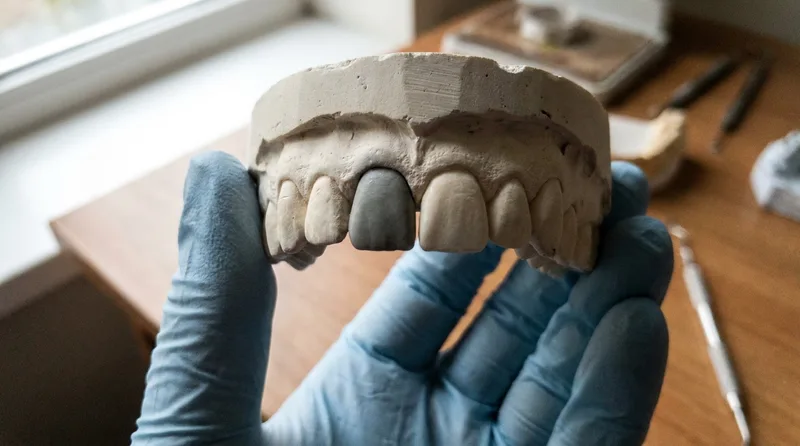
Discoloration alone doesn't prove a tooth is dead. Healthline notes that tooth discoloration can have other causes, and it's always a good idea to see your dentist if you notice a tooth changing color. Our guide to dental abscess warning signs explains the signs that suggest an infection needs urgent attention.
It's also common for several of these signs to appear together, which makes them easier to recognize. A darkened tooth with swelling and a bad taste, for example, points more strongly to infection than any single sign alone. Take note of what you see and when it started, because that's the first thing your dentist will want to know.
Once the pulp dies, the nerves may stop sending signals, so the early warning signs can fade even though the problem is still there. Healthline says most symptoms occur before necrosis, and that a tooth with no feeling at all could be a sign that the pulp has died.
Healthline describes the shift in plain terms. In the early stages of pulp trouble, a tooth is especially sensitive to cold foods and drinks, and sweets can bother it, with the discomfort lasting about one to two seconds at a time. Once necrosis develops, you can't feel cold at all, though you might feel heightened pressure from eating or grinding that lasts for several minutes.
That's why dead tooth symptoms can fool you: a tooth that has gone quiet isn't necessarily a healthy tooth. If a tooth that used to be sensitive suddenly stops responding, especially if it has also darkened or the gum nearby is swollen, it's worth having it checked. The relief of fewer warning signs can be misleading, because the infection can continue to develop around the root.
Healthline adds that sometimes the condition isn't known to the patient and is only discovered at a dental examination. That's one reason regular checkups matter even when nothing seems wrong, since X-rays can reveal decay or an abscess that you can't feel.
A tooth can die from untreated decay, trauma or multiple large fillings. Healthline says pulp necrosis usually starts with tooth decay that eventually reaches the pulp, and the ADA lists a deep cavity, repeated dental procedures, a cracked or fractured tooth and injury to the tooth as ways the pulp can become infected.
Decay is the most common starting point, and it's widespread. Among US adults aged 20 to 64, 91% have had dental caries, according to the CDC's National Center for Health Statistics (2011 to 2012 data), and 20.5% have untreated tooth decay, according to the CDC's 2024 Oral Health Surveillance Report. The ADA's page on cavities explains how decay develops and is treated, and Healthline notes that cavities caught early are filled and don't cause further issues.
Trauma is the other major cause, and it can be less obvious. The ADA says injury to a tooth can lead to infection of the pulp even if there's no visible crack or chip. Healthline's guide to root canal symptoms makes the same point: even if you injure a tooth but it doesn't chip or crack, the injury may still damage its nerves. Our guide to what to do after you crack a tooth explains how to act quickly after an injury.
Repeated dental work can contribute as well. Healthline lists multiple large fillings, along with long-term decay and trauma, as causes of chronic pulpitis, the long-term inflammation of the pulp that can end in necrosis. That doesn't mean fillings are a problem. It means that a tooth with a history of large restorations deserves close attention if it starts to change.
Left untreated, a dead tooth can lead to infection, fever and jaw swelling, according to Healthline, and the ADA says the tissues around the root can become infected, an abscess can form and bacteria can damage the bone that keeps the tooth connected to your jaw.
Healthline also lists conditions that pulpitis and subsequent necrosis may be associated with, including cellulitis, abscesses, sinusitis, periodontitis and bone loss. That's a reminder that a dental infection doesn't always stay in the tooth. Dental infections send many people to the emergency room: a nationwide analysis found 846,629 emergency department visits with a primary diagnosis of periapical abscess in the United States across 2021 and 2022, according to a study of national emergency department data.
Know the signs that call for urgent care. Facial swelling, a fever or swelling that's spreading should be seen the same day, and Healthline notes that a dentist may give antibiotics beforehand if you need a root canal and have facial swelling or a fever. If you can't reach a dentist and the swelling is spreading or makes it hard to breathe or swallow, go to an emergency room.
The ADA's practical message is simple: treating the problem early is simpler than treating it late. A tooth that's still intact is far more likely to be saved with a root canal, while a tooth that has broken down badly may only be a candidate for removal. Waiting rarely improves the options.
A dentist diagnoses a dead tooth with an exam, X-rays and sometimes an electric pulp tester. Healthline says the dentist first examines your teeth, gums and surrounding tissues, X-rays help narrow down areas of decay or abscess, and the pulp tester shows whether the pulp is alive.
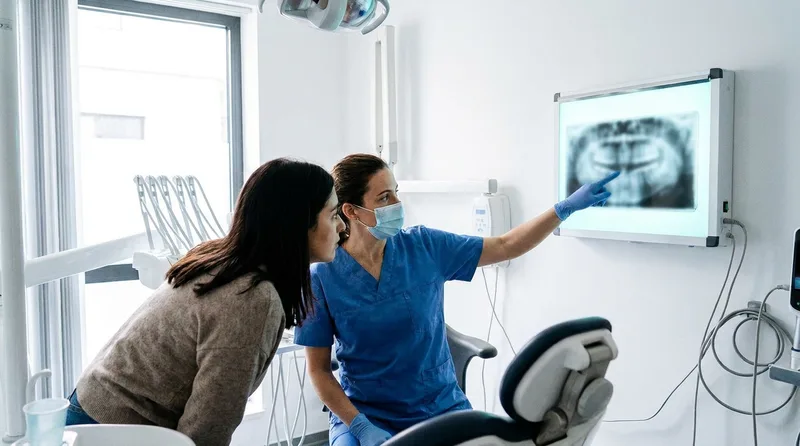
The pulp tester sends a small electrical signal to the tooth. If you can feel it, the pulp is alive, and if you can't, necrosis could be possible. That's why testing a tooth that seems fine can still reveal a hidden problem. At Elia Family Dental, 3D endodontic imaging shows the infection and the inside of the tooth, so Dr. Elia can plan treatment precisely. Our guide to 3D endodontics explains why that precision matters.
Diagnosis isn't about one test. Your dentist looks at the whole picture: what you've noticed, the look of the tooth and gums, the X-rays and how the tooth responds. That combination is what separates a dead tooth from a tooth that's only sensitive or discolored for another reason, and it's why self-diagnosing dead tooth symptoms from a mirror isn't reliable.
The two main options are a root canal, which cleans out the dead pulp and keeps your tooth, or extraction, which removes it. Healthline says necrotic pulp can't be revived without a root canal and/or extracting the tooth, and the ADA says root canals repair and save your tooth instead of removing it.
| Option | What it does | Worth knowing |
|---|---|---|
| Root canal | Removes the dead pulp, cleans the canals and seals them | Saves your natural tooth; the ADA says it usually takes 1 or 2 office visits |
| Crown after a root canal | Covers and protects the treated tooth | Healthline says a root canal makes the tooth more fragile, so it is often covered with a crown |
| Extraction | Removes the tooth | Considered when the tooth is too damaged to save; it can be replaced afterward |
| Tooth replacement | Replaces a removed tooth | Options include bridges, partial dentures and implants |
Root canals are common. According to the American Association of Endodontists, as reported by Healthline, more than 15 million root canals are performed each year in the United States, which is more than 41,000 a day. The ADA explains that your dentist numbs the area, so there's little to no discomfort, then removes the nerve from inside the tooth, cleans each canal and fills it to seal against future infection. Healthline adds that studies found only 17% of people who had a root canal described it as their most uncomfortable dental experience.
Afterward, the tooth needs a proper restoration. The ADA says a follow-up visit replaces the temporary filling with a regular filling or a crown, and that with proper care your restored tooth can last a lifetime. Our guide to the crown after a root canal explains why a crown matters, and our root canal patient guide walks through what to expect. At Elia, a root canal is numbed first and often completed in a single visit.
If a tooth can't be saved, removal isn't the end of the road. Our guides to tooth extraction, bridge vs partial denture and dental bridge vs implant explain how a missing tooth can be replaced. To weigh the two paths side by side, see root canal vs extraction.
The first step is an exam with imaging, so Dr. Elia can see the inside of the tooth and tell you whether it can be saved. Elia uses 3D endodontic imaging to map the tooth precisely, and root canals are numbed first and often completed in a single visit.

If you have swelling, a fever or sudden changes in a tooth, call right away. Elia Family Dental offers same-day emergency care for urgent problems, and the team can tell you whether to come in immediately. Bring a note of when you first noticed the changes, anything that makes the tooth feel different and your insurance details if you have them.
Elia Family Dental accepts Delta Dental, Blue Cross Blue Shield, Cigna, Principal and most PPO plans and verifies your coverage before treatment begins. Sunbit and CareCredit offer flexible monthly payment plans, and Sunbit doesn't require a hard credit check. You can start with a conversation, and there's no obligation to proceed.
Results may vary. Please consult with your dentist at Elia Family Dental for personalized treatment recommendations.
Worried About a Tooth? Let Us Take a Look
Call Elia Family Dental and Dr. Elia will examine the tooth, take images and explain whether it can be saved.
Book an Appointment →Prefer to talk it through first?
Call 732-681-8604 →Written By
Lead Dentist
Guided biofilm therapy vs deep cleaning: see how each works, what pocket depths decide, and which one your gums may need. Wall Township, NJ.
Tunneling gum graft explained: how the VISTA technique covers exposed roots through one small incision, what studies show and what recovery involves.
Plaque vs tartar: learn how plaque hardens, why only a dental professional can remove tartar and what to expect at a cleaning in Wall Township, NJ.
Book your visit with Dr. Elia online or call us, and we'll take it from there.