invisalign
Invisalign for Crowded Teeth: What Aligners Can Fix
Invisalign for crowded teeth explained: what aligners can fix, how long treatment takes, and when another option fits. Free consult in Wall Township.
Nov 3, 202610 min read



Veneers vs crowns comes down to coverage: a veneer covers only the front surface of a tooth, while a crown covers the tooth to restore its shape, size and strength. A veneer suits a mostly healthy tooth with a cosmetic concern, and a crown suits a tooth that is weak, broken or heavily filled. At Elia Family Dental in Wall Township, Dr. Nicole Elia offers both through her cosmetic and restorative dentistry care.
Say a front tooth has bothered you for years. It's stained, a little chipped, and slightly uneven next to its neighbor. You've heard the words "veneer" and "crown" and you're not sure which one you're being offered, or which one you should be asking about. They're often confused, and they solve different problems.
This guide explains how each works, when each is the better fit, how they compare on tooth preservation and lifespan, and what to ask before you decide. It's general education only, and an exam with imaging decides what your tooth needs.
Not Sure Which Your Tooth Needs?
Book a visit and Dr. Elia will examine the tooth, review your X-rays and show you a preview of your options.
Book Appointment →A veneer covers only the front surface of a tooth, while a crown covers the tooth to restore its normal shape and size. The ADA's MouthHealthy guide to veneers says they differ from crowns because they cover only the front surface of a tooth rather than the entire tooth structure.
The ADA's guide to crowns lists what crowns are for: restoring a tooth to its normal shape and size, strengthening a tooth with a large filling when there isn't enough tooth left to hold the filling, protecting a weak tooth from breaking or restoring one that's already broken, covering discolored or badly shaped teeth, attaching bridges, and covering a dental implant.
Put simply, a veneer is mostly about appearance and a crown is mostly about strength and protection. That's a useful rule of thumb, but real teeth don't always fit neatly into one category. A badly stained tooth that is also heavily filled, for example, may call for a crown even though the goal is cosmetic.
Elia Family Dental offers both, so the recommendation isn't tilted toward one product. You'll hear what each option would do for your specific tooth, what it involves, and what it would cost before anything begins.
A veneer is the better choice when the tooth is structurally healthy and the concern is how it looks: a stain that won't respond to whitening, a small chip, an uneven shape, or a small gap. The ADA says veneers can improve teeth that are chipped or broken, stained, or crooked or misshapen, and can mask gaps in your smile.
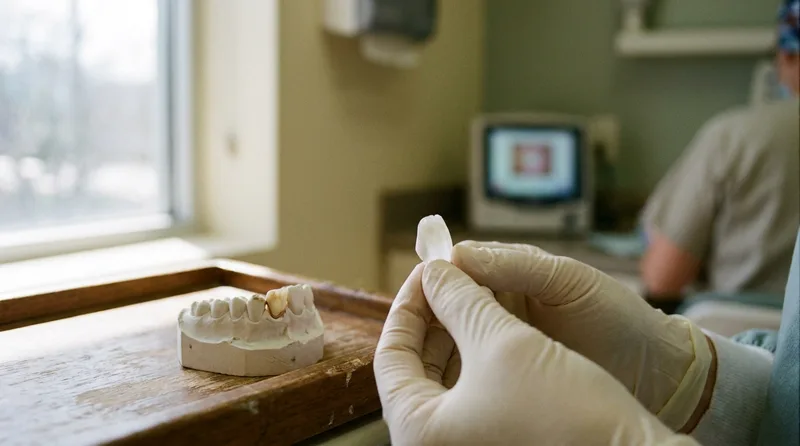
The two main types are porcelain, a thin custom shell the ADA describes as strong, long-lasting and natural-looking, and composite, made from tooth-colored filling material bonded to the tooth. Veneers have limits. The ADA says they may not be a good choice if you clench or grind your teeth or have a deep overbite, and that your dentist must treat decay or gum disease first. If color is your only concern, whitening may do the job, as our guide to veneers vs bonding and the ADA's whitening guide explain, and our guide to teeth whitening vs veneers compares the two directly. And our guide on whether you're a candidate for veneers covers who they suit best.
A crown is the better choice when the tooth is weak, cracked, broken, or has a large filling, because it covers the tooth and strengthens it rather than just improving the front surface. The ADA says a crown can strengthen a tooth with a large filling when there isn't enough tooth remaining to hold the filling.
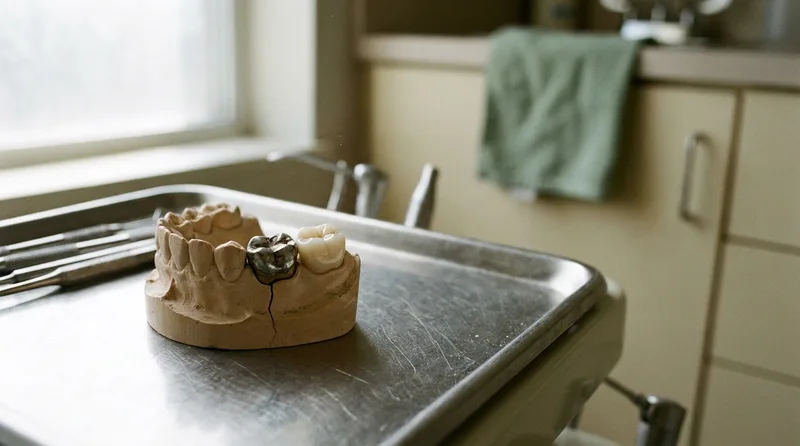
Not sure whether a large cavity needs a crown or just a filling? Our guide to crown vs filling explains how dentists decide. After a root canal, a crown is often how the tooth is protected, and our guide to a crown after a root canal covers why. For a chipped tooth, our guide to chipped tooth repair options compares bonding, veneer and crown.
The deciding question is almost always the same: how much healthy tooth is left? A veneer needs a sound tooth beneath it. A crown can rebuild a tooth that isn't. Your dentist finds the answer with an exam and X-rays, not by looking at the outside alone.
Veneers generally involve less change to the tooth than crowns, but neither is reversible. The ADA says veneer treatment is not reversible because tooth enamel is removed to place a veneer, and that porcelain veneer preparation removes a small amount of enamel from the front and sides.
| Factor | Veneer | Crown |
|---|---|---|
| What it covers | The front surface of the tooth | The tooth, to restore shape, size and strength |
| Best for | Stains, small chips, uneven shape, masking gaps | Weak, cracked, broken or heavily filled teeth |
| Enamel removed | A small amount from the front and sides, per the ADA | Generally more, since the whole tooth is reshaped |
| Reversible | No, per the ADA | No |
| Typical lifespan | 10 to 15 years or more for porcelain, per Elia | 10 to 15 years, often longer, per Elia |
| Main concern | May chip, crack, wear down or loosen, per the ADA | Needs enough healthy tooth underneath |
That crown row reflects general practice: a crown surrounds the tooth, so more of it is reshaped. Composite veneers are the exception on the veneer side. The ADA notes they may need less enamel removed and fewer visits than porcelain, though they're easier to fix if damaged and less stain- or wear-resistant.
For a patient who values keeping as much natural tooth as possible, the question is whether a veneer will really solve the problem. If it will, it's usually the more conservative choice. If the tooth is weak, a crown protects it, and trying to save it with a veneer alone would be false economy.
With good care, Elia Family Dental reports that dental crowns typically last 10 to 15 years, often longer, and porcelain veneers typically last 10 to 15 years or more. Porcelain veneers can last 10-15 years with proper care, according to the Journal of Prosthetic Dentistry, which matches that range.
Habits matter more than most people expect. Elia notes that avoiding habits like biting nails or chewing ice helps veneers last even longer, and the ADA warns that veneers may chip, crack, wear down or loosen over time, requiring repair or replacement. Clenching and grinding put extra force on any restoration.
For more detail on each, see our guides on how long veneers last and how long dental crowns last. And if you're deciding on material for a crown, zirconia vs porcelain crowns compares the options.
One honest note: lifespan figures are averages. A well-made restoration on a sound tooth, cared for and checked regularly, can outlast the range. A restoration on a tooth that keeps getting stressed or neglected can wear out sooner. Regular checkups are the difference, since regular dental visits can catch 80% of oral health issues before they become serious, according to the American Dental Association. Americans who see a dentist regularly are also 60% less likely to lose teeth, according to the Journal of Dental Research.
For crowns, Elia Family Dental uses an iTero 3D scan with no goopy impression molds, designs the crown, and makes it in the office with a 3D printer, so many crowns are finished in one visit. For veneers, the process starts with a smile consultation and a Digital Smile Design preview before any treatment begins.

Elia's same-day crowns are made in-office with 3D printing, as described on the Same-Day Crowns page and in our guide to same-day dental crowns. Restorations are built with tooth-colored materials that match your natural teeth. Nothing is placed until you've approved the plan, and if a preview shows something you don't like, the design changes while nothing has changed in your mouth yet. Dr. Elia's training includes advanced study at the Pankey Institute.
Yes. Many smile makeovers use both, with crowns on weak or heavily restored teeth and veneers on sound teeth beside them, all shade-matched so the result looks like one natural smile. Elia's cosmetic process builds a personalized combination of treatments with clear costs, timelines and expected results.
A preview makes combined plans easier to judge. Digital Smile Design lets you see the projected result on screen and give feedback until it looks right, before anything is placed. According to the American Academy of Cosmetic Dentistry, 99.7% of Americans believe a smile is an important social asset, which is why a preview is worth the time.
If straightening is part of the picture, our comparison of Invisalign vs veneers explains when moving teeth comes before covering them. Sequence matters, and your dentist will lay it out so you know what comes first.
The most important point: you don't have to decide alone, or in the abstract. Seeing a preview of each option on your own teeth turns a confusing choice into a visual one.
Coverage differs. The ADA notes veneers are considered cosmetic dentistry, so insurance may not cover them unless they're deemed medically necessary, while many plans treat crowns that restore a damaged tooth differently. Elia Family Dental accepts Delta Dental, Blue Cross Blue Shield, Cigna, Principal and most PPO plans and verifies your coverage before treatment begins.
We don't list dollar amounts here, because cost depends on the tooth, the material and your plan. At your consultation you'll get clear costs and timelines in writing. Sunbit and CareCredit financing are available, and Sunbit doesn't require a hard credit check. We don't accept HMO, Medicaid or Medicare plans.
So, veneers vs crowns? Choose the one that fits the tooth, not the one that sounds more impressive. If the tooth is healthy and the concern is cosmetic, a veneer may be right. If the tooth is weak or heavily restored, a crown protects it. Book a visit, and Dr. Elia will examine your tooth and show you both paths.
Results may vary. Please consult with your dentist at Elia Family Dental for personalized treatment recommendations.
Ready to Compare Your Options?
Book an appointment with Elia Family Dental and Dr. Elia will examine your tooth and preview both options.
Book an Appointment →Prefer to talk it through first?
Call 732-681-8604 →Written By
Lead Dentist
Invisalign for crowded teeth explained: what aligners can fix, how long treatment takes, and when another option fits. Free consult in Wall Township.
Invisalign retainers explained: why you need them, what research says about wear time, and how to care for them. Guidance from Elia Family Dental.
Teeth whitening vs veneers: see which stains bleach, when veneers are the better answer, and how Dr. Elia helps you choose in Wall Township.
Book your visit with Dr. Elia online or call us, and we'll take it from there.