invisalign
Invisalign for Crowded Teeth: What Aligners Can Fix
Invisalign for crowded teeth explained: what aligners can fix, how long treatment takes, and when another option fits. Free consult in Wall Township.
Nov 3, 202610 min read


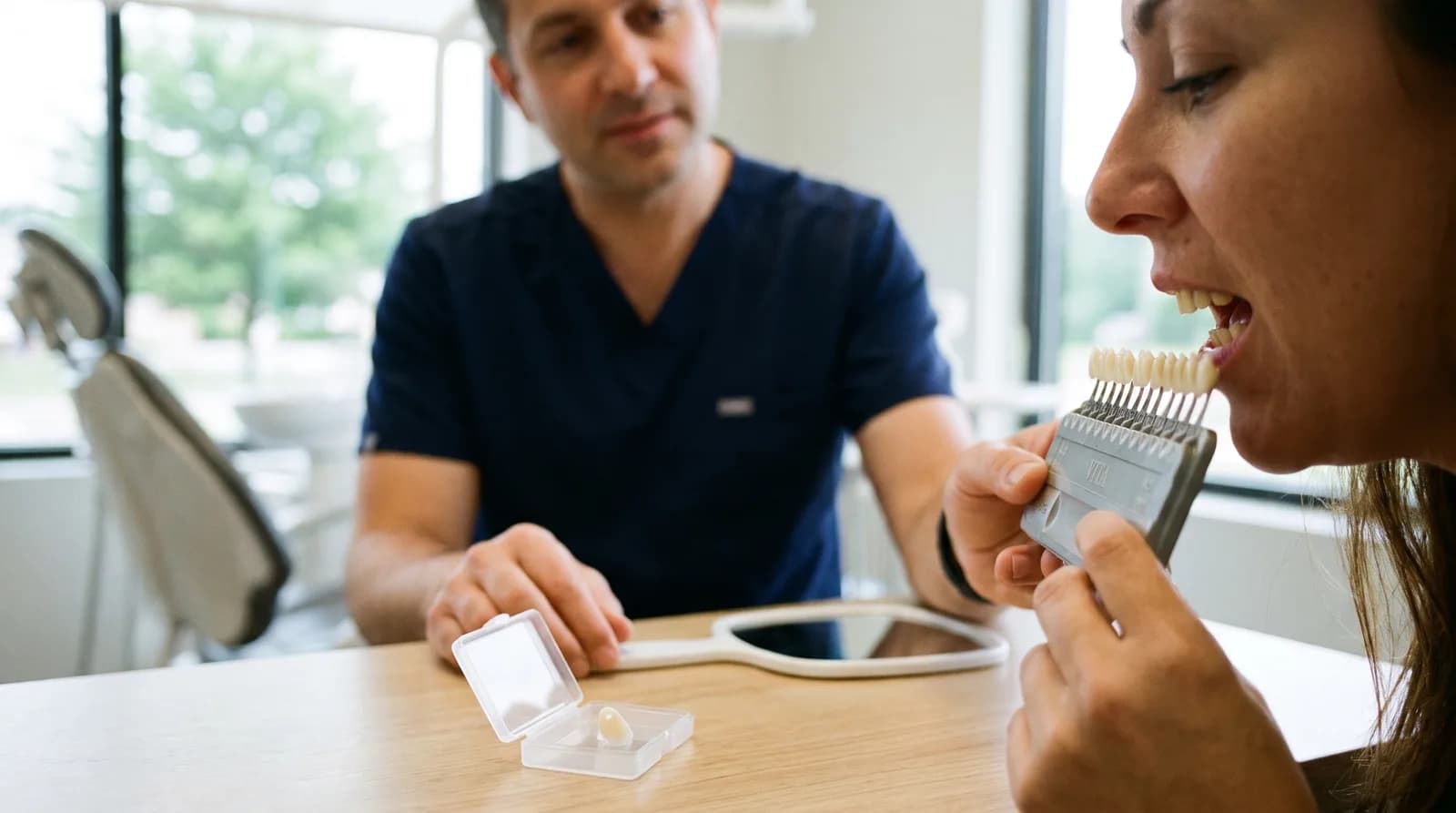
Teeth whitening vs veneers usually comes down to the type of stain and what else you'd like to change: whitening is typically the first step for yellow teeth, while veneers are the better answer when stains won't lift or the shape, size or alignment of your teeth also bothers you. At Elia Family Dental in Wall Township, Dr. Nicole Elia offers both, including GLO teeth whitening and veneers through her cosmetic dentistry care.
Imagine you're standing in front of a mirror, looking at teeth that have slowly turned the color of weak tea. You've seen whitening ads, and you've seen smiles that look like movie sets. The question is which one your teeth actually need, and which one is worth your money.
This guide compares the two honestly: what each does, which stains respond, how time, cost and longevity compare, and the right order if you want both. It's general education only, and a dentist has to examine your teeth to know which path fits.
Wondering Which Fits Your Smile?
Book a consultation and Dr. Elia will check your shade, review your goals and show you a preview of each option.
Book Appointment →Whitening is usually the better first step for yellow teeth, because the ADA says yellow teeth will probably bleach well, while veneers are better when stains won't lift or when teeth are also chipped, uneven or misshapen. The ADA's MouthHealthy guide to teeth whitening explains which discoloration responds.
The reasoning is simple. Whitening changes color only. It lifts stains and brightens the tooth you already have, with nothing removed and nothing added. Veneers change more. They cover the front of the tooth with a custom shell, so they can alter color, shape, size and the look of small gaps all at once.
That difference matters because it affects what you pay for. If color is the only issue, veneers can be more treatment than the problem calls for. If color is one of several issues, whitening alone may leave you disappointed. Matching the treatment to the actual concern is the whole decision.
Whiter teeth are the top wish for many patients. When the American Academy of Cosmetic Dentistry asked people what they'd most like to improve about their smile, the most common response was whiter teeth, according to the ADA. The American Association of Orthodontists also found that nearly 90% of patients requested tooth whitening, the ADA reports. It's a common goal, and usually an achievable one.
Teeth whitening uses a bleach, hydrogen peroxide or carbamide peroxide, that breaks stains into smaller pieces, which makes the color less concentrated and your teeth brighter. At Elia Family Dental, GLO professional whitening uses a heat-and-light system designed to brighten teeth while keeping sensitivity low.
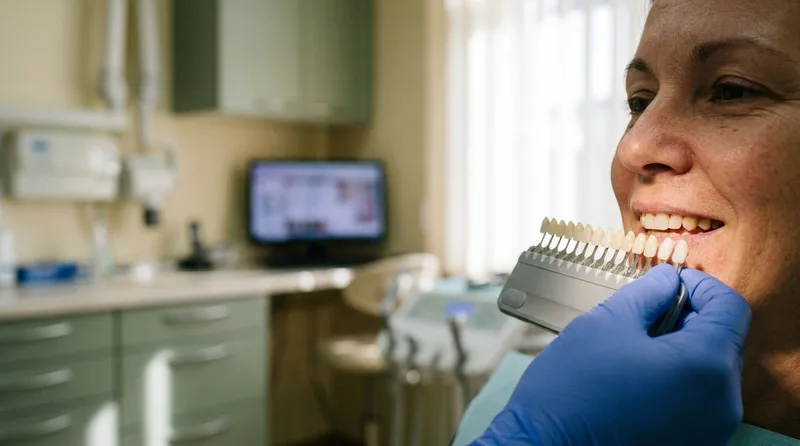
The appointment is quick. Elia describes noticeable brightening in one visit, with no messy impressions needed. Our guide to how GLO whitening works covers the process in detail, and GLO vs strips compares it with store products. If you worry about sensitivity, our guide to teeth whitening for sensitive teeth is the place to start.
What whitening can't do is change anything besides color. It won't close a gap, reshape a chipped edge, or fix a tooth that sits out of line. It also can't help every kind of stain, which is where the next section matters.
Veneers cover the front surface of a tooth with a custom shell, so they can change color, shape and size and mask small gaps in one treatment. According to the ADA's guide to veneers, they can improve teeth that are chipped or broken, stained, or crooked or misshapen, and can mask gaps in your smile.
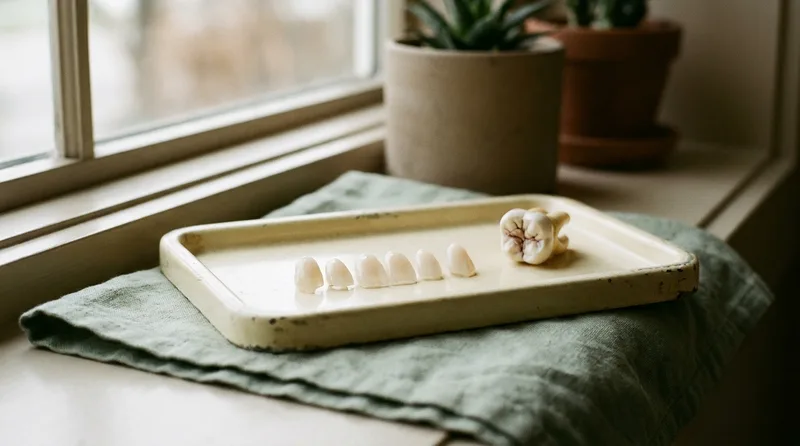
The ADA describes two main types. Porcelain veneers are thin, custom-made shells that are strong, long-lasting and natural-looking, though they tend to be the more expensive option. Composite veneers are made from tooth-colored filling material bonded to the tooth, may need less enamel removed and fewer visits, and are easier to fix if damaged but less stain- or wear-resistant.
Veneers also have tradeoffs. The ADA says treatment is not reversible because tooth enamel is removed to place a veneer, that a veneer may chip, crack, wear down or loosen over time, and that veneers may not be a good choice if you clench or grind your teeth or have a deep overbite. Our guides to composite vs porcelain veneers and whether you're a candidate for veneers go deeper.
The biggest practical advantage is that veneer color holds. Because veneers aren't stained the way natural enamel is, they stay the shade they were made, which is why a stubborn stain can be a good reason to choose one.
Yellow stains from age, coffee, tea or wine tend to respond to whitening, while brown stains may not respond as well, gray tones may not bleach at all, and whitening is ineffective on discoloration caused by medications or a tooth injury. The ADA is specific about each case.
| Type of discoloration | How whitening is likely to respond | Where veneers come in |
|---|---|---|
| Yellow teeth, including age-related yellowing | Will probably bleach well, per the ADA | Only if shape or alignment also bother you |
| Surface stains from coffee, tea, red wine or tobacco | Often respond; the ADA lists these as major staining causes | Rarely needed for stain alone |
| Brown teeth | May not respond as well, per the ADA | A reasonable option if whitening falls short |
| Teeth with gray tones | May not bleach at all, per the ADA | Often considered |
| Discoloration from medications or a tooth injury | Not effective, per the ADA | Veneers, or a crown if the tooth is weak |
| Existing crowns, veneers or fillings | Whitening does not work on them, per the ADA | They keep their shade, so plan around them |
Why do the causes matter? The ADA explains that age thins the outer enamel, so more of the yellowish dentin underneath shows through. Tobacco leaves tar and nicotine stains. An injury can make a tooth lay down darker dentin. Different causes, different results, which is why a dentist should look before you buy anything.
That's also why a shade check comes first at Elia Family Dental. Knowing what kind of discoloration you have tells you whether whitening is likely to meet your goal, or whether you'd be paying for a result your teeth can't deliver.
Whitening is faster and less invasive, while veneers last longer and change more. Elia's GLO whitening takes a single quick appointment, and veneers take multiple visits, remove some enamel, and typically last 10 to 15 years or more, according to Elia's cosmetic dentistry FAQ.
| Factor | Teeth whitening | Veneers |
|---|---|---|
| What it changes | Color only | Color, shape, size, small gaps |
| Time | One visit, in under an hour at Elia | Several visits for porcelain; composite may need fewer, per the ADA |
| Enamel removed | None | Yes, per the ADA |
| Reversible | Results fade with habits and need touch-ups | No, per the ADA |
| Longevity | Depends on habits like coffee, tea, wine and tobacco | 10 to 15 years or more for porcelain, per Elia |
| Insurance | Usually a cosmetic, out-of-pocket service | Cosmetic, so may not be covered unless medically necessary, per the ADA |
We don't list dollar amounts here, because cost depends on your teeth, the number of teeth and the treatment. At your consultation you'll hear clear costs and timelines. The honest way to compare is total value. Whitening costs less and needs upkeep, while veneers cost more and may serve for years.
Both options need maintenance. Whitening results fade with the habits the ADA names, such as coffee, tea, red wine and tobacco, and a take-home kit helps maintain them. Veneers need good home care and regular checkups, since they can chip or wear down over time. Neither is a one-and-done purchase, so plan for upkeep from the start.
Our guide to how long veneers last covers care and replacement, and teeth whitening before a wedding explains timing for a deadline.
Often, yes. Veneers are shade-matched to your natural teeth, and the ADA says whitening won't change a veneer afterward, so brightening your natural teeth first lets you choose a veneer shade that suits the result. Your dentist will plan the order with you.
The ADA notes that placing either type of veneer includes picking the best color shade to match your natural teeth. Your dentist helps you make that decision. If your natural teeth are whitened later, the veneers stay as they were, and the two can drift apart. Sequence avoids that mismatch.
The same logic applies to crowns and fillings. If you have older dental work in the smile zone, whitening won't change it, so your natural teeth may end up a different shade. Our guide to veneers vs crowns explains how those restorations differ, and your dentist can plan around what you already have.
A good rule: decide the final look first, then plan the steps in the order that gets there with the fewest surprises. A preview helps, which is the subject of the next section.
Whitening fits if your teeth are healthy and mainly yellowed, veneers fit if stains won't lift or shape and size also bother you, and a combination fits if you want a brighter natural smile with a few teeth refined. The right answer depends on your teeth, not on which sounds more impressive.
If straightening is also on your mind, our comparison of Invisalign vs veneers explains when moving teeth comes before covering them. And if you're weighing bonding, veneers vs bonding covers that choice.
If you're unsure which group describes you, that's what the consultation is for. A shade check and a short exam sort most cases into one of these groups in a single visit. Most patients end up somewhere in the middle: whiten what can be whitened, then refine only the teeth that need it. That keeps the most natural tooth structure and often keeps the cost reasonable.
Expect a relaxed conversation where Dr. Elia checks your shade and your teeth, listens to your goals, and shows you a preview before any treatment begins. Elia's Digital Smile Design turns photos and scans into a projected smile you can see on screen and give feedback on.

According to the American Academy of Cosmetic Dentistry, 99.7% of Americans believe a smile is an important social asset. That's a lot to decide on a hunch, and a preview takes the guesswork out. Nothing changes in your mouth until you've approved the plan.
Insurance and payment are part of the conversation. Whitening is usually a cosmetic, out-of-pocket service, and Elia Family Dental is clear about cost up front. Other visits may be covered by plans like Delta Dental, Blue Cross Blue Shield, Cigna and Principal. Sunbit and CareCredit financing are available, and Sunbit doesn't require a hard credit check. We don't accept HMO, Medicaid or Medicare plans.
For teeth whitening vs veneers, the best answer is the one your teeth actually support. Healthy teeth and routine checkups matter too, since regular dental visits can catch 80% of oral health issues before they become serious, according to the American Dental Association. Americans who see a dentist regularly are also 60% less likely to lose teeth, according to the Journal of Dental Research. Book a visit, and Dr. Elia will tell you honestly which path fits.
Results may vary. Please consult with your dentist at Elia Family Dental for personalized treatment recommendations.
Ready for a Brighter Smile?
Book an appointment with Elia Family Dental and Dr. Elia will check your shade and preview your options.
Book an Appointment →Prefer to talk it through first?
Call 732-681-8604 →Written By
Lead Dentist
Invisalign for crowded teeth explained: what aligners can fix, how long treatment takes, and when another option fits. Free consult in Wall Township.
Invisalign retainers explained: why you need them, what research says about wear time, and how to care for them. Guidance from Elia Family Dental.
Veneers vs crowns: learn how they differ, which damage or goals each fits, and how Dr. Elia decides what your tooth needs in Wall Township.
Book your visit with Dr. Elia online or call us, and we'll take it from there.