invisalign
Invisalign Retainers: How Long Do You Need to Wear Them?
Invisalign retainers explained: why you need them, what research says about wear time, and how to care for them. Guidance from Elia Family Dental.
Nov 3, 202610 min read


Invisalign for crowded teeth works well for many cases, because Elia Family Dental's Invisalign treats crowding, spacing and many common bite problems. Clear aligners can treat 90% of mild-to-moderate alignment issues, according to the American Journal of Orthodontics, while severe crowding may call for another approach. Dr. Nicole Elia examines your teeth and confirms whether Invisalign is the right fit for you.
Say your lower front teeth overlap like shingles, and floss shreds every time you try to clean between them. You've avoided braces for years because of how they look. Then you hear that clear aligners can handle crowding, and you wonder whether that's true for your teeth, or only for the easy cases in the photos.
This guide answers that honestly: what causes crowding, what aligners can and can't do, how long it takes, and what the alternatives are. It's general education only, and an exam with a 3D scan shows what your teeth need.
Curious Whether Invisalign Fits Your Teeth?
Book a free consultation and Dr. Elia will examine your smile and show you a preview of your projected result.
Book Appointment →Yes, for many cases. Invisalign treats crowding by gradually moving teeth into better positions with a series of custom clear aligners, and clear aligners can treat 90% of mild-to-moderate alignment issues, according to the American Journal of Orthodontics. More complex cases may need a different approach, which an exam can determine.
The key word is "mild-to-moderate." That figure tells you aligners are well suited to the common cases, not that every case is simple. Teeth that overlap slightly, rotate a little or sit crowded in the front are the kind of problem aligners handle most reliably. Severe crowding, or crowding combined with a significant bite problem, is a different conversation.
That's why the first step at Elia Family Dental is a free consultation. Dr. Elia looks at your smile, talks through your goals, and confirms whether Invisalign is the right fit. If it isn't, you'll hear that plainly, along with what would work better.
Elia also plans Invisalign with a restorative and cosmetic eye. That means looking at the whole smile, including tooth shape and wear, instead of treating alignment in isolation.
Crowded teeth happen when there isn't enough room in the jaw for all the teeth to sit in line. The ADA's MouthHealthy guide to braces says alignment problems may be inherited or result from injury, early or late tooth loss, or thumbsucking, and that teeth can be crowded, spaced too far apart, or meet in an abnormal way.
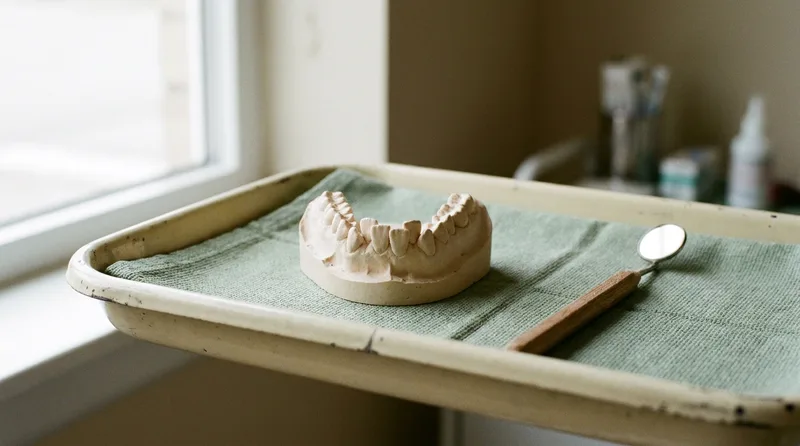
Jaw size and tooth size both matter. When teeth are large relative to the jaw, there simply isn't enough room, so teeth overlap or rotate to fit. That's a common pattern, and it's one reason crowding often runs in families.
Many adults assume they missed their chance. The ADA says healthy teeth can be orthodontically treated at any age, and that today many adults seek treatment for long-standing problems or problems that stem from maturational changes. Our guide to Invisalign for adults covers that question in more detail.
Crowding matters beyond looks because overlapping teeth are harder to clean, and trapped plaque can lead to long-term oral health issues. Elia's Invisalign page makes the point plainly: crooked or crowded teeth don't just affect your appearance, they make cleaning harder and can lead to long-term oral health issues.
The ADA adds that leaving an abnormal bite uncorrected can lead to problems such as decay, gum disease, tooth loss, speech and chewing difficulties and abnormal wear to enamel. Not every crowded smile has these problems, but crowding makes some of them more likely to develop.
Straighter teeth are easier to clean, which can reduce the risk of cavities and gum disease by up to 30%, according to the ADA. That's a practical reason to treat crowding even if you're comfortable with how your smile looks.
Think of alignment as part of daily upkeep. If floss catches or shreds in the same places, if food packs between overlapping teeth, or if one spot always seems to trap plaque, your teeth are telling you something. An exam shows whether alignment is the cause.
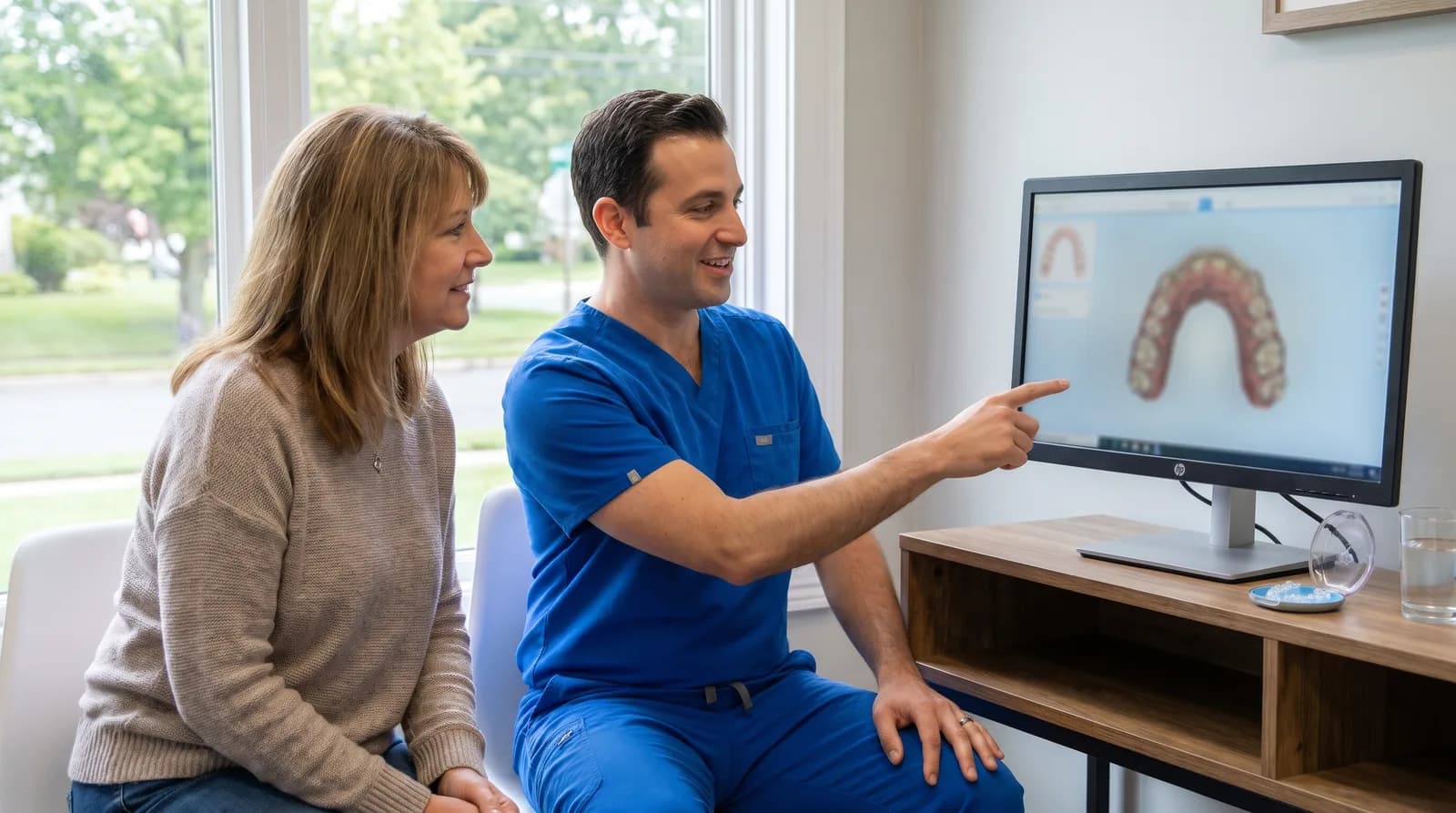
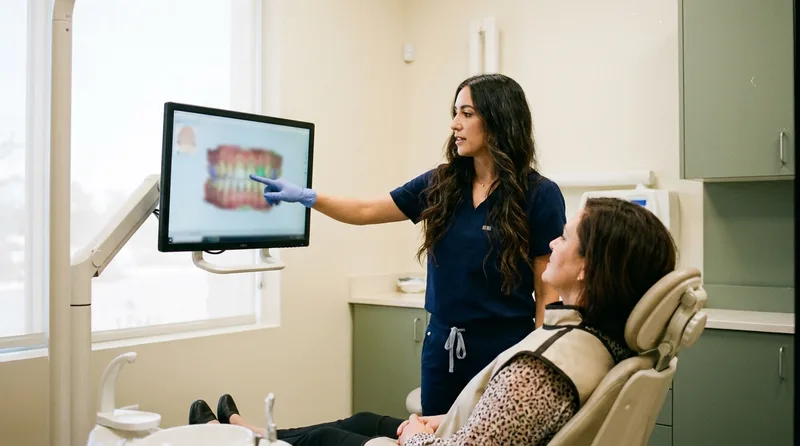
Invisalign straightens crowded teeth with a series of custom clear aligners, each worn for about two weeks, that move teeth a little at a time into better positions. The iTero 3D scanner builds a precise model and shows a projected preview of your result before treatment begins.

Crowded teeth need room to move into. Depending on the case, dentists can create that room in a few ways, such as widening the arch gently or reshaping tiny amounts of the contacts between teeth, and your treatment plan shows what yours involves. Our guide to Invisalign attachments explains the small tooth-colored bumps that help aligners grip and guide teeth.
Aligners are removable for eating, drinking, brushing and flossing, with no food restrictions. For crowded teeth, that matters, because it means you can clean between the overlapping surfaces properly throughout treatment.
Invisalign handles mild to moderate crowding well, and more complex crowding depends on the case. The honest answer is that your exam decides, because the amount of crowding, the shape of your jaw and your bite all affect what aligners can do.
| How crowded | What it looks like | Outlook with aligners |
|---|---|---|
| Mild | Slight overlap or rotation, often in the front teeth | Well suited, in line with the 90% figure for mild-to-moderate cases |
| Moderate | Several overlapping teeth, but a normal bite | Often suitable, and your plan shows the steps |
| Severe or complex | Heavy crowding, or crowding with a significant bite problem | May need another approach, so an exam and a 3D scan decide |
The ADA notes that orthodontic treatment may be provided by your dentist or an orthodontist, a dentist who specializes in the diagnosis, prevention and treatment of dental and facial irregularities. If your case is beyond what aligners can do well, a dentist who tells you so is doing right by you. Our comparison of Invisalign vs braces for adults explains the tradeoffs.
The preview is part of the honesty. Because the iTero scan shows your projected result before you start, you can judge whether the plan reaches your goal, and you can ask questions while nothing has been committed.
Why do mild cases do so well? Aligners apply gentle, controlled forces to individual teeth, which suits small rotations and overlaps. Bigger movements and bite corrections are more complex, which is why severity matters so much to the outlook.
Clear aligner treatment averages 6 to 18 months, compared with 18 to 36 months for traditional braces, according to the American Association of Orthodontists. Your own timeline depends on how much movement your teeth need, and your plan lists it before you begin.
Each aligner set is worn for about two weeks at Elia Family Dental, so your timeline is simply the number of sets in your plan. Wearing aligners as directed keeps you on schedule, and video consultations are available for convenient check-ins between visits.
Treatment doesn't end with the last aligner. Teeth tend to relapse without retention, according to a Cochrane review, which is why you finish with a custom retainer. Our guide to Invisalign retainers explains why they matter and how to care for them.
For people with crowded teeth, retention deserves extra attention. Teeth that have been moved the most may have the strongest tendency to drift, so follow your dentist's retainer schedule closely.
Alternatives include traditional braces, a referral to an orthodontist for complex cases, and, for mild crookedness that you want to mask rather than move, veneers. The ADA says braces can be metal or tooth colored, sometimes placed behind your teeth, and that removable aligners are another option under a dentist's supervision.
Veneers deserve a caution here. They cover teeth rather than move them, treatment is not reversible, and they don't fix the cleaning problems that crowding creates. Our guide to braces vs Invisalign cost and our look at closing a gap between front teeth compare other cosmetic routes.
The best choice is the one that fixes the underlying problem with the least tooth structure removed. For most mild-to-moderate crowding, that points to aligners. For anything more complex, your dentist will say so. Your dentist can also explain whether combining approaches makes sense, such as straightening first and refining a tooth's shape afterward.
Cost depends on your plan and how much movement your teeth need, so the clearest answer is a personalized estimate from your free consultation. Elia Family Dental accepts Delta Dental, Blue Cross Blue Shield, Cigna, Principal and most PPO plans, and verifies your coverage before treatment begins.
Coverage for orthodontic treatment varies by plan, and some plans include orthodontic benefits, so ask your plan for specifics. We don't list dollar amounts here. Sunbit and CareCredit financing are available, and Sunbit doesn't require a hard credit check. We don't accept HMO, Medicaid or Medicare plans.
According to the American Dental Association, regular dental visits can catch 80% of oral health issues before they become serious, including early shifting. Keep your routine visits during treatment, so your team can check your teeth, gums and progress.
If you're weighing Invisalign for crowded teeth, start with the consultation. Dr. Elia will examine your smile, show you a preview of the projected result, and tell you honestly whether aligners are the right fit. Book a visit, and take the first step toward teeth that are easier to clean and a smile you're comfortable showing.
Results may vary. Please consult with your dentist at Elia Family Dental for personalized treatment recommendations.
Ready to Straighten Crowded Teeth?
Book a free consultation with Elia Family Dental and Dr. Elia will preview your projected result.
Book an Appointment →Prefer to talk it through first?
Call 732-681-8604 →Written By
Lead Dentist
Invisalign retainers explained: why you need them, what research says about wear time, and how to care for them. Guidance from Elia Family Dental.
Teeth whitening vs veneers: see which stains bleach, when veneers are the better answer, and how Dr. Elia helps you choose in Wall Township.
Veneers vs crowns: learn how they differ, which damage or goals each fits, and how Dr. Elia decides what your tooth needs in Wall Township.
Book your visit with Dr. Elia online or call us, and we'll take it from there.