invisalign
Invisalign for Crowded Teeth: What Aligners Can Fix
Invisalign for crowded teeth explained: what aligners can fix, how long treatment takes, and when another option fits. Free consult in Wall Township.
Nov 3, 202610 min read


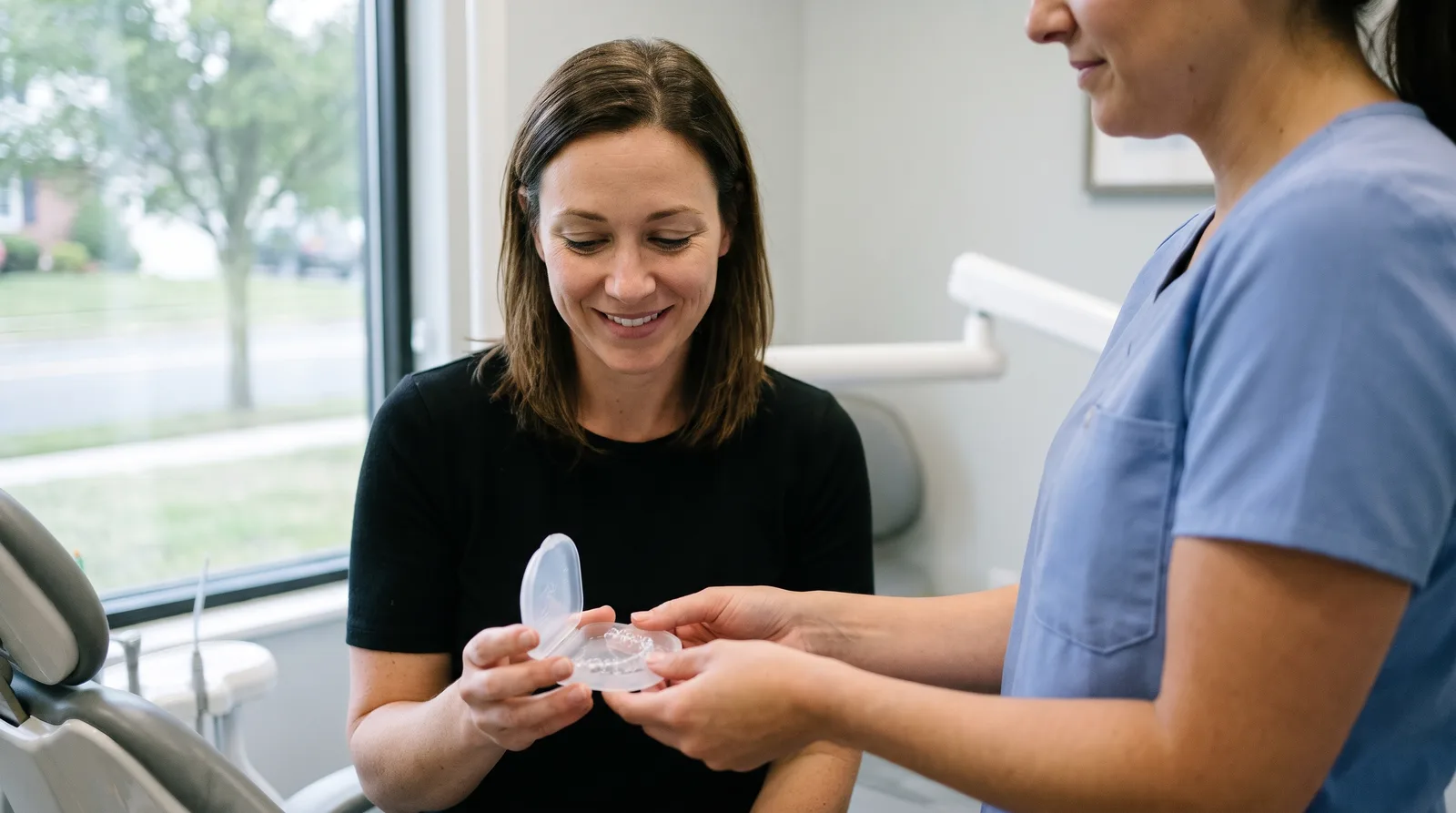
Invisalign retainers keep your new smile in place, and the honest answer on wear time is that no single schedule is proven best, so you should follow the one your dentist gives you. Without a phase of retention, teeth tend to drift back toward their old positions. At Elia Family Dental in Wall Township, Dr. Nicole Elia finishes Invisalign treatment with a custom retainer to protect your results.
You finish your last set of aligners, and your teeth look the way you hoped. Then someone hands you a retainer case and says, "wear these." How often? For how long? And what if you skip a few nights? Those are the questions most patients ask at exactly this moment.
This guide explains why retainers matter, what research does and doesn't say about wear time, the types of retainers, and how to care for yours. It's general education only, and your dentist sets the schedule that fits your teeth.
Finishing Invisalign or Thinking About It?
Book a consultation and Dr. Elia will explain your treatment and what retention looks like from the start.
Book Appointment →You need retainers because teeth tend to relapse, meaning drift back toward their original positions, without a phase of retention. A 2023 Cochrane review states this plainly, and the ADA's orthodontics guide says retainers preserve and stabilize the results of orthodontic treatment.
Think about what Invisalign does. Over months, gentle pressure moves teeth through bone into new positions. When the pressure stops, the surrounding tissues are still settling, and the teeth have a natural tendency to move back. A retainer holds them where you want them while the bone and gums adapt.
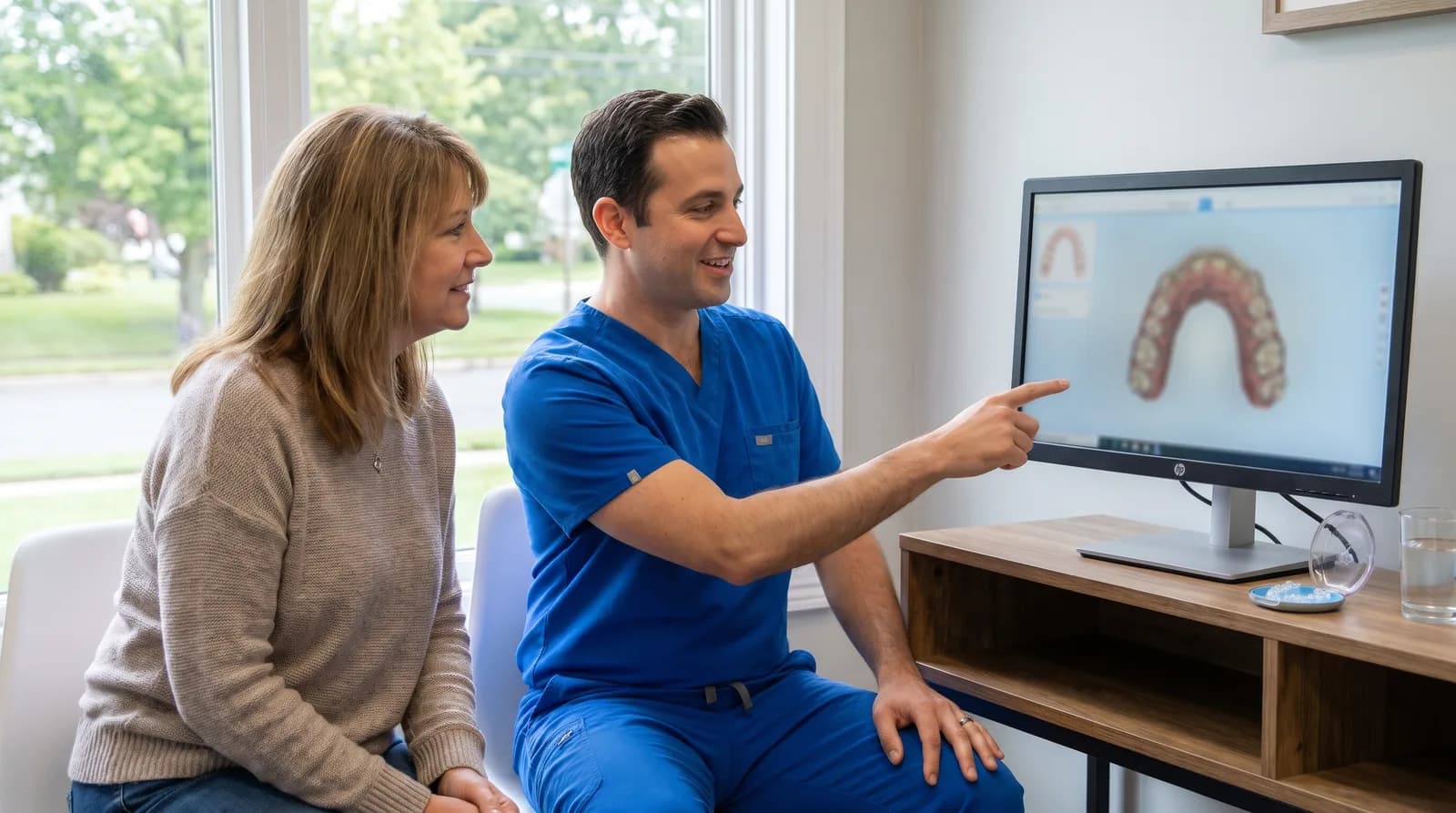
At Elia Family Dental, retention is built into the plan from the beginning. Your treatment follows clear steps: a consultation, an iTero 3D scan with a preview of your result, custom aligners worn for about two weeks each, and then beautiful results protected with a custom retainer.
One caution about the research. The Cochrane review looked at people who had orthodontic braces and excluded studies of aligners, so it doesn't speak to Invisalign directly. The principle that teeth relapse without retention is the same, but the details of schedules can differ, which is why your dentist's instructions matter most.
No single schedule is proven best, so follow the one your dentist gives you and ask for it in writing. The 2023 Cochrane update rated the evidence on retention as low or very low certainty, and concluded that firm conclusions can't be drawn about any one approach.
Here's what the review actually found. It included 47 studies with 4,377 participants, but only 11 were at low risk of bias, and most measured outcomes after less than a year. For example, one study found no evidence of a difference in stability between part-time and full-time wear of Hawley retainers, and that study had 52 participants.
That uncertainty cuts both ways. It means nobody can promise that one schedule works for everyone, and it means skipping retainers because you feel fine isn't backed by evidence either. Many orthodontists advise long-term wear to keep results, and the safest path is to follow your dentist's plan for your teeth.
The main types of Invisalign retainers are removable clear plastic retainers, removable wire-and-acrylic (Hawley) retainers, and fixed retainers bonded behind the teeth. The Cochrane review describes retention as fixed or removable retainers, and notes that removable ones can be worn full-time or part-time and vary in shape, material and construction.
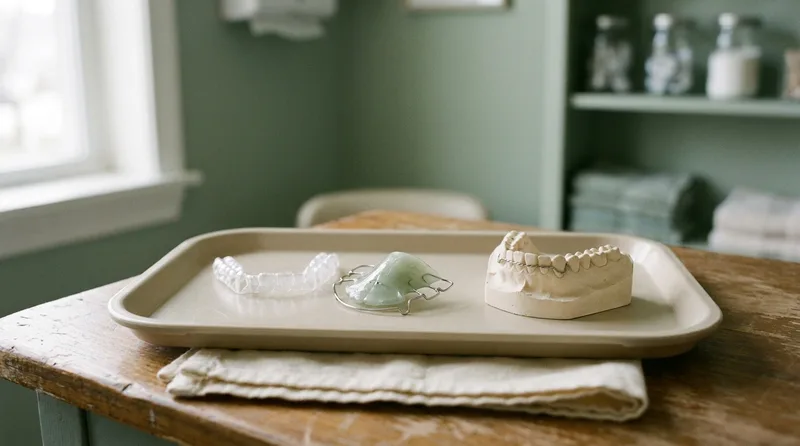
Results across studies were mixed. In the Cochrane update, clear plastic retainers were associated with better gum health than fixed retainers, but findings on retainer failure and stability differed between studies, and the differences in stability weren't clinically significant. Each result came from a small study, so none of it settles the question.
Elia Family Dental finishes Invisalign with a custom retainer. Ask which type is recommended for your teeth, why, and how it will be replaced if it ever breaks or is lost. The best retainer is the one you'll actually keep using.
If you stop wearing your retainer, your teeth will tend to drift back toward where they started. The Cochrane review's plain-language summary puts it simply: once people finish treatment, the teeth tend to get crooked again, which is why dentists try to prevent it with retention.
If you notice any of these, call the office rather than forcing the retainer on. A retainer that no longer fits comfortably is a signal, not something to push through. The sooner your dentist sees the change, the more options you have, and the less likely it is to need a new round of treatment.
Don't be discouraged if life got busy and you missed some nights. It's common, and it's fixable. Our guide to Invisalign for adults covers how aligners work for adults who may have had braces before, and what to do when teeth have moved.
Clean your retainer daily, store it in its case whenever it's out, keep it away from heat, and bring it to your checkups. These are common guidance steps, and your dentist may add instructions for your type. Healthy gums matter too, and the ADA's gum disease guide reminds you to brush twice a day and clean between your teeth daily.

Retainers fail in ordinary ways. The Cochrane review defines retainer failure as broken, detached, worn out, ill-fitting or lost, and those are the situations that deserve a phone call. A retainer that's cracked or doesn't seat properly should be replaced, not tolerated.
Why does cleaning matter? A retainer sits against your teeth for hours, so anything on it ends up on them too. A quick daily clean keeps it fresh, and your dentist can check it for wear at each visit. Small habits protect both the retainer and the teeth it's holding in place.
If your Invisalign retainers are lost, broken or tight, call the office promptly instead of waiting, because teeth can begin to shift when they aren't being held. Elia Family Dental offers video consultations for convenient check-ins, and the team can advise you on repair or replacement and on what to do in the meantime.
Replacement is easier when your digital records already exist. Elia's iTero scanner creates a precise 3D model with no messy impressions, which helps your team plan what comes next. Every case is different, so the office tells you what makes sense for yours.
If your teeth have already moved a little, don't panic. Small changes can often be addressed, and your dentist will tell you honestly whether a retainer adjustment, a short course of aligners or simply a new retainer is the right step. Waiting tends to narrow the options rather than widen them, which is why a prompt call is worth it.
Retainers are the final step of a five-step process: consultation, 3D digital scan, custom aligners, wear and progress, and results protected with a custom retainer. Clear aligner treatment averages 6 to 18 months, according to the American Association of Orthodontists, and retention continues after that.
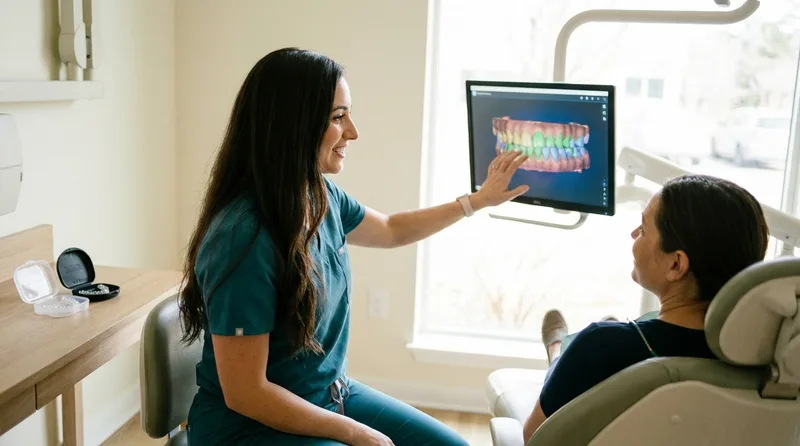
During treatment, aligners are removable for eating, drinking, brushing and flossing, and you switch to a new set about every two weeks. Our guide to Invisalign attachments explains the small tooth-colored bumps that help aligners work, and clear aligners for teens vs adults compares how treatment differs by age.
If you're still deciding whether Invisalign is the right choice, our comparisons of braces vs Invisalign and Invisalign vs veneers weigh your options. The iTero scan shows a preview of your projected result before you start, so you can see where you're headed.
Think of the retainer phase as part of the treatment, not an add-on. The months of aligners earn the result. The retainer keeps it. Planning for both from the first visit avoids surprises later. If your teeth are crowded to begin with, our guide to Invisalign for crowded teeth explains what aligners can and can't fix.
Coverage and cost depend on your plan and your treatment, so the clearest answer is a personalized estimate. Elia Family Dental accepts Delta Dental, Blue Cross Blue Shield, Cigna, Principal and most PPO plans, and verifies your coverage before treatment begins. We don't list dollar amounts here.
Ask about retainers specifically. Find out what's included at the end of treatment, how replacement works, and what it costs, so there are no surprises. Sunbit and CareCredit financing are available, and Sunbit doesn't require a hard credit check. We don't accept HMO, Medicaid or Medicare plans.
According to the American Dental Association, regular dental visits can catch 80% of oral health issues before they become serious, which includes checking how your retainer fits. Americans who see a dentist regularly are also 60% less likely to lose teeth, according to the Journal of Dental Research.
For Invisalign retainers, the simple rule is to wear them as directed, care for them well, and call early if anything changes. According to the American Academy of Cosmetic Dentistry, 99.7% of Americans believe a smile is an important social asset, and a retainer is how you keep yours. Book a visit, and Dr. Elia will explain your plan from start to finish.
Results may vary. Please consult with your dentist at Elia Family Dental for personalized treatment recommendations.
Ready to Straighten and Keep Your Smile?
Book an appointment with Elia Family Dental and Dr. Elia will walk you through Invisalign and retention.
Book an Appointment →Prefer to talk it through first?
Call 732-681-8604 →Written By
Lead Dentist
Invisalign for crowded teeth explained: what aligners can fix, how long treatment takes, and when another option fits. Free consult in Wall Township.
Teeth whitening vs veneers: see which stains bleach, when veneers are the better answer, and how Dr. Elia helps you choose in Wall Township.
Veneers vs crowns: learn how they differ, which damage or goals each fits, and how Dr. Elia decides what your tooth needs in Wall Township.
Book your visit with Dr. Elia online or call us, and we'll take it from there.