Periodontal Care
Guided Biofilm Therapy vs Deep Cleaning: Which Fits?
Guided biofilm therapy vs deep cleaning: see how each works, what pocket depths decide, and which one your gums may need. Wall Township, NJ.
Nov 9, 202611 min read


How to clean Invisalign aligners comes down to a short routine: rinse them whenever you take them out, brush them gently with a soft toothbrush and clear soap each night, and keep them in their case. Aligners that stay clean look clearer, smell fresher and are more comfortable to wear. Elia Family Dental's Invisalign aligners are removable for eating, drinking, brushing and flossing, with no food restrictions, so cleaning fits naturally into your day.
At Elia Family Dental you move to a new set about every two weeks, so it's tempting to think cleaning matters less. It still matters. Healthline notes that aligners that aren't cleaned can look discolored and can cause bad breath, and that even aligners changed every two weeks are worth cleaning carefully. This guide walks through a simple daily routine, what to use and avoid, how to store your aligners and how to look after your teeth at the same time.
It's general education only, and your dentist may give you specific instructions for your treatment.
Starting Invisalign and Want a Care Plan?
Book a free consultation and Dr. Elia will walk you through how treatment works and how to care for your aligners day to day.
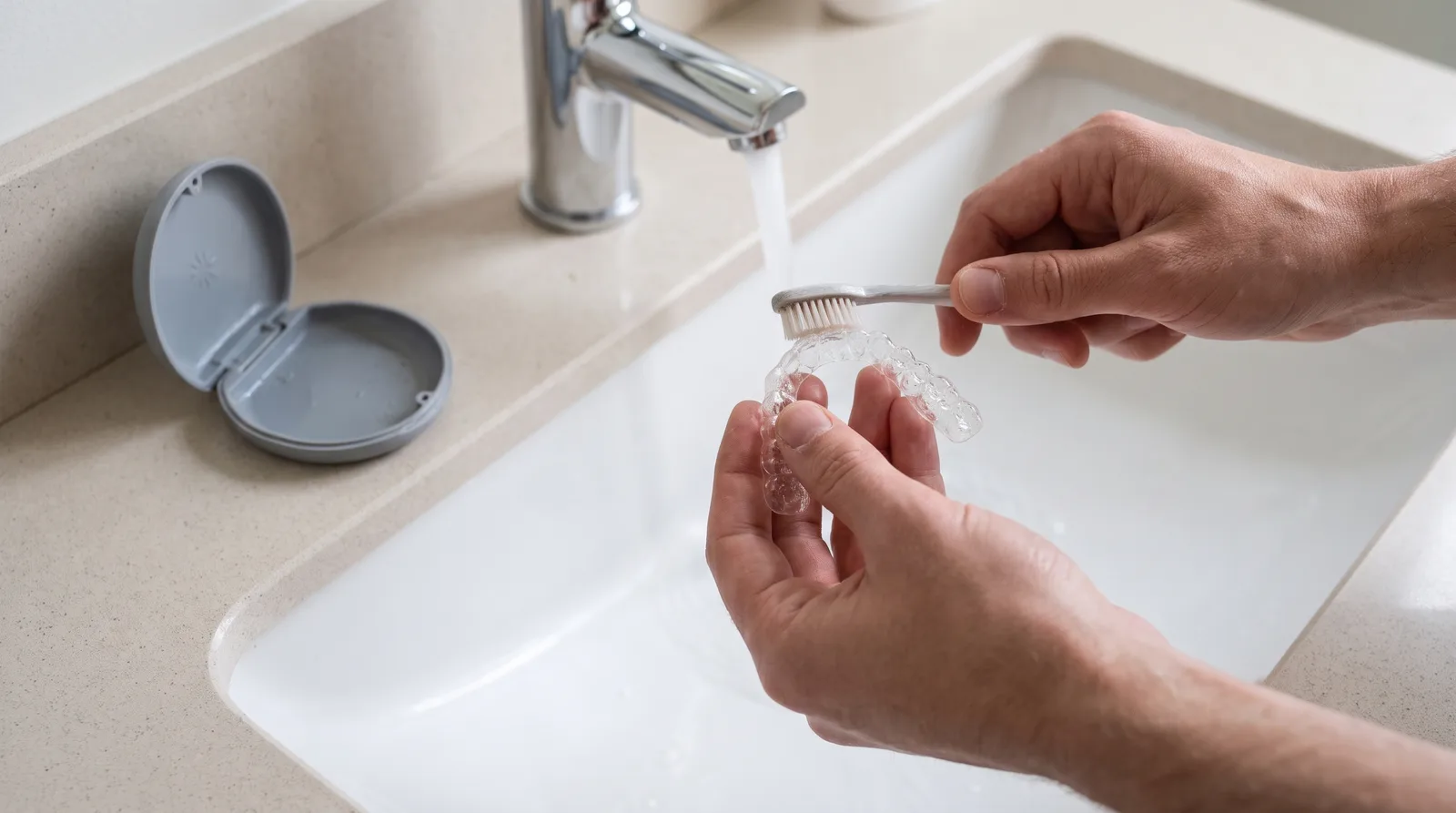
Book Appointment →Rinse your aligners every time you take them out, and clean them thoroughly once a night. Healthline, describing the process on Invisalign's website, lists a nightly routine: rinse with water, brush with a soft-bristled toothbrush and gentle, clear liquid soap, rinse thoroughly and store the aligners in a protective case.
Healthline draws a useful line between rinsing and cleaning. Rinsing may make aligners look slightly cleaner, but it doesn't address the unseen bacteria that can build up. Knowing how to clean Invisalign starts with this difference, because cleaning is the brushing step. The two work together: a quick rinse each time keeps saliva and food from drying on the plastic, and a proper clean at night removes what's left.
You can also clean your aligners whenever they look visibly dirty, such as if you drank something other than water while wearing them or put them back in too soon after eating. Healthline says to do the nightly clean at the same time you brush and floss your teeth, which makes it easy to remember because it joins a habit you already have.
If you're newer to treatment, our guides to Invisalign for adults and Invisalign vs braces for adults explain how everyday life with aligners compares with other options, including how cleaning differs from caring for fixed braces.
A simple routine has five steps: remove, rinse, brush your teeth, clean the aligners and store them. Most of it takes place at moments you already have, such as meals, brushing and bedtime, so it adds only a minute or two to your day.
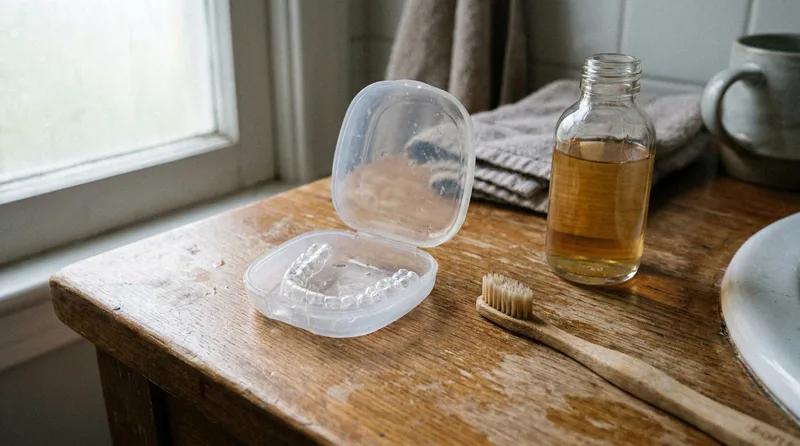
A dedicated brush matters. Healthline specifies a soft-bristled toothbrush that's not the one you use to brush your teeth daily, so keep a second brush by the sink for your aligners and replace it when the bristles fray. Brush the inside and outside of each aligner gently, covering the grooves where food and plaque collect, and rinse until no soap remains.
If you wear a new set every two weeks, the same routine applies to every set. A habit that's easy to repeat is worth more than a perfect routine you skip on busy days, so aim for consistency first and add extras, such as soaking, only if they fit.
Use a soft-bristled toothbrush kept just for your aligners and a gentle, clear liquid soap. Healthline says to avoid denture cleaners, mouthwashes (especially those with alcohol), scented soaps, soaps with added dyes, toothpaste and coarse brushes, because they can be too harsh or can stain the plastic.
| What | Use it? | Why |
|---|---|---|
| Soft-bristled toothbrush kept only for aligners | Yes | Healthline recommends it, and says a coarse brush may be too harsh |
| Gentle, clear liquid soap | Yes | Part of the cleaning process Invisalign describes, per Healthline |
| Cleaning crystals or effervescent tablets made for oral appliances | Optional | Brushing plus tablets cleaned best in a small 2015 study |
| Denture cleaners | Avoid | Healthline lists them among cleansers that can be too harsh |
| Mouthwash, especially with alcohol | Avoid | Healthline lists mouthwashes among cleansers to avoid |
| Scented or dyed soaps (blue, red or green) | Avoid | They can taste bitter or stain the aligners, per Healthline |
| Toothpaste | Ask your dentist | Healthline lists it among cleansers to avoid, though a 2015 study that used it found it only slightly less effective than tablets plus brushing |
| Very hot water | Avoid | Aligners can't usually hold up to very hot water, per Healthline |
The toothpaste row deserves a note. Sources differ, and it's worth being open about that. Healthline lists toothpaste among cleansers to avoid, while the 2015 study it describes included a toothpaste-and-brush method that worked nearly as well as the best option. If you're unsure, ask Dr. Elia which approach they prefer for your aligners, and follow that.
As a rule of thumb for how to clean Invisalign, the gentler the product, the better. Aligners are thin plastic that's made to be replaced, so harsh methods can scratch or cloud it. Scratches and haze are cosmetic, but they can make aligners look less clear and give plaque more places to cling, which is the opposite of what you want.
Soaking products can help, and research suggests brushing plus effervescent tablets cleaned aligners most effectively, though brushing alone was only slightly inferior. In a 2015 study of aligner cleaning methods, brushing combined with sodium carbonate and sulfate crystals gave the best results.
The study was small and short: 12 people wore three sets of aligners over 6 weeks, in three 2-week stages, using a different cleaning method in each stage. The methods were running water as the control, effervescent tablets followed by brushing, and brushing alone with a toothbrush and toothpaste. The researchers suggested that people wearing aligners should clean them with a combination of brushing and commercially available tablets for oral appliances.
Healthline adds some context. Invisalign sells cleaning crystals and a soak called Steraligner, and it says the crystals' ingredients are similar to those in retainer cleaners, but not denture cleaners, if you want a more accessible alternative. A soak is an optional extra, not a replacement for brushing, and you should follow the product's directions and ask your dentist before adding one.
Retainers need the same care once treatment ends, and our guide to Invisalign retainers explains how long you'll wear them and how to look after them. A cleaning habit you build now carries over directly to your retainers.
Take your aligners out for anything other than water, avoid very hot water and keep them in their case when they're not in your mouth. Healthline says drinking anything other than water while wearing them risks staining or damaging them, and that aligners can't usually hold up to very hot water.

That's easy to do with Elia's aligners, which come out for eating and drinking with no food restrictions. The habit to build is simple: out for coffee, tea, juice and meals, in again after you've rinsed your mouth or brushed. If you put aligners back in too soon after eating, food can be trapped against your teeth, and Healthline says that's a good reason to clean them when they look dirty.
Watch your cleaning products too. Healthline warns that soaps with added dyes, such as blue, red or green, can stain aligners, which makes for a long two weeks of wearing them. Clear and unscented is the safest choice, and it's the same advice that applies to the soap you pick up in a hurry on the way out the door.
Heat and rough handling can change how a tray feels in your mouth. If an aligner doesn't seem to fit the way it did, don't force it. Our guide to Invisalign not fitting explains what to try and when to contact the office.
Always keep them in a protective case when they're out of your mouth. Healthline says storing your aligners in a case every time you aren't wearing them lowers the chance of losing them and protects them from bacteria.
The case is your best insurance against the most common aligner problem, which is losing them. A case that lives in your pocket or bag means you never need to wrap aligners in a napkin or set them on a table, where they're easy to throw away by accident. Put the case in the same place every time you take them out, so it becomes automatic.
The case needs cleaning too. It's reasonable to wash it regularly with mild soap and water and let it dry fully before you put the aligners back in, so it doesn't become a damp home for bacteria. A spare case is low-cost, and it's useful for travel, work and the car.
A small kit makes it easy to keep up the routine away from home:
If an aligner is lost or damaged, call Elia Family Dental before you skip ahead to the next set. Your dentist designed each stage to build on the one before, so the safest move is to ask. Video consultations are available for convenient check-ins, so you can get an answer without scheduling a full visit.
Yes, brush and floss before you put your aligners back in. Healthline says to clean your aligners at the same time you brush and floss, and it notes that dirty aligners keep exposing your teeth to built-up bacteria, so clean teeth and clean aligners go together.
The basics come from the ADA: brush twice a day for two minutes with fluoride toothpaste and a soft-bristled brush, and replace your toothbrush every three to four months. The ADA also recommends flossing once a day to remove food particles and plaque. Aligners are removable, which makes brushing and flossing easier than with fixed braces, so it's worth taking advantage of that.
Gum health deserves attention during treatment. An estimated 42% of dentate US adults aged 30 or older have periodontitis, according to an analysis of national survey data from 2009 to 2014 by CDC researchers, and 20.5% of dentate adults aged 20 to 64 have untreated tooth decay, according to the CDC's 2024 Oral Health Surveillance Report. The ADA's pages on gum disease and cavities explain how each develops.
Regular professional cleanings help too, and our guide to how often to get your teeth cleaned explains how to set a schedule. Many people find that wearing aligners makes them more aware of their teeth, which is a good habit to keep for life.
The first step is a free consultation, where Dr. Elia looks at your smile, talks through your goals and confirms whether Invisalign is the right fit. You'll also hear how to care for your aligners, so you start with a clear routine rather than guessing.
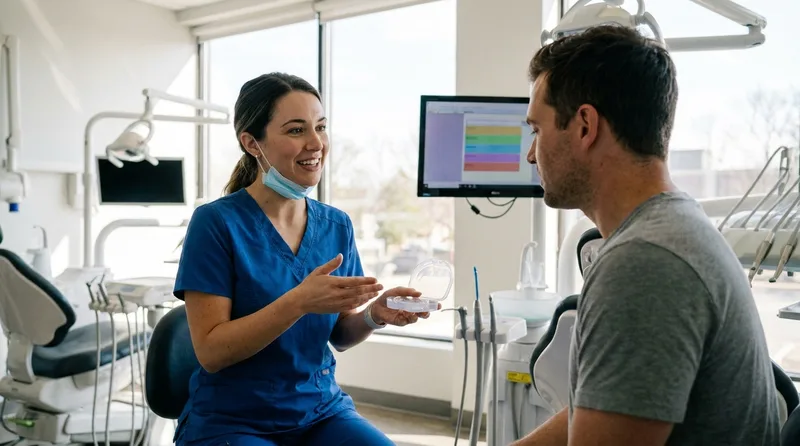
Bring your questions, including any about how to clean Invisalign, which products to use or travel. The iTero 3D scanner shows you a preview of your projected smile before you start, and each custom set is worn for about two weeks. At the end of treatment, you'll get a custom retainer to keep your results, and video consultations are available for convenient check-ins along the way.
Elia Family Dental accepts Delta Dental, Blue Cross Blue Shield, Cigna, Principal and most PPO plans and verifies your coverage before treatment begins. Sunbit and CareCredit offer flexible monthly payment plans, and Sunbit doesn't require a hard credit check. You can start with a conversation, and there's no obligation to proceed.
Results may vary. Please consult with your dentist at Elia Family Dental for personalized treatment recommendations.
Ready to Start Invisalign?
Book a free consultation with Elia Family Dental and Dr. Elia will show you how treatment works and how to keep your aligners clean.
Book an Appointment →Prefer to talk it through first?
Call 732-681-8604 →Written By
Lead Dentist
Guided biofilm therapy vs deep cleaning: see how each works, what pocket depths decide, and which one your gums may need. Wall Township, NJ.
Tunneling gum graft explained: how the VISTA technique covers exposed roots through one small incision, what studies show and what recovery involves.
Dead tooth symptoms include darkening, swelling and a tooth that stops responding. Learn the causes and options at Elia Family Dental in Wall Township, NJ.
Book your visit with Dr. Elia online or call us, and we'll take it from there.