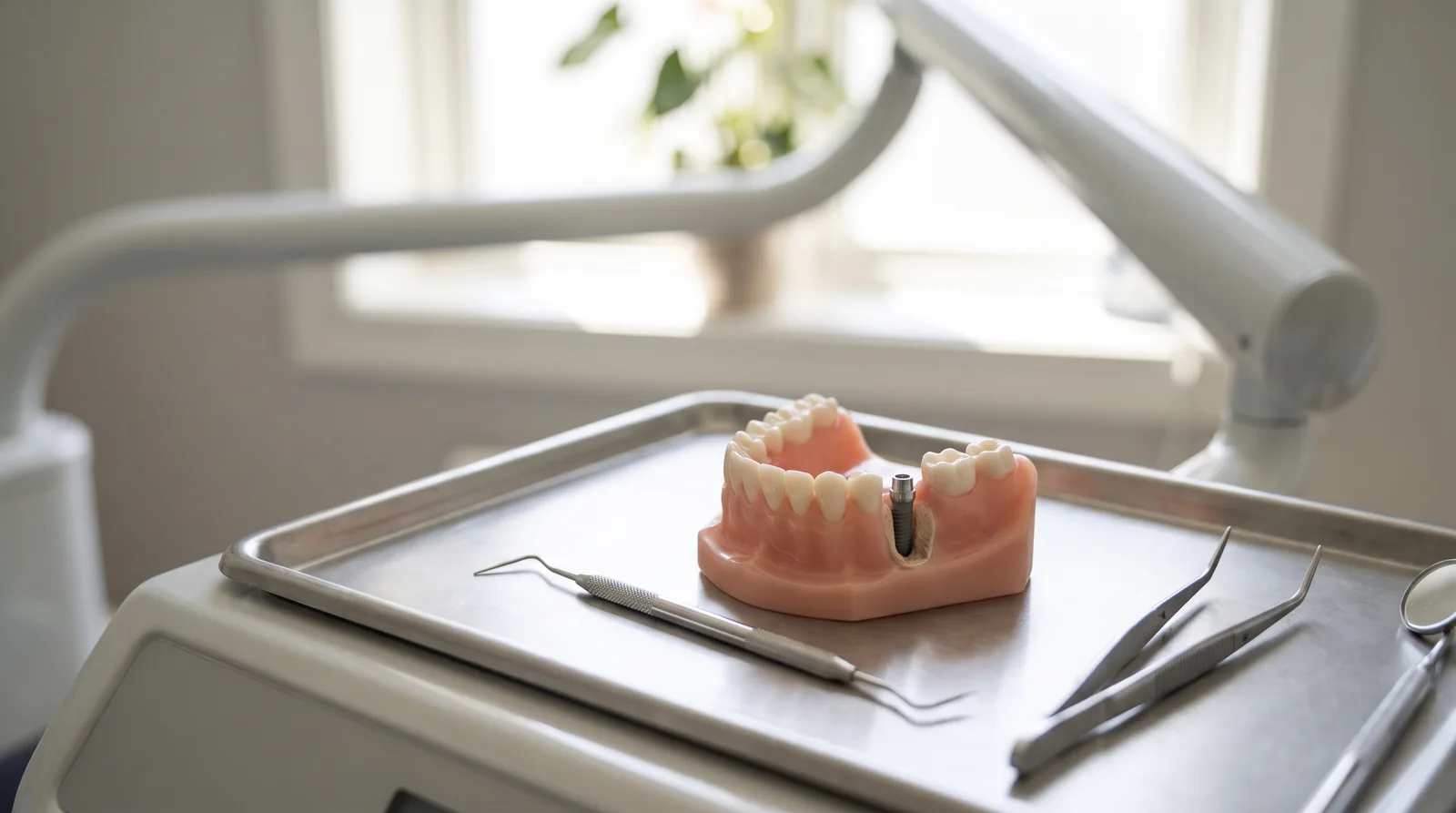
Dental Implants
Front Tooth Implant: What to Expect From Start to Finish
Front tooth implant explained: steps, timeline, temporary teeth, natural results and who qualifies. Plan yours with Elia Family Dental in Wall Township.
Nov 4, 202610 min read



Periodontist vs dentist comes down to specialty: a general dentist provides everyday care such as exams, cleanings, fillings and early gum treatment, while a periodontist is a dentist who specializes in gum disease and dental implants. At Elia Family Dental in Wall Township, Dr. Nicole Elia provides general dentistry and board-certified periodontist Dr. Marjorie Baptiste treats advanced gum and bone problems, in the same office.
Your hygienist measures your gums and says a number that sounds more serious than last time. Or you're told your gums are receding, or that you'll need an implant someday. Then comes the word "periodontist," and you wonder whether you're about to be sent somewhere unfamiliar, and whether your regular dentist can still help.
This guide explains who does what, when each is the right choice, and how the two work together. It's general education only, and an exam with imaging decides what your gums actually need.
Wondering Who Should Treat Your Gums?
Book a visit and our team will measure your gums, review your X-rays and explain which care fits.
Book Appointment →A periodontist is a dentist with advanced training in gum disease and implants, while a general dentist handles the full range of everyday dental care. The ADA's MouthHealthy page on periodontics says periodontists receive three additional years of education beyond dental school.
Both are dentists. The difference is focus. A general dentist treats the whole mouth, including teeth, fillings, crowns, cleanings and routine gum care. A periodontist concentrates on the gums and the bone that support your teeth, and on the placement of dental implants.
Think of it like a family doctor and a specialist. Your general dentist is the first stop and the person who knows your whole history. A periodontist is who you see when a gum or bone problem needs a specialist's depth, and in many cases the two work as a team.
That doesn't mean one is better. They're suited to different problems, and good dentistry means getting the right care at the right time, and not sending a simple problem to a specialist or leaving a complex one with someone who isn't set up to treat it.
A general dentist handles exams, professional cleanings, X-rays, fillings, root canals and early gum disease. At Elia Family Dental, general dentistry covers exams, professional cleanings, digital X-rays, fillings and root canals, and periodontal treatment includes scaling and root planing with laser-assisted therapy and an ongoing maintenance plan.
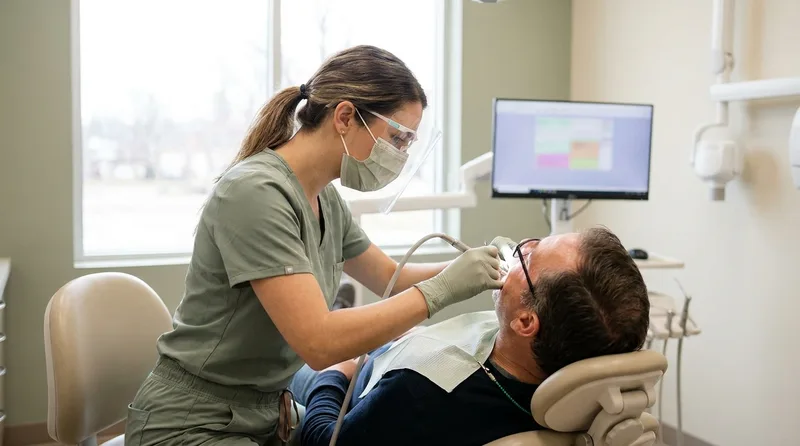
Most people start here. Your general dentist sees you once or twice a year, knows your history, and is usually the first to notice bleeding gums or a deepening pocket. That early detection is the most valuable thing a general dentist does for gum health. The ADA says the early stage of gum disease, gingivitis, is still reversible and can usually be eliminated by a professional cleaning at your dental office followed by daily brushing and flossing. Our guides to the signs of gum disease and gum disease treatment stages explain what to watch for, and scaling and root planing explains the deep cleaning for pockets.
A periodontist treats the full range of gum disease, from mild gingivitis to severe periodontitis, and places and maintains dental implants. The ADA says periodontists offer scaling and root planing, root surface debridement and regenerative procedures, can perform surgery for severe gum disease, and are trained in cosmetic periodontal procedures.
These treatments share a theme: the gums and the bone underneath. Our guide to bone grafting before dental implants explains how bone support affects implants, and laser gum treatment covers a gentler option for some cases.
Gum disease is common, and it often shows no warning signs early on. The ADA calls it a major cause of tooth loss in adults. Some 42% of adults aged 30 and older have some form of periodontal disease, according to CDC 2024 data, so a specialist's role is a common one. If you have diabetes, our guide to diabetes and gum disease explains why gum checks matter even more. Needing one doesn't mean something went wrong. It means the problem is one that specialty training addresses.
See a periodontist when gum disease has progressed beyond what a cleaning can manage, when you have deep pockets, gum recession or bone loss, or when you need implants or bone support. Your dentist may recommend this after measuring your gums and reviewing your X-rays.
The ADA's guide to gum disease lists warning signs worth acting on: gums that bleed easily, red, swollen or tender gums, gums that have separated from the teeth, persistent bad breath or a bad taste, loose permanent teeth, and any change in the way your teeth fit together when you bite. It advises seeing your dentist if you suspect gum disease, because the sooner you treat it the better.
You don't have to diagnose yourself. A thorough exam includes measuring the depth of the pockets around each tooth and reviewing X-rays for bone levels. Those two measurements usually show whether your problem is a general dentist's territory or calls for a specialist.
Many offices send patients elsewhere for specialist care, but at Elia Family Dental you don't need to be sent across town. Our periodontist treats patients in our own office, and Elia's service pages note that treatment is planned and performed right here, from the first exam to healing.
That matters more than it sounds. When a specialist is in a different practice, your records travel by email, your plan is explained twice, and you coordinate two sets of appointments. In one office, your X-rays, measurements and history are already in front of both doctors.
Insurance rules vary, and some plans have their own requirements for specialist visits, so ask us to verify your coverage before you book. We'll check your benefits for both the dentist and the periodontist before treatment begins.
If you've been told elsewhere that you need a periodontist, you're welcome to come in for a second look. Bring your X-rays if you have them, and we'll measure, explain and give you a plan.
Dr. Marjorie Baptiste is Elia Family Dental's board-certified periodontist. Her credentials include a DMD from Tufts University School of Dental Medicine (2008), a periodontal and dental implant specialty degree from Tufts (2012), and diplomate status with the American Board of Periodontology. Learn more on our team page.
At Elia Family Dental, she places implants and treats gum disease and bone loss. Dr. Elia then completes the final restoration, so the person who plans your implant and the person who finishes your tooth are on the same team, in the same office.
Why do these details matter? Diplomate status with the American Board of Periodontology is the mark of board certification, an additional credential beyond completing specialty training. Teaching other dentists and leading an accredited program suggest that peers trust her judgment. For a patient, that adds up to reassurance that complex cases are in experienced hands.
They split the work by expertise and share one plan. Dr. Elia handles your exams, cleanings, early gum care and restorations, and Dr. Baptiste handles surgical gum treatment, bone regeneration and implant placement, with both doctors working from the same records and imaging.

For implants, the handoff is especially smooth. Our periodontist places the implant, and Dr. Elia designs and places the crown. Our guides to the dental implant process and screw-retained vs cemented implant crowns show both halves.
If your needs change, so does the plan. A patient who starts with a cleaning may later need grafting, and one who comes in for an implant consultation may need a deeper cleaning first. Having both doctors in one office makes those shifts easy, and you never have to start over.
Regular visits keep the system working. According to the American Dental Association, regular dental visits can catch 80% of oral health issues before they become serious, and Americans who see a dentist regularly are 60% less likely to lose teeth, according to the Journal of Dental Research.
Cost depends on the treatment, so the clearest answer is a personalized estimate after your exam. Elia Family Dental accepts Delta Dental, Blue Cross Blue Shield, Cigna, Principal and most PPO plans, and verifies your coverage before treatment begins. We'll still work with your plan if you're out of network.
We don't list dollar amounts here, because surgical gum care, grafting and implants vary widely by case. Sunbit and CareCredit financing are available, with flexible monthly payments and a quick application, and Sunbit doesn't require a hard credit check. We don't accept HMO, Medicaid or Medicare plans.
If you're still comparing a periodontist vs dentist for your situation, the practical step is to get measured. Book a visit, and Dr. Elia's team will examine your gums, review your imaging and explain whether your care stays with the general dentist or involves our periodontist. Either way, you'll leave with a plan and a clear next step.
If you're considering an implant and have a history of gum disease, read dental implants with gum disease to see what the research says.
Results may vary. Please consult with your dentist at Elia Family Dental for personalized treatment recommendations.
Ready to Get Your Gums Checked?
Book an appointment with Elia Family Dental and our team will measure your gums and explain which care fits.
Book an Appointment →Prefer to talk it through first?
Call 732-681-8604 →Written By
Lead Dentist
Front tooth implant explained: steps, timeline, temporary teeth, natural results and who qualifies. Plan yours with Elia Family Dental in Wall Township.
Dental implants with gum disease are possible when gum health is controlled first. See what research says, how treatment works, and what to expect.
Diabetes and gum disease affect each other. Learn the risks, warning signs, and how deep cleanings and checkups protect your gums in Wall Township.
Book your visit with Dr. Elia online or call us, and we'll take it from there.