Dental Implants
Front Tooth Implant: What to Expect From Start to Finish
Front tooth implant explained: steps, timeline, temporary teeth, natural results and who qualifies. Plan yours with Elia Family Dental in Wall Township.
Nov 4, 202610 min read


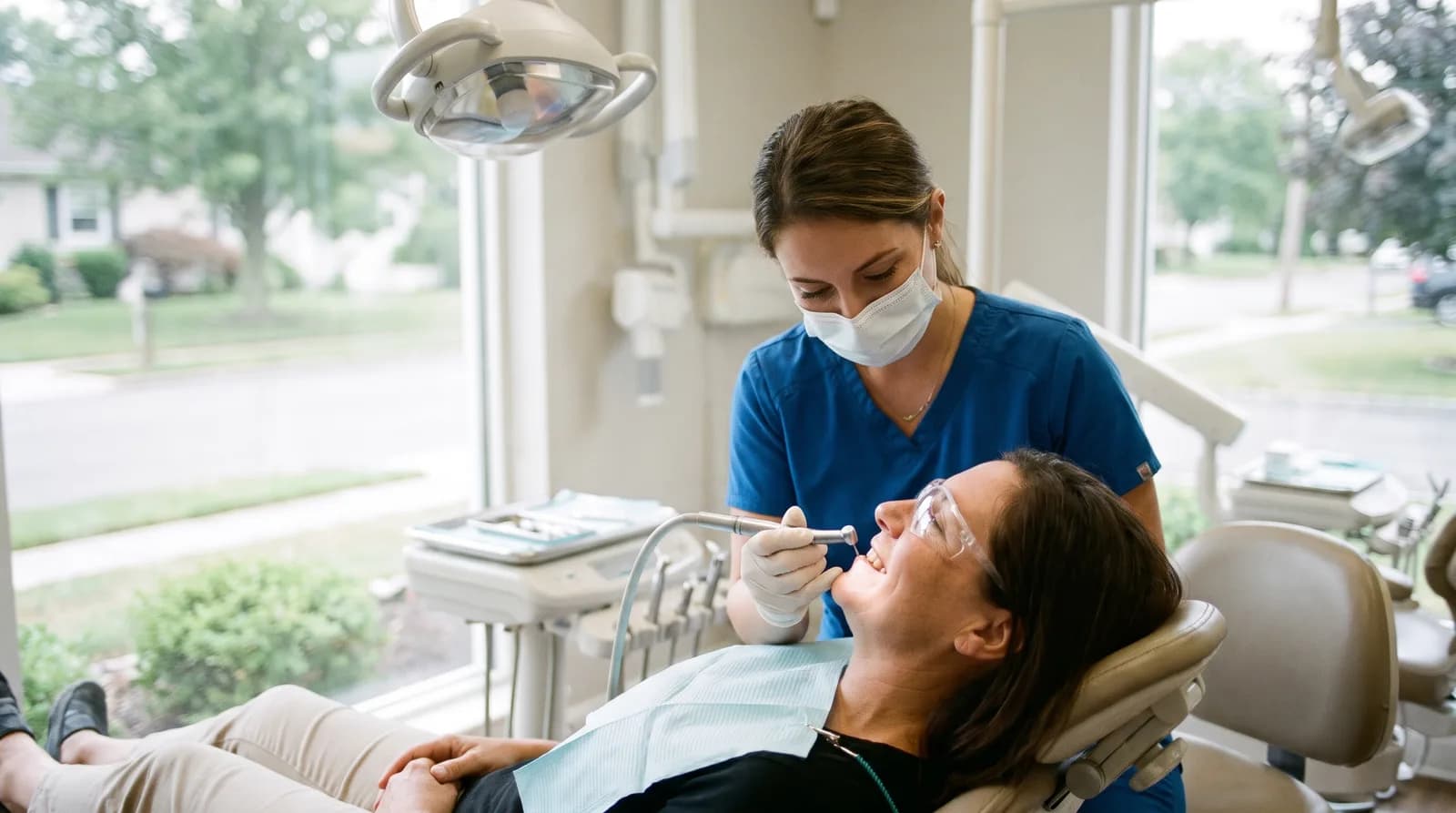
What happens at a dental cleaning is a health history review, an exam, X-rays only if needed, plaque and tartar removal, a gum check and home care advice. At Elia Family Dental in Wall Township, Dr. Nicole Elia and her team offer exams, professional cleanings and digital X-rays through general dentistry care, in a calm, unhurried visit.
Maybe it's been a while. Maybe you've never been sure what actually happens between sitting down and getting the little goodie bag. A cleaning isn't mysterious, but it's easy to feel unprepared, and not knowing what's coming is a big reason people put visits off.
This guide walks through the visit step by step, explains what each part is for, and answers the usual questions about comfort, frequency and cost. It's general education only, and your dentist adapts the visit to your needs.
Due for a Cleaning?
Book a visit and our team will walk you through each step, with time to ask questions along the way.
Book Appointment →A dental cleaning visit starts with your health history and an exam, includes X-rays only when they're needed, removes plaque and tartar, and ends with a gum check and home care advice. The ADA's MouthHealthy guide to dental visits says the dentist or hygienist reviews your medical history and examines your mouth.
The exact order can vary, and the visit is tailored to you. Someone with healthy gums and few problems will have a shorter, simpler visit than someone who needs a closer look at one area. The ADA puts it well: there is no one-size-fits-all dental treatment.
The ADA also notes that regular visits help spot dental problems early, when treatment is likely to be simpler and more affordable, and help prevent many problems from developing in the first place. That's the real purpose of a cleaning: it's maintenance that keeps small issues small. Each step has a job, and none of them is there to rush you.
Before the cleaning, your team reviews your medical history, examines your mouth and decides whether X-rays are needed. The ADA's guide to dental X-rays says they should be taken only when your dentist believes they'll provide the necessary diagnostic information, and that you may not need one at every visit.
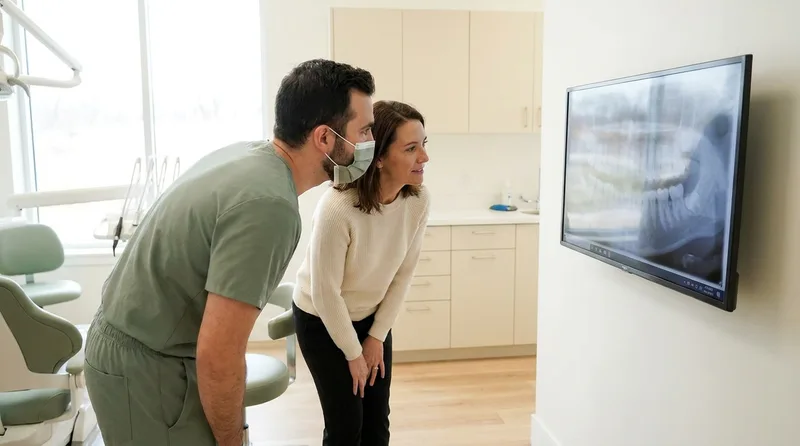
X-rays reveal what an exam can't see, such as new cavities or impacted teeth. For new patients, the ADA says X-rays may be recommended to determine your current oral health and create a baseline for spotting changes later. If a previous dentist has images of you, the new dentist may ask for copies instead of ordering new ones.
At Elia Family Dental, the exam and imaging come first. Our general dentistry process begins with a thorough exam of your teeth, gums and bite, followed by digital X-rays and 3D scanning for a precise picture of your smile. Digital X-rays use far less radiation than older film, and your scans appear on screen so you can see what the team sees. Our guide to how often you need dental X-rays explains the timing.
If it's your first visit, our guide on what to expect as a new patient covers paperwork, records and what to bring.
The cleaning removes plaque and tartar. The ADA explains that plaque is a sticky film of bacteria that can harden into tartar if it isn't removed daily, and that tartar makes teeth harder to keep clean and can inflame the gums. See the ADA's explanation of plaque for more.
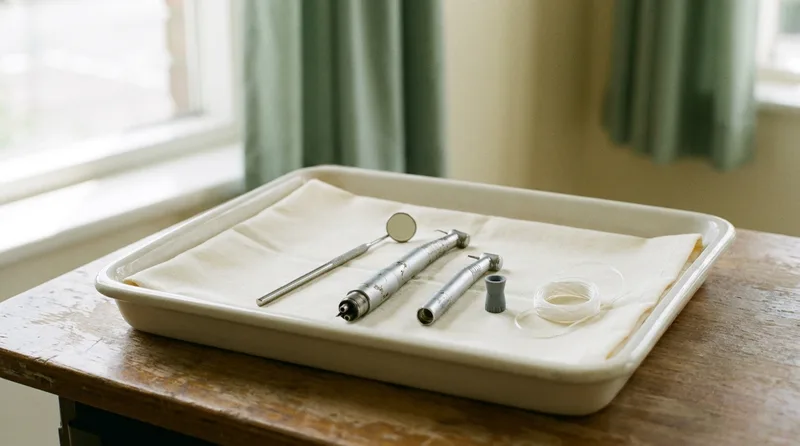
Traditional cleanings use hand and ultrasonic instruments to scrape away tartar, then polish the teeth. That works, and many people are comfortable with it. But some find the scraping noise and sensation unpleasant, which is part of why newer approaches exist.
Elia Family Dental offers Guided Biofilm Therapy, or GBT, a modern approach to professional cleaning. Instead of harsh scraping, it uses warm water, air and a fine powder to gently lift biofilm, stains and early tartar. Elia's page lists these steps:
For a full comparison, see our guide to Guided Biofilm Therapy vs traditional cleaning, or the Guided Biofilm Therapy page for the process.
Beyond cleaning, your team checks your gums for signs of gum disease and performs an oral cancer screening. The ADA says the hygienist may use a special instrument to check your gums, and that the dentist evaluates your overall dental health and conducts an oral cancer screening of the tongue, mouth, jaw and neck.
These checks are why a cleaning is worth more than it looks. Our guide to oral cancer screening at the dentist explains what that part involves, and why it's routine rather than a cause for worry.
You'll leave with a clear picture of your oral health: what looks good, what to watch, and what, if anything, needs treatment. A clear plan is explained before anything begins, so you never feel surprised by what comes next. If the team spots something worth watching, such as a worn filling or an inflamed area of gum, you'll hear about it now rather than when it becomes a problem.
Most people find a cleaning comfortable, and Guided Biofilm Therapy is designed to make it gentler: Elia describes it as more comfortable than a traditional cleaning, with no harsh scraping, and safe for implants, braces and sensitive teeth. Tell the team if you're sensitive or nervous, and they'll adjust.
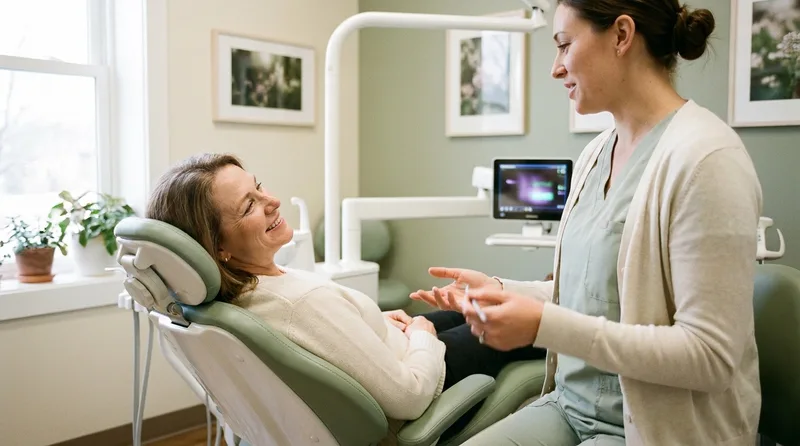
Nerves are common. About 36% of Americans have dental anxiety, according to a 2024 BMC Oral Health study. If that's you, the single most helpful thing is to say so at the start. Knowing the steps in advance, and having a way to signal a pause, takes much of the stress out of the chair.
Elia's visits are calm and unhurried, with time to explain everything. Our guide to dental anxiety and judgment-free care explains how the team works with nervous patients. And if tooth sensitivity is the worry, mention it when you book so the visit can be planned around it. If your mouth often feels dry, our guide to dry mouth causes explains why that matters for your teeth.
A little tenderness in the gums after a cleaning isn't unusual, especially if it has been a while. If anything feels off, call. Most patients find that the dread was far worse than the visit itself.
It depends on you. The ADA says there's no one-size-fits-all schedule: some people need to visit once or twice a year, and others may need more visits. Your dentist sets the interval based on your gum health, your cavity risk and your history.
Skipping visits is common. About 100 million Americans fail to see a dentist each year, according to the ADA, even though regular exams and good hygiene can prevent most dental disease. Our guide to how often you should get your teeth cleaned gives a straight answer for adults.
According to the American Dental Association, regular dental visits can catch 80% of oral health issues before they become serious. Americans who see a dentist regularly are also 60% less likely to lose teeth, according to the Journal of Dental Research. Those are the numbers behind the schedule.
If you've had gum disease, expect more frequent visits. Cleanings that track your gum measurements over time keep the problem from returning, and your dentist will tell you the right interval for you.
If your gums show signs of disease, you may need a deeper treatment such as scaling and root planing, which cleans below the gumline. The ADA describes it as a procedure for pockets that form where gums separate from teeth.
After scaling and root planing, the ADA says your dentist schedules a follow-up to see how your gums have healed and to measure pocket depth. That's different from a routine cleaning. A routine cleaning maintains healthy gums, while a deep cleaning treats gums that already have disease. Our guide to scaling and root planing explains the process, and the periodontal maintenance schedule explains what comes after.
Needing more than a routine cleaning isn't a failure. It's a sign the problem was caught while it can still be managed. Some 42% of adults aged 30 and older have some form of periodontal disease, according to CDC 2024 data, so it's far more common than most people think.
If your team recommends a deeper treatment, ask what they found, how it will be treated, and what you can do at home. A clear explanation is part of good care.
Cost depends on your plan and what your visit includes, so the clearest answer is to ask us before you come. Elia Family Dental accepts Delta Dental, Blue Cross Blue Shield, Cigna, Principal and most PPO plans, and verifies your coverage before treatment begins. Many plans cover part of preventive care.
We don't list dollar amounts here, because exams, X-rays and cleanings are priced according to what your visit involves. Sunbit and CareCredit financing are available, and Sunbit doesn't require a hard credit check. We don't accept HMO, Medicaid or Medicare plans, so call us if you're unsure which category your plan falls into.
So, what happens at a dental cleaning? Less than you might fear, and more than you might expect: an exam, a gentle cleaning, a gum check and a screening, all in one calm visit. Book yours, and Dr. Elia's team will walk you through each step as it happens.
Results may vary. Please consult with your dentist at Elia Family Dental for personalized treatment recommendations.
Ready for a Comfortable Cleaning?
Book an appointment with Elia Family Dental and our team will walk you through each step.
Book an Appointment →Prefer to talk it through first?
Call 732-681-8604 →Written By
Lead Dentist
Front tooth implant explained: steps, timeline, temporary teeth, natural results and who qualifies. Plan yours with Elia Family Dental in Wall Township.
Dental implants with gum disease are possible when gum health is controlled first. See what research says, how treatment works, and what to expect.
Diabetes and gum disease affect each other. Learn the risks, warning signs, and how deep cleanings and checkups protect your gums in Wall Township.
Book your visit with Dr. Elia online or call us, and we'll take it from there.