Wisdom Tooth Removal Cost: What Affects the Final Price
Dr. Nicole EliaNovember 11, 202612 min read
Key Takeaways
Wisdom tooth removal cost depends on the tooth's position: erupted teeth come out like any other, while embedded teeth need an incision and bone removal, per WebMD.
Fully impacted teeth buried in the gum or jawbone can be harder to remove, and the surgery usually takes about 30 to 60 minutes, according to Healthline.
Imaging comes first: an X-ray shows whether teeth are impacted, and Elia uses digital X-rays and 3D imaging to plan the safest approach.
Anesthesia options are local, sedation and general, and the type can change your estimate, per Healthline and Mayo Clinic.
A 2020 Cochrane review found insufficient evidence on whether symptom-free impacted wisdom teeth should be removed, so ask whether monitoring is an option.
Elia Family Dental verifies your insurance, offers Sunbit and CareCredit monthly payment plans and provides same-day emergency extractions.
Wisdom tooth removal cost is a common worry, and the honest answer is that it depends on your teeth, your plan and the care you need. We don't list dollar amounts here, because a price quoted without an exam and X-rays is only a guess. What we can do is explain what moves the price, from how deeply a tooth is impacted to the imaging, anesthesia and insurance involved. Elia Family Dental's general dentistry team evaluates your wisdom teeth first, so your estimate reflects your own mouth.
This guide complements our article on when wisdom teeth removal is actually necessary, which covers whether you need removal at all. Here we focus on cost: why impacted and erupted teeth differ, what affects the total, how imaging and anesthesia fit in, whether every tooth must come out, how insurance works and how to get a clear estimate. It's general education only, and your dentist can tell you what your teeth need after an exam.
Wondering What Your Wisdom Teeth Will Cost?
Book an evaluation and our team will check your wisdom teeth with X-rays, explain your options and walk you through costs and coverage before treatment begins.
Why Is Wisdom Tooth Removal Cost Hard to Pin Down?
Wisdom tooth removal cost varies because the work involved varies so much from one mouth to the next. WebMD says how a wisdom tooth is removed depends on its position and stage of development, from an erupted tooth that comes out as easily as any other to one embedded in the jawbone that needs an incision and bone removal.
WebMD adds that a tooth under the gum and embedded in the jawbone is often taken out in small sections, so less bone has to be removed. That's a very different procedure from lifting out a tooth that has already come through the gum, and it's why two people can need their wisdom teeth out and receive very different estimates, even at the same office.
Other things change the total too: how many teeth are coming out, the imaging needed, the type of anesthesia and your insurance. That's why Elia Family Dental explains costs after an exam with X-rays, not over the phone. Once the team has seen your teeth, they know the type of removal needed and can give you a plan you can rely on.
Our guide to simple vs surgical extraction explains the difference between the two main types of removal, which is the starting point for understanding any extraction estimate, including one for wisdom teeth.
How Does an Impacted vs Erupted Tooth Change the Price?
An impacted tooth usually means more work, which is why it affects the price. Healthline says a wisdom tooth is impacted when it gets stuck under the gum or doesn't have enough room to break through, and that a fully impacted tooth buried in the gum or jawbone can be harder to remove than one that has broken through.
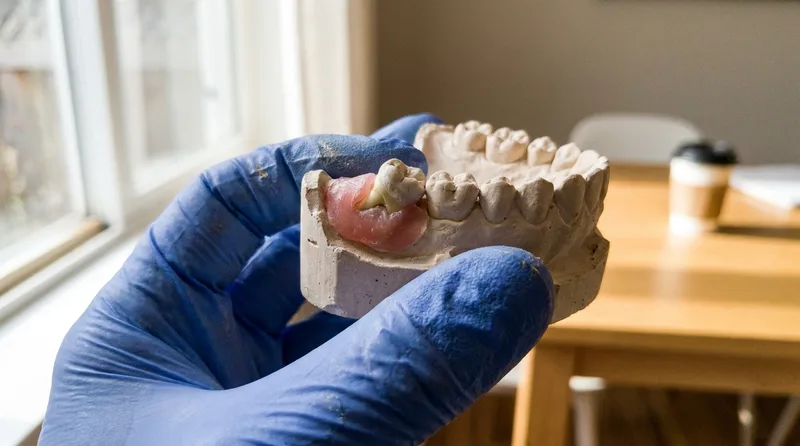
An impacted wisdom tooth is stuck under the gum or doesn't have room to break through.
Erupted
Partially impacted
Fully impacted
What it is
The tooth has come through the gum
The tooth has partly broken through the gum
The tooth has not broken through and stays under the gum or in the bone
What removal involves
Can be taken out as easily as any other tooth, per WebMD
Often needs more work, because part of the tooth is covered
Needs an incision and removal of bone over the tooth, often in sections, per WebMD
Why it matters for cost
Usually the simplest case
More involved than a simple extraction
Typically the most involved, so the estimate is usually higher
Healthline explains the usual cause: wisdom teeth become impacted because the jaw doesn't have enough space for them, or because the tooth grows in at the wrong angle. It lists being between ages 17 and 25 and having a small jaw structure as risk factors. A partially impacted tooth can trap food and make cleaning difficult, which is one reason dentists pay close attention to them.
The surgery itself isn't long. Healthline says the entire surgery for an impacted wisdom tooth usually takes about 30 to 60 minutes, and that it's usually an outpatient procedure, so you go home the same day. How much of that time is needed for your teeth is part of what your estimate reflects, which is why imaging comes before any price.
What Factors Affect Wisdom Tooth Removal Cost?
The main factors are how deeply the teeth are impacted, how many come out, the imaging needed, the type of anesthesia and your insurance. Mayo Clinic lists how many wisdom teeth need to be removed among the questions to ask your dentist or oral surgeon, because the count changes the plan.
Impaction: erupted, partially impacted and fully impacted teeth call for different amounts of work.
Number of teeth: removing one tooth is a different plan from removing all four.
Imaging: an X-ray shows whether teeth are impacted, and some cases call for 3D imaging.
Anesthesia: local anesthesia, sedation and general anesthesia are the options.
Complexity and time: deeper teeth take longer to remove than ones that have come through.
Infection or symptoms: a tooth that's already causing problems may need extra care.
Who does the removal: in the office or with a specialist, which can affect network and coverage.
Follow-up care: checking that healing is on track is part of the plan.
Timing can matter too. WebMD says a dentist or oral surgeon may suggest removal even before problems show, to avoid a more complicated removal later, and that removal is easier in younger people, when the roots are not yet fully formed and the bone is less dense. In older people, WebMD notes, recovery and healing time tend to be longer. Our guide to the tooth extraction recovery timeline shows what the weeks after removal look like.
Your wisdom tooth removal cost estimate should list what's included: the exam and imaging, the removal itself, the anesthesia and follow-up care. If a tooth is already causing problems, such as swelling or an infection, the team may need to address that first, which can change the plan and the timing. Ask for the estimate in writing, so you can compare it with your insurance's explanation of benefits.
How Does Imaging Help Plan Wisdom Tooth Removal?
Imaging shows where your wisdom teeth sit and whether they're impacted, which determines the plan and the estimate. Healthline says your dentist can tell whether wisdom teeth are impacted by examining your teeth and taking a simple X-ray, which can also show whether other teeth or bone are damaged.
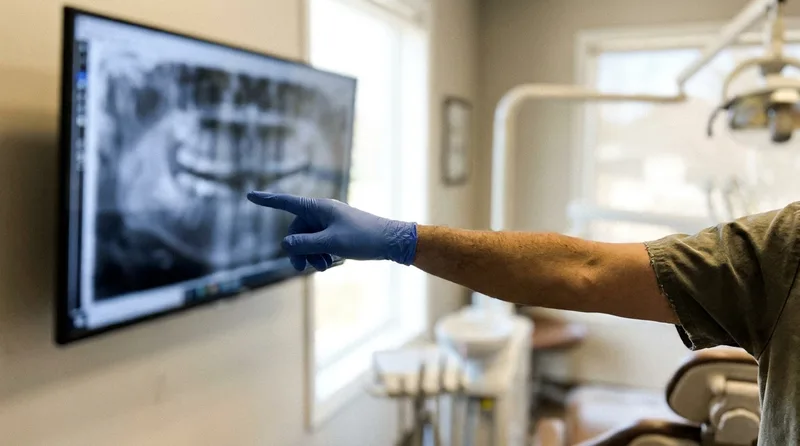
An X-ray shows whether wisdom teeth are impacted and how they're angled.
WebMD adds that your dentist may take X-rays regularly to check for the presence and alignment of your wisdom teeth. At Elia Family Dental, the evaluation uses digital X-rays and 3D imaging to assess the tooth and plan the safest approach. Those images answer the practical questions: how the tooth is angled, how close it is to nearby teeth and whether it's covered by gum or bone.
That's why a quote given without imaging should be treated with care. A figure based on a guess can change once your teeth are seen, and a surprise partway through is the last thing you want. Getting imaging first lets the team explain your options, the type of removal needed and your costs in advance.
How Do Anesthesia Options Affect the Cost?
The type of anesthesia is one of the choices that can change your estimate, and the options are local anesthesia, sedation and general anesthesia. Healthline lists all three, and Mayo Clinic says your dentist or oral surgeon may use one of three types of anesthesia during wisdom tooth removal.
Local anesthesia: numbs your mouth so you're comfortable during the procedure.
Sedation: Healthline describes it as relaxing you and blocking discomfort.
General anesthesia: makes you sleep and not feel anything during the procedure, per Healthline.
The choice also changes your day. Mayo Clinic says that if you get sedation or general anesthesia, you're taken to a recovery room afterward, while with local anesthesia you'll likely recover in the dental chair. Mayo also suggests asking whether someone will need to drive you home, so it's worth planning a ride if sedation or general anesthesia is part of your plan.
The right choice depends on your teeth and on how you feel about the procedure, not on a standard rule. At Elia Family Dental, the area is numbed gently and the team makes sure you're fully comfortable before anything begins. Ask which anesthesia your case calls for, what options are available and whether it's included in your estimate.
Do You Need Every Wisdom Tooth Removed?
Not always. Healthline says that if an impacted wisdom tooth doesn't cause issues, your dentist might suggest leaving it alone and monitoring it, and a 2020 Cochrane review found insufficient evidence to determine whether symptom-free impacted wisdom teeth should be removed or kept.
The Cochrane review included only two studies, and it found only low- to very low-certainty evidence on the effects of removing versus keeping these teeth. It noted that keeping them may be linked to a higher long-term risk of periodontitis affecting the neighboring second molars, though that evidence is very low certainty, and it concluded that patient values should be considered. In plain terms, this is a decision to make with your dentist, not an automatic one.
Healthline notes there's debate in the medical community, with some dentists preferring removal to prevent future problems and others preferring to leave the teeth alone. If you skip surgery, you'll need monitoring, which means visiting your dentist regularly and flossing around the teeth. Wisdom teeth are hard to clean, and Healthline lists infection, cavities, crowding and gum disease among the problems an unremoved tooth can cause. Gum disease is common: an estimated 42% of dentate US adults aged 30 or older have periodontitis, according to an analysis of national survey data from 2009 to 2014 by CDC researchers.
From a cost standpoint, monitoring has its own price in visits and X-rays, and removal has its up-front price. Neither is automatically less costly over time, which is why a clear conversation about your teeth matters. Ask your dentist what the risks of waiting are for your teeth specifically, and what monitoring would involve. Regular visits are a habit many people already keep: about 65.5% of US adults had a dental exam or cleaning in the past year, according to CDC data for 2023.
Does Dental Insurance Cover Wisdom Tooth Removal?
Coverage varies by plan, and plans can treat simple and surgical removal differently, so it's worth asking before treatment. Elia Family Dental accepts Delta Dental, Blue Cross Blue Shield, Cigna, Principal and most PPO plans, and the team verifies your coverage before treatment begins.
What you pay usually depends on your deductible, your coinsurance share, your annual maximum and whether the office is in your network. Our guide to dental insurance explained covers how those pieces work. If you're referred to a specialist, ask that office for its own estimate and which plans it's in network with, because coverage can differ between offices.
Is wisdom tooth removal covered, and at what level? Ask whether impacted and erupted teeth are treated differently.
What is my deductible, and have I met it? It affects what you pay first.
How much of my annual maximum is left? Removing several teeth can use a lot of it.
Is anesthesia or sedation covered? Some plans treat it separately.
Do I need pre-approval? Elia's team can help check this for you.
Without insurance, Sunbit and CareCredit offer flexible monthly payment plans, and Sunbit doesn't require a hard credit check. Our guides to dental care without insurance, CareCredit vs Sunbit and dental financing with Sunbit explain the options. Ask early, and ask for the estimate in writing before treatment.
What Is the First Step at Elia Family Dental?
The first step is an evaluation with digital X-rays and 3D imaging, so the team can assess your wisdom teeth, tell you which path applies and explain your costs and coverage. Elia handles simple and surgical extractions, and Dr. Elia coordinates a referral if a specialist is the better fit.
An evaluation with imaging is the first step in planning your care and your costs.
Evaluation. An exam with digital X-rays and 3D imaging shows where your wisdom teeth are.
Your path. You learn whether removal is needed or monitoring is reasonable, and who performs it.
Your estimate. You get the type of removal, what's included and what your insurance may cover.
Comfortable numbing. Anesthesia is chosen for your case, and you're comfortable before anything begins.
Aftercare. You leave with clear written instructions, and the team checks in on your healing.
Learn more about oral surgery and extractions at Elia. You'll also get clear written aftercare instructions, and the team checks in to make sure you're healing well. Our guides to dry socket symptoms and what to eat after dental surgery help you plan your recovery. Same-day emergency extractions are available, so if you have swelling, a fever or a tooth that's suddenly causing problems, call right away.
Bring your insurance details, a list of your medications and any questions about anesthesia, timing or cost. You can start with a conversation, and there's no obligation to proceed. Call 732-681-8604 and the team will verify your coverage so you know your portion before treatment.
Dental crown cost depends on material, tooth condition, prep work and coverage. See what affects the price and how same-day crowns fit in Wall Township.
Dental cleaning cost without insurance depends on what your visit includes. See what a cleaning covers and why exams and X-rays differ, in Wall Township.
Nov 11, 202611 min read
Ready When You Are
Book your visit with Dr. Elia online or call us, and we'll take it from there.