Tooth Extraction Cost: What Affects the Price and Coverage
Dr. Nicole EliaNovember 11, 202612 min read
Key Takeaways
Tooth extraction cost varies by location, whether the tooth is impacted, how many teeth are removed and the type of anesthesia, according to Healthline.
A simple extraction removes a visible tooth, while teeth that are broken, below the surface or impacted need a more involved surgical procedure.
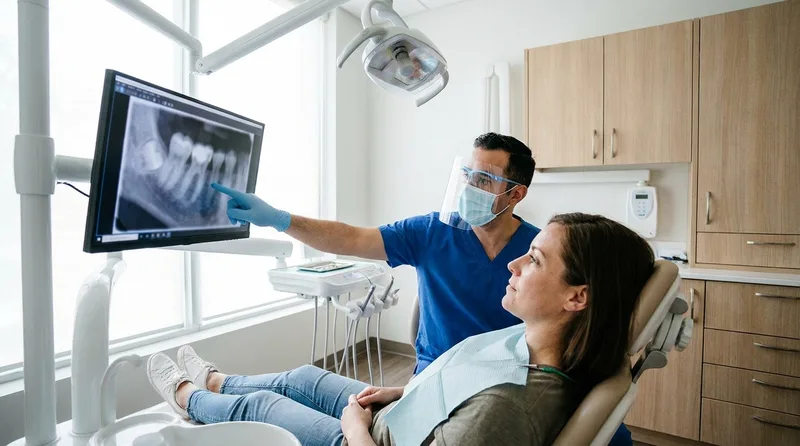
Imaging comes first: Elia uses digital X-rays and 3D imaging to assess the tooth and plan the safest approach, which also shapes your estimate.
Dental plans vary on extractions, so ask what your plan covers, your deductible and your annual maximum, and Elia will verify coverage before treatment.
Sunbit and CareCredit offer monthly payment plans, and Sunbit does not require a hard credit check.
Same-day emergency extractions are available at Elia Family Dental, and waiting can make an extraction more involved.
Tooth extraction cost is one of the first questions people ask when a tooth needs to come out, and the honest answer is that it depends on your tooth, your plan and the care you need. We don't list dollar amounts here, because a price quoted without an exam is only a guess. What we can do is explain what moves the price, how coverage works and what to ask for. Elia Family Dental's general dentistry team gives you a clear plan and costs before treatment begins.
This guide covers why one price can't fit every extraction, how simple and surgical extractions differ, what affects the total, how imaging factors in, what to know about insurance, your options without insurance and how to get a clear written estimate. It's general education only, and your dentist can tell you what your own tooth needs after an exam.
Need a Tooth Out and Want to Know the Cost?
Book a visit and our team will examine the tooth, explain what type of extraction is needed and walk you through your costs and coverage.
Why Is It Hard to Give One Price for a Tooth Extraction?
Tooth extraction cost varies because every extraction is different. Healthline says cost can vary by your location, whether the tooth is impacted and whether you need additional teeth removed, and that the type of anesthesia you need can add to it. A written estimate after an exam is the only reliable number.
Healthline also notes that the cost of removing an impacted tooth is significantly higher than removing a visible one, and that where you live affects the price because services reflect an area's cost of living. So two people who need a tooth removed can have very different totals, even at the same office, because what's involved in each case is different.
The ADA describes an extraction as having a tooth removed, usually because of disease, trauma or crowding, and says your dentist will first numb the area to lessen any discomfort. Healthline adds that decay, infection and crowding are common reasons. Our guide to the signs a tooth extraction should not wait explains when removal becomes the right call.
That's why Elia Family Dental explains costs after an exam, not over the phone. Once the team has seen the tooth and the imaging, they know whether it's a simple or surgical case, what anesthesia suits you and what your plan is likely to cover. You get a plan you can rely on, not a range that may not apply to you.
What Is the Difference Between a Simple and Surgical Extraction?
A simple extraction removes a tooth that's visible in the mouth, while a surgical extraction is needed for teeth that are broken, below the surface or impacted. Healthline explains that simple extractions use local anesthesia and instruments to loosen and remove the tooth, and surgical extractions are more involved.
A simple extraction uses an elevator to loosen the tooth and forceps to remove it.
Simple extraction
Surgical extraction
When it is used
The tooth is visible and can be reached
The tooth is broken, below the surface or impacted
Anesthesia
A local anesthetic numbs the area, so you feel pressure rather than discomfort
Local anesthesia, often with IV anesthesia to keep you calm, and sometimes general anesthesia
What is involved
The dentist loosens the tooth with an instrument and removes it with forceps
A small incision in the gum, and sometimes removing bone or cutting the tooth before it can be removed
How it can affect cost
Usually the lower-cost option
Healthline says removing impacted teeth costs significantly more
The difference matters for cost because a surgical extraction takes more time and usually more imaging and anesthesia. For a closer look at both procedures, see our guide to simple vs surgical extraction. For wisdom teeth, which are often surgical because of their position, our guide to wisdom teeth removal explains when removal is actually necessary.
You usually don't choose between the two. Your dentist decides based on the tooth's condition and position, and imaging shows which applies. What you can control is asking early what type of extraction is likely, so the estimate you receive matches the care you'll need.
What Factors Affect Tooth Extraction Cost?
The main factors are the type of extraction, the tooth's position and condition, the anesthesia you need, the imaging required, how many teeth are removed and your location. Healthline names location, whether the tooth is impacted, additional teeth and the type of anesthesia as the things that move the price.
Simple or surgical: impacted, broken or below-the-surface teeth need a more involved procedure.
Tooth position and condition: a tooth that has broken off, or one that's tucked behind others, can take longer.
Anesthesia: local anesthesia is typical for simple cases, while surgical cases may add IV or general anesthesia.
Imaging: your dentist takes an X-ray before the procedure, and some cases call for 3D imaging.
Number of teeth: Healthline lists needing additional teeth removed as a cost factor.
Location: prices reflect an area's cost of living.
Related care: follow-up visits and a plan for replacing the tooth are part of the full picture.
Timing can change the type of extraction too. Healthline says teeth that are broken require a more involved procedure, and the ADA warns that an untreated tooth infection can spread and damage the bone that holds the tooth in place. Dental infections send many people to the emergency room: a nationwide analysis found 846,629 emergency department visits with a primary diagnosis of periapical abscess in the United States across 2021 and 2022, according to a study of national emergency department data.
Decay and gum disease are common reasons a tooth ends up needing to come out. Among US adults aged 20 to 64, 91% have had dental caries, according to the CDC's National Center for Health Statistics (2011 to 2012 data), and 20.5% have untreated tooth decay, according to the CDC's 2024 Oral Health Surveillance Report. The ADA's pages on cavities and gum disease explain how each develops. Our guide to root canal vs extraction can help if you're weighing whether the tooth can be saved.
How Does Imaging Affect the Cost and the Plan?
Imaging comes first because it shows what kind of extraction you need, and that shapes the estimate. Healthline says your dentist will take an X-ray of your tooth before the procedure, and Elia uses digital X-rays and 3D imaging to assess the tooth and plan the safest approach.
Imaging shows what type of extraction is needed, which shapes the plan and the estimate.
The images answer practical questions. They show the shape and number of the roots, how close the tooth is to nearby structures and whether it's impacted or partly below the gum. That tells your dentist whether the case is simple or surgical, what anesthesia suits it and how long it's likely to take, which are the same questions that determine cost.
That's why a tooth extraction cost quoted without imaging should be treated with care. A figure based on a guess may change once the tooth is seen, and a surprise partway through is the last thing you want. Getting imaging first costs less than discovering a complication mid-procedure, and it lets the team explain your options and your costs in advance.
If the tooth turns out to be dead or infected, our guide to dead tooth symptoms explains how that's recognized and what the alternatives to extraction are. Many people are surprised to learn that some teeth that seem beyond saving can still be treated with a root canal, which is why imaging and an exam come before any decision.
Does Dental Insurance Cover Tooth Extractions?
Coverage varies by plan, and plans can treat simple and surgical extractions differently, so it's worth asking before treatment. Elia Family Dental accepts Delta Dental, Blue Cross Blue Shield, Cigna, Principal and most PPO plans, and the team verifies your coverage before treatment begins.
What you pay with insurance usually depends on several plan features: your deductible, your coinsurance share, your annual maximum and whether the office is in your network. Our guide to dental insurance explained covers how PPOs, coverage and maximums work, so you know which questions to ask your plan.
Is this extraction covered, and at what level? Ask whether simple and surgical are treated differently.
What is my deductible, and have I met it? This affects what you pay first.
How much of my annual maximum is left? A plan's yearly limit can affect larger treatments.
Is the anesthesia or sedation covered? Some plans treat it separately.
Do I need pre-approval? Elia's team can help check this for you.
If your plan isn't on the list, Elia Family Dental will still work with it. Out-of-network patients are welcome, and the team will walk you through what to expect. Call 732-681-8604 and they'll verify your coverage so you know your portion before the extraction. Insurance details change from plan to plan and from year to year, so it's worth confirming your benefits close to your appointment. If your plan has a waiting period for certain treatments, ask about it early, because it can affect timing.
How Can You Afford an Extraction Without Insurance?
Without insurance, flexible payment plans are the main option. Elia Family Dental works with Sunbit and CareCredit, which offer monthly payment plans, and Sunbit doesn't require a hard credit check. The team will walk you through your options before treatment so you can choose what fits your budget.
Ask early about payment plans, so you know your costs before treatment.
Our guides explain each route in detail. Dental care without insurance covers how patients afford care, CareCredit vs Sunbit compares the two financing options and dental financing with Sunbit explains the application. A soft credit check doesn't affect your credit score, while a hard credit check can, which is why Sunbit's approach matters to many people.
The most helpful step is to ask early. Tell the team you're paying without insurance when you book, and ask for the full estimate before the day of treatment. A clear number, and a plan for how to pay it, takes much of the stress out of an extraction, and it means you can decide about timing without worrying about surprises.
Don't let tooth extraction cost alone delay care for a tooth that's infected or broken. As explained above, waiting can make an extraction more involved, and an infection can spread. If cost is the obstacle, say so: the team would rather help you find a workable plan than have you put off treatment. The ADA notes that regular dental visits help spot problems early, when treatment is likely to be simpler and more affordable, and about 65.5% of US adults had a dental exam or cleaning in the past year, according to CDC data for 2023.
What Should You Ask for in a Written Estimate?
Ask what type of extraction is planned, what the estimate includes, what could add to it and what your insurance is expected to pay. A written estimate that answers those questions lets you compare options and plan your payments without guesswork.
What type of extraction is planned? Ask whether it's simple or surgical, and why.
What does the estimate include? Ask about the exam, imaging, anesthesia, the extraction itself and follow-up care.
What could add to it? Ask about sedation, additional teeth or a socket preservation graft if one is recommended.
What will my plan pay? Ask the office to verify your coverage before treatment.
How can I pay my share? Ask about Sunbit, CareCredit and other options.
What's the plan for replacing the tooth? Ask about timing and options, because replacement is a separate decision with its own cost.
Replacement is worth planning from the start. Elia's oral surgery page describes bone and tissue preserved wherever possible and a clear plan for replacing the tooth. Our guides to bridge vs partial denture and dental implant cost explain what drives those costs, and our tooth extraction recovery timeline shows what the weeks after an extraction look like.
A good office is comfortable with these questions. If you get vague answers, or a price that can't be explained, that's a signal to ask more or get a second opinion. The goal is a plan you understand, with costs you've agreed to before the day of treatment. Keep a copy of the estimate with your appointment notes, so you can compare it with the final bill.
What Is the First Step at Elia Family Dental?
The first step is an evaluation with digital X-rays and 3D imaging, so the team can assess the tooth and plan the safest approach, then explain the type of extraction, your costs and your coverage. Elia handles both simple and surgical extractions, and same-day emergency extractions are available. Learn more about oral surgery and extractions.
After the evaluation, the area is numbed gently so you're fully comfortable before anything begins. The tooth is removed carefully, preserving the surrounding bone and tissue whenever possible, and you leave with clear written aftercare instructions. The team checks in to make sure you're healing well.
If you have swelling, a fever or a tooth that has broken, call right away. Elia Family Dental offers same-day emergency care, and the team can tell you whether to come in immediately. Bring your insurance details if you have them, and tell the team about your medications and health conditions so the plan is safe and accurate.
Dental crown cost depends on material, tooth condition, prep work and coverage. See what affects the price and how same-day crowns fit in Wall Township.
Dental cleaning cost without insurance depends on what your visit includes. See what a cleaning covers and why exams and X-rays differ, in Wall Township.
Nov 11, 202611 min read
Ready When You Are
Book your visit with Dr. Elia online or call us, and we'll take it from there.